AVA Journal
Facelift Revision ① Pixie Ear. Why It Happens, and How to Correct It (Explained by a Plastic Surgeon)
Have you looked in the mirror at some point after a facelift and felt like your ear shape had changed? Or noticed a scar around the ear that healed wider and more visible than you expected?
When the earlobe gets pulled downward and distorted, it's called a "pixie ear." It's one of the most common disappointments that can show up after a facelift. This is the first post in a series on facelift revision, covering why pixie ear happens and how it can be corrected, from a plastic surgeon's perspective.

What is pixie ear?
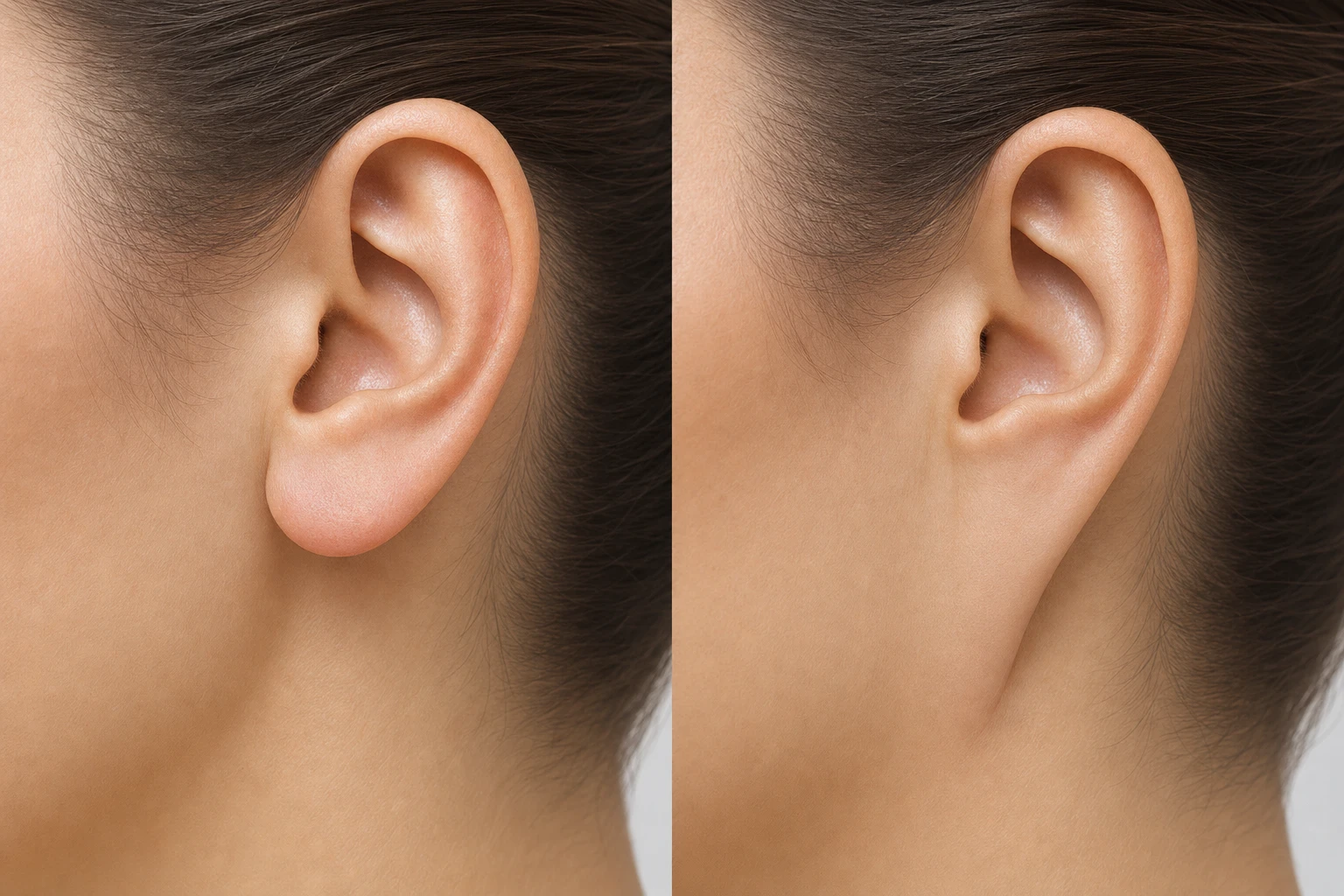
Pixie ear refers to a deformity where the earlobe's free edge (the loose lower border) disappears, and the point where the lobe attaches to the cheek gets pulled downward and stretched into an elongated shape. Normally, the earlobe hangs naturally away from the face. After a facelift, if the skin keeps pulling the ear downward, that attachment point gets dragged down along with it, stretching the lobe until it looks fused to the cheek. This often shows up together with a widened scar.
Why do pixie ear and widened scars happen?
The key issue is where the pulling force, or tension, actually ends up.
There's a supportive layer inside the face called the SMAS. A facelift works by dissecting this SMAS layer thoroughly, lifting it, and securing it in place so that the SMAS bears the weight that gravity would otherwise pull downward. When this is done properly, almost none of that pulling force reaches the skin incision.
Problems arise when this principle isn't followed.
1. Insufficient SMAS dissection
If the SMAS isn't dissected thoroughly enough, the lifting force can't be distributed through it properly. That force then transfers directly to the skin and the ear, increasing the pull on the ear and making pixie ear more likely.
2. Suturing the SMAS in place without actually dissecting it
If the SMAS is simply cinched with sutures rather than properly dissected and repositioned, or if the technique ultimately just pulls and closes the skin, the tension held by those sutures loosens over time. The skin then tries to return to its original position, pulling the ear downward again in the process. This is when a significant scar can form, or the earlobe gets dragged down into a pixie shape.
3. SMAS incision placed too close to the ear
After the skin is dissected, if the SMAS incision line is placed too close to the ear, a large share of the lifting force transfers directly to the ear. This, too, can cause pixie ear.
There are other contributing factors depending on the surgical technique used.
But the common thread is clear: the skin and the ear end up bearing tension that the SMAS was supposed to carry.
How should pixie ear be corrected?
The key to correcting pixie ear is cutting off, at the source, the tension that's pulling the ear downward.
Many patients think of a localized fix, meaning a small incision made just around the lower ear area to correct it directly. That kind of partial correction is technically possible. I don't recommend it, though, for two reasons.
First, the new scar often ends up longer than the stretched pixie ear deformity itself. Bringing the dragged-down earlobe back into position requires an incision that's as long, or longer, than the deformity being corrected.
Second, the underlying tension pulling on the skin isn't fully resolved. If the root cause of the tension is still there when the incision is closed, the result isn't a clean line, but a scar that tends to widen and become more noticeable again over time.
For that reason, correcting pixie ear cleanly requires a full facelift revision, not a localized fix.
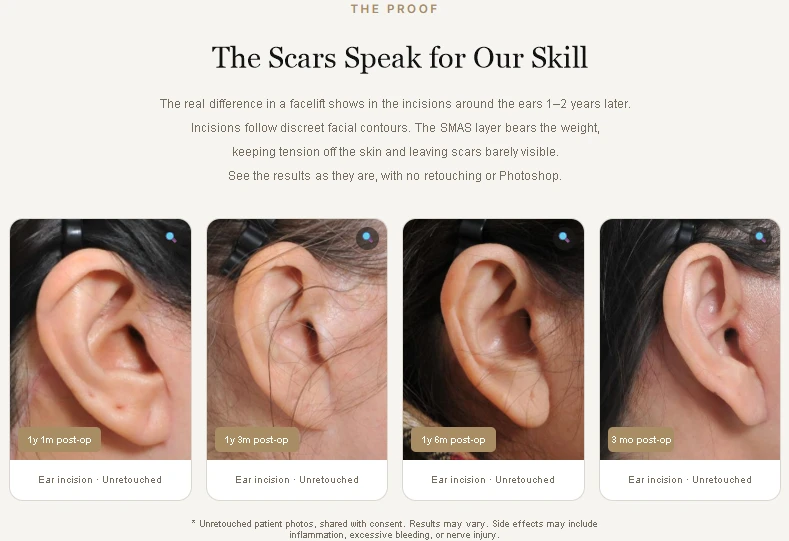
In a revision, the SMAS is dissected thoroughly again and repositioned properly, which eliminates the tension that was pulling on the ear in the first place. Once that tension has been fully released before the incision is closed, the resulting scar is typically faint enough to go unnoticed in everyday life. The earlobe can also return to its natural position. Earlobe reshaping is sometimes performed at the same time to refine the final shape.
Of course, no two cases are identical. The degree of ear deformity, the location and condition of the existing scar, and how much remaining skin is available all factor into the specific design and technique chosen.
Revision surgery requires more precision than the first procedure
Reopening tissue that has already been dissected once and has developed scarring requires a level of precision in dissection and structural repair that goes well beyond a first facelift. It involves carefully releasing tissue that settled in the wrong position and guiding it back to where it belongs. That's why correction always starts with an accurate diagnosis of the underlying cause.
If you've been unhappy with the ear shape or scarring after a facelift performed elsewhere, or if you've been told that correction isn't possible, it's worth getting a second, thorough evaluation. The right approach to correction depends entirely on the underlying cause.
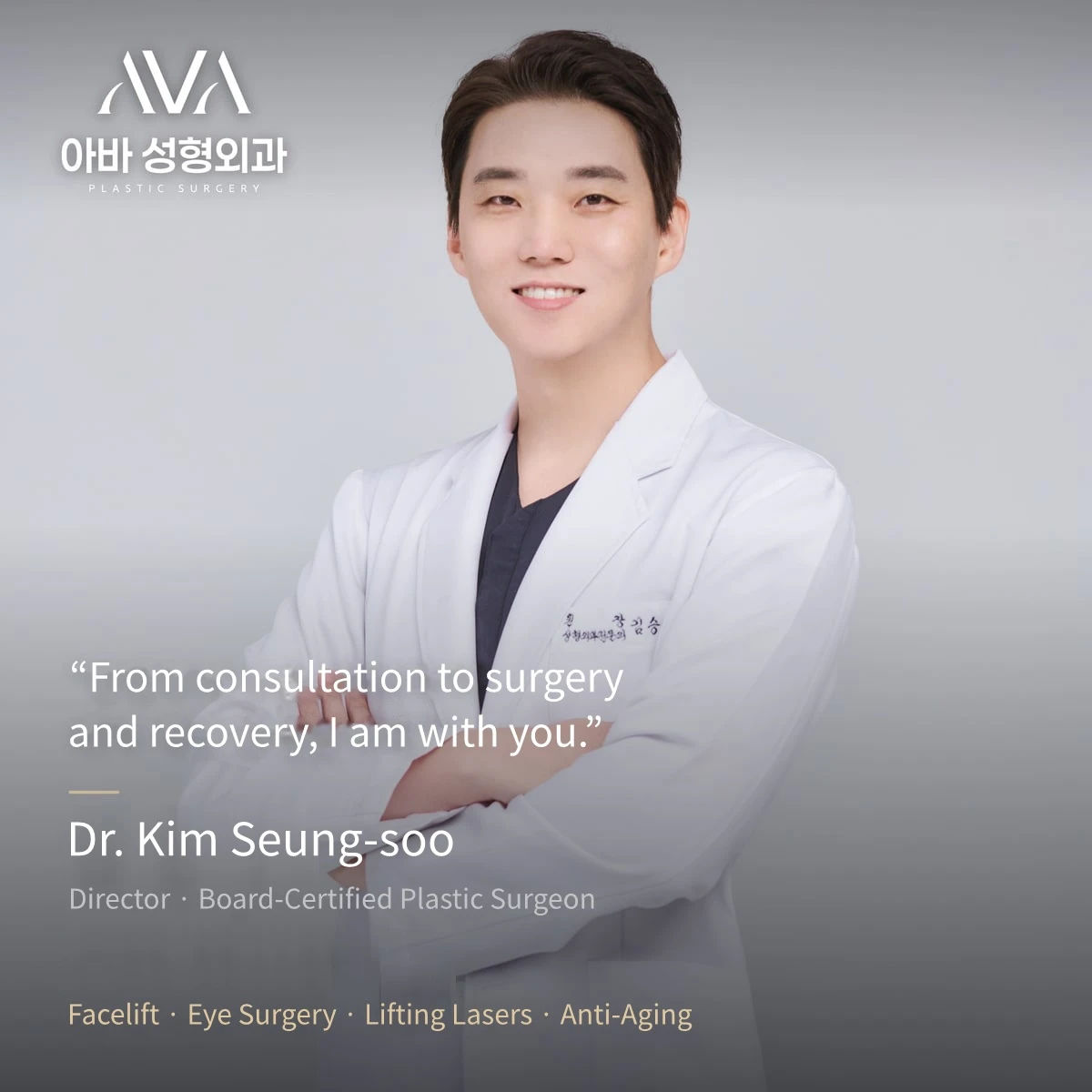
At AVA Plastic Surgery, Dr. Seungsoo Kim personally oversees every case from consultation through surgery and recovery.
📍 AVA Plastic Surgery Clinic · 4F Insung Building, 603 Gangnam-daero, Seocho-gu, Seoul (1-min walk from Sinsa Station Exit 4)
🕙 Weekdays 10:00 AM–7:00 PM · Sat 10:00 AM–5:00 PM · Closed Sundays and public holidays
📞 Reservations & consultations: 02-545-1882
🔗 Website
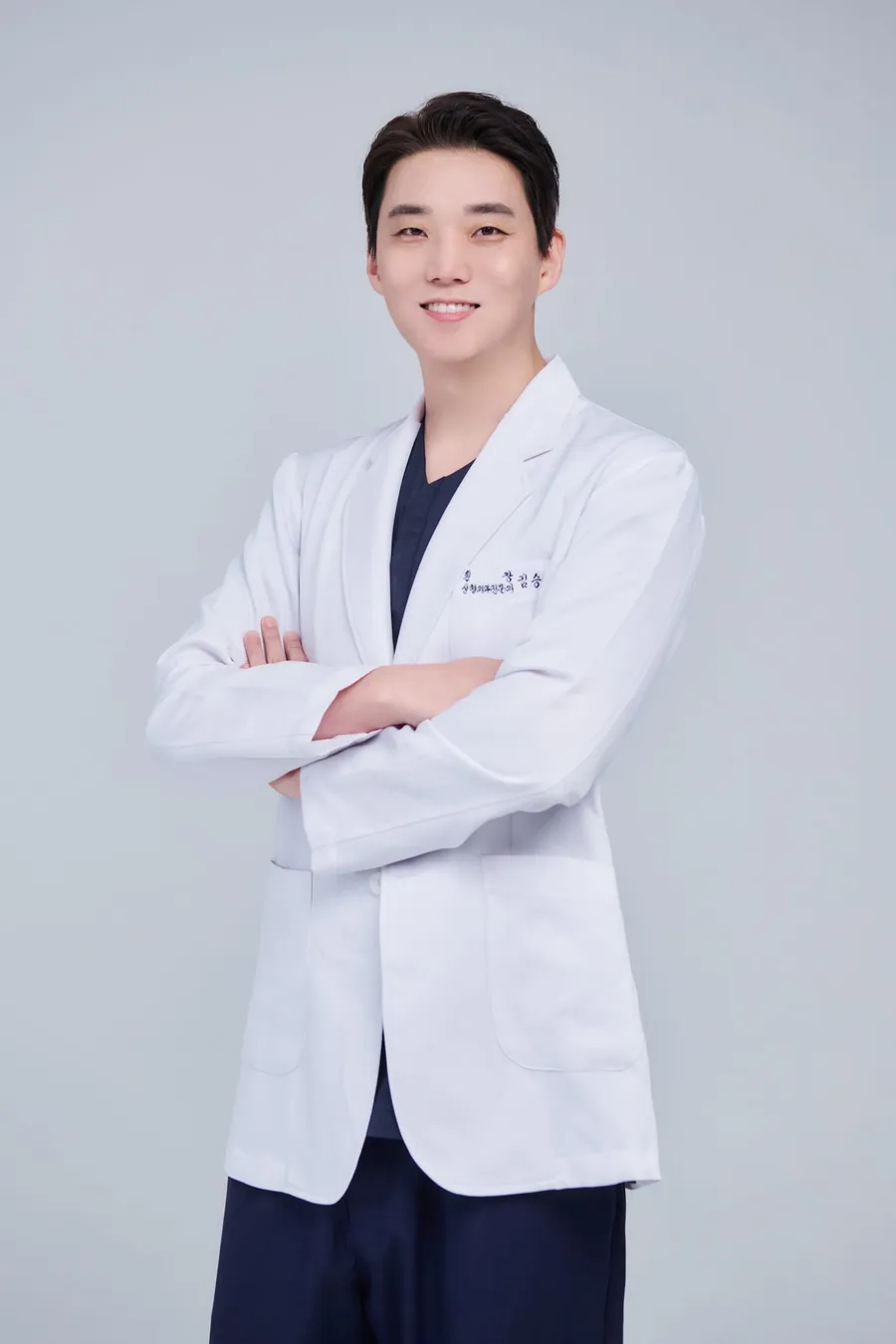
Dr. Seungsoo KimBoard-certified plastic surgeon · AVA Plastic Surgery, Seoul · 6 international journal publications