
Fat Grafting in Seoul, Korea
Completing refined lines with micro-fat grafting that maximizes engraftment rates and precise liposuction.
Facial Fat Grafting
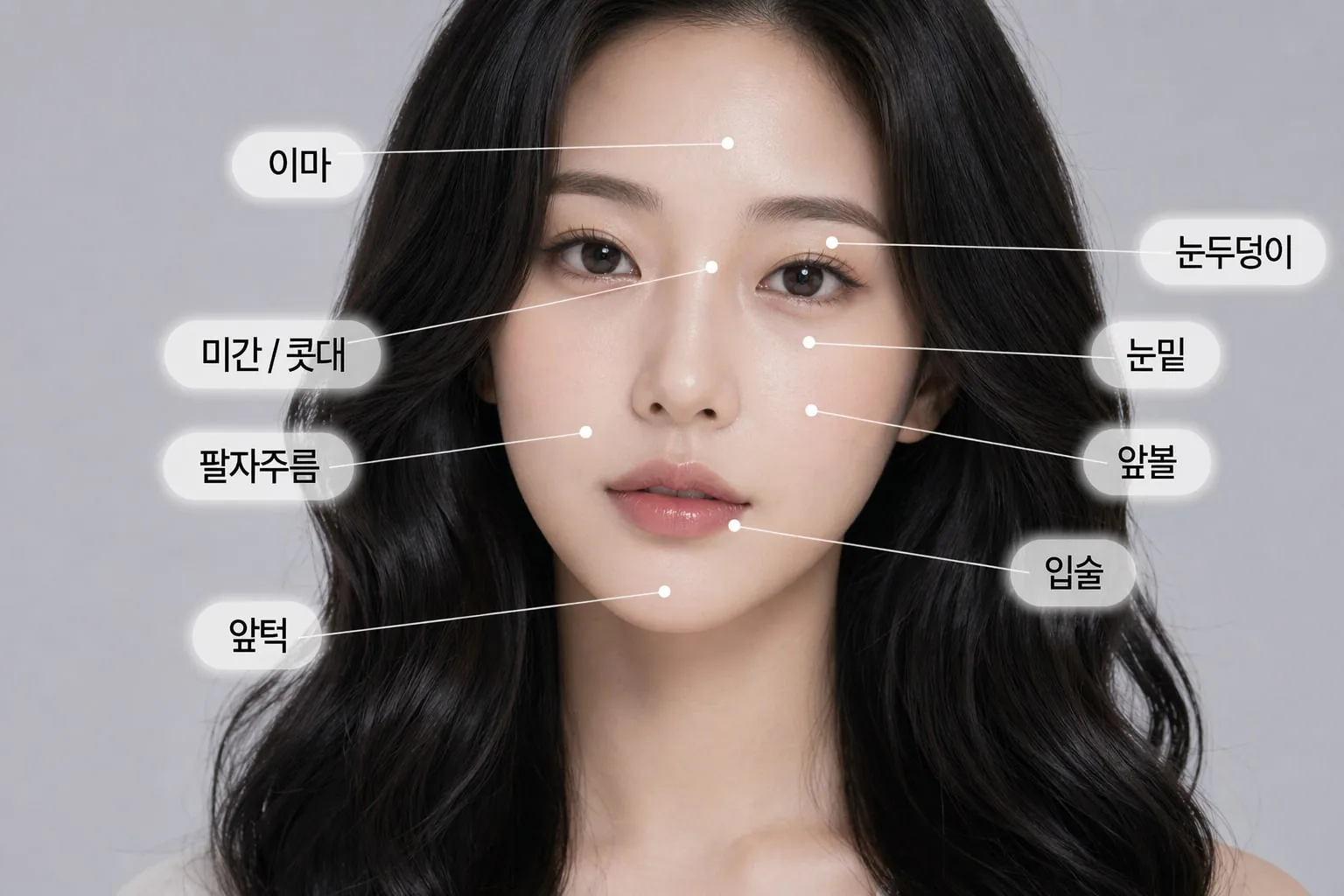
A sphere appears smaller than a flat circle of the same diameter — the same principle applies to the face. The more three-dimensional projection a face has, the smaller, shorter in the chin, and more youthful it tends to appear. Facial fat grafting is not about adding bulk; it is about restoring the highlight zones — forehead, anterior cheeks, temples, and chin — that have deflated with age, so that the face regains the impression of being "smaller through dimension." Performed using your own fat combined with PRP (Platelet-Rich Plasma) for a natural result.

Check Point Highly Recommended For
Facial Fat Grafting Procedure
1-on-1 3D Design
The highlight zones that should catch light from the front — forehead, anterior cheeks, temples, and chin — are analysed individually. The volume required at each site to restore three-dimensional contour is calculated precisely.
Pure Fat Harvesting
Fat is harvested using fine cannulae from areas with high graft survival rates, such as the inner thighs and abdomen. The amount harvested is small, so the donor sites show minimal change.
Centrifugation & Purification
Blood, oil, and damaged cells are separated, leaving only viable adipocytes. Depending on the target area, the fat is refined into micro-fat (anterior cheeks, forehead) or nano-fat (under-eye area, fine lines) with differing particle sizes.
PRP Blending & Multi-layer Injection
PRP (rich in growth factors), extracted from your own blood, is blended with the purified fat before injection. A multi-layer micro-injection technique following the skin planes — subcutaneous, fascial, and periosteal — optimises the environment for graft survival.
Moulding & Final Refinement
External moulding is applied to help the injected fat settle evenly. Symmetry between both sides and frontal three-dimensionality are checked repeatedly for a precise finish.
The AVA Difference
Contour-First Cannula Control
Outcome contour is prioritized over volume alone.
Cannula diameter and angle are finely adjusted throughout.
Cell Damage Minimization Protocol
Every stage—harvest, purification, and grafting—
is carefully handled to reduce cellular trauma.
Patient Satisfaction Defines Completion
Surgery is complete not when sutures are removed,
but when the patient smiles in front of the mirror.
Fat grafting harvests and refines the patient's own fat and transfers it to hollow areas to restore facial volume and dimension.
Who it’s not for
Not advised if you have very little body fat to harvest, if your face is already full, or if sagging skin is the main problem, because added volume can make it look heavier.
What we suggest instead
Sagging is treated with a lift; small volume needs can be met with filler.
Are there any side effects or precautions to be aware of?
Pick a surgery date to see stitch removal, return to daily life and the earliest flight home as calendar dates. Confirmed at consultation.
- Arrive in Seoul · consultationD-1Fri, Sep 25
- SurgeryD+0Sat, Sep 26
- Stitch removalD+7Sat, Oct 3
- Back to daily lifeD+5Thu, Oct 1
- Earliest flight homeD+7Sat, Oct 3
- Major swelling settledD+30Mon, Oct 26
Individual recovery and combined procedures change the dates.
Cost depends on the extent of surgery, anesthesia and any combined procedures, and is quoted at consultation. The same criteria apply to every patient.
See current offersQ&A
Post-op Instructions
- Do not rub the surgical area strongly for about a week.
- Avoid alcohol and smoking for at least 2 weeks as they delay recovery.
- Swelling and bruising vary individually but will gradually improve.
- Light walking or stretching helps reduce swelling.
Curious About This Procedure?
Our head surgeon provides a one-on-one assessment and a tailored treatment plan just for you. Results and recovery may vary by individual.