
Rhinoplasty in Seoul, Korea
Not just raising the nose, but meticulously designing the natural angle from forehead to the tip.
Rhinoplasty by Type
The nose sits at the very centre of the face, balancing the overall impression of your features. Short nose · bulbous nose · deviated nose · dorsal hump · upturned nose · drooping nose — they all fall under the umbrella of "rhinoplasty," yet each has a distinct underlying structure that calls for a completely different surgical approach. At AVA, the guiding principle is: implant for the dorsum, autologous cartilage (septal · auricular) for the tip — achieving both a natural appearance and long-term safety in a single procedure.

Short Nose / Upturned Nose
The nose appears short in length, or the tip is rotated upward so that the nostrils are prominently visible from the front. Rather than simply augmenting height, a septal extension graft is used to physically relocate the tip downward and forward, resetting the rotation angle to a naturally balanced proportion.
Bulbous Nose
The tip appears blunt, round, or spread laterally. Excess subcutaneous and soft tissue is refined, the alar cartilages are brought together with suturing techniques, and auricular cartilage grafts are added as needed to define a cleaner tip contour.
Long Nose / Drooping Tip
The tip hangs downward, creating an arrow-like profile from the side. The ptotic tip cartilages are rotated upward and secured, and the tension of the depressor septi nasi muscle — which pulls the tip down when smiling — is also addressed, preventing further drooping with facial expression.
Deviated Nose
The nasal dorsum curves to one side, affecting both aesthetics and breathing function. The deviated septal cartilage is corrected and the nasal bones are repositioned to the midline via osteotomy. Nasal obstruction caused by a deviated septum is corrected simultaneously.
Dorsal Hump
A prominence of the nasal bone and cartilage creates a strong, angular profile from the side. The projection is smoothed by rasping and trimming, and the tip is lifted at the same time — essential for achieving a natural dorsal line after the hump is reduced.
Wide Nose
A broad nasal bone base makes the nose appear flat and wide from the front. Osteotomies are performed on both sides of the nasal bone to narrow it inward, creating a more defined, three-dimensional dorsal line. If the alar base is also wide, alar reduction can be performed concurrently.
Check Point Highly Recommended For
Rhinoplasty by Type Procedure
1-on-1 Structural Assessment
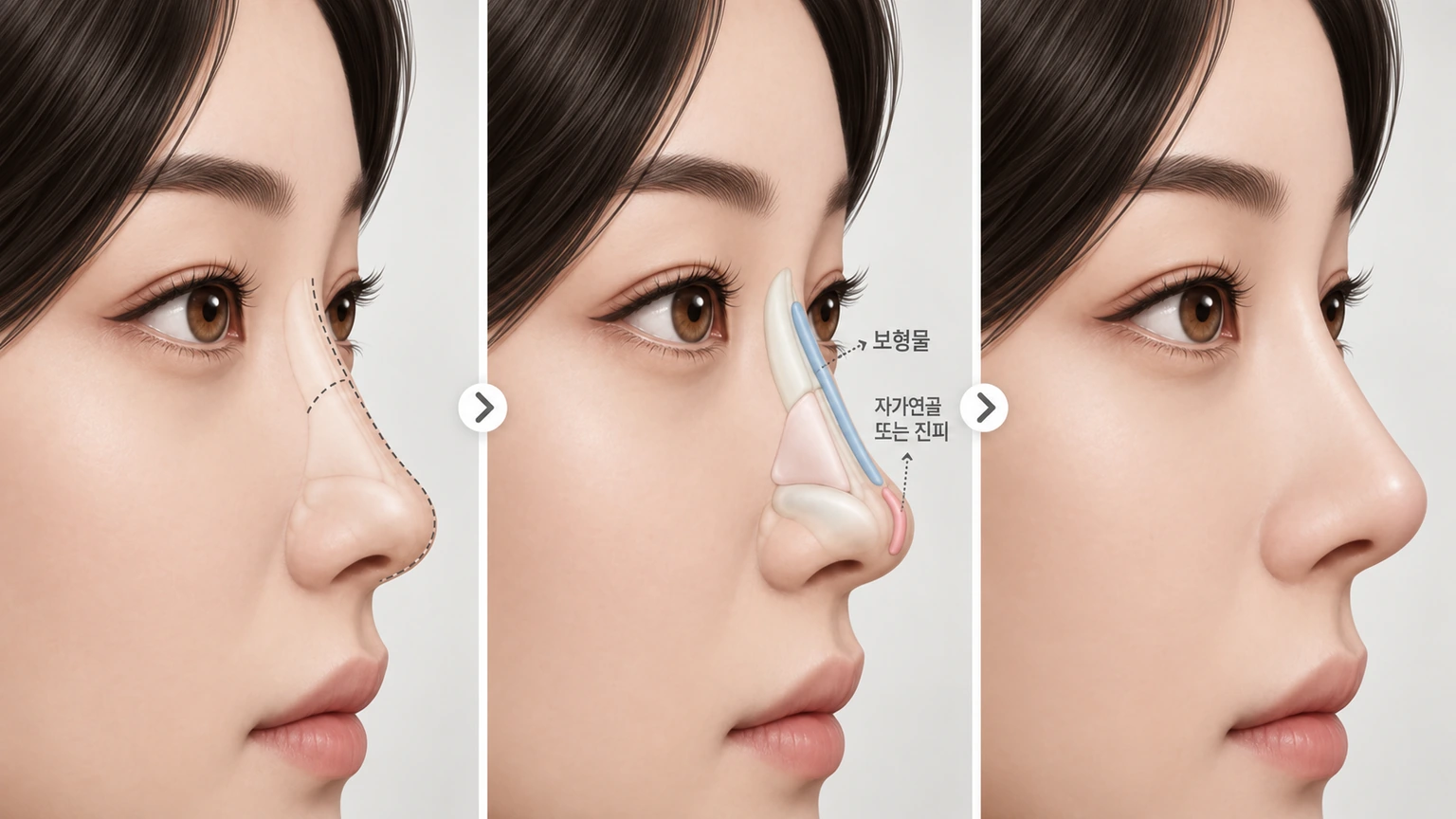
A comprehensive evaluation of septal cartilage, nasal bones, skin thickness, and functional concerns (deviated septum, rhinitis) is performed, followed by precise design of dorsal height and tip position in proportion to your facial structure.
Dorsal Implant Placement
A silicone (or Gore-Tex) implant is custom-carved to suit the patient's skeletal framework and placed along the dorsum — no implant is used at the tip as a matter of principle.
Autologous Cartilage Work at the Tip
Septal cartilage is used as the primary source; if insufficient, auricular cartilage is harvested to define the tip's length, angle, and contour (Septal Extension Graft, Tip Graft, etc.).
Columellar Incision & Closure
A W-shaped incision at the base of the columella is closed with precision — placed in a location that becomes virtually imperceptible over time.
The AVA Difference
Autologous Rib Cartilage Rhinoplasty (Especially Revision)
Reduces implant-related concerns by reconstructing nasal architecture
using the patient's own 6th–7th rib cartilage.
Park-Kim-Lee Revision Algorithm
A Stranc classification-based revision algorithm (Archives of Craniofacial Surgery, 2017)
that considers structural defects and respiratory function together.
Patient Satisfaction Defines Completion
Surgery is complete not when sutures are removed,
but when the patient smiles in front of the mirror.
Rhinoplasty corrects the bridge and tip according to the underlying structure, whether a short, bulbous, deviated or humped nose, to balance the center of the face.
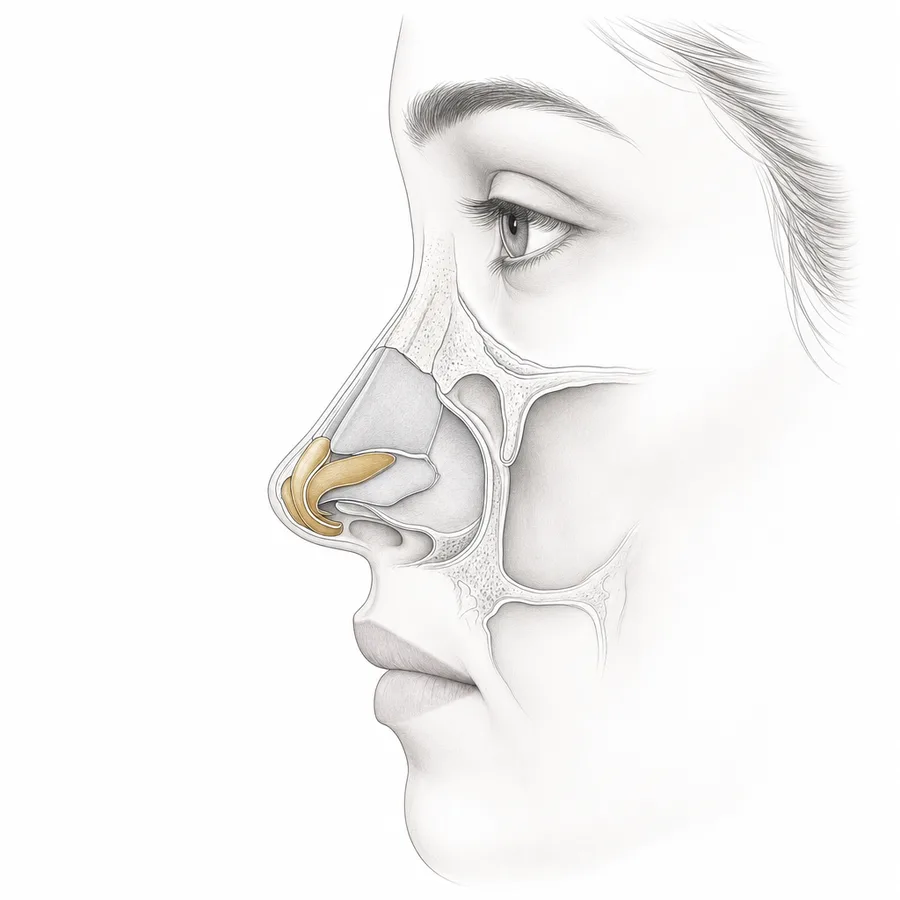
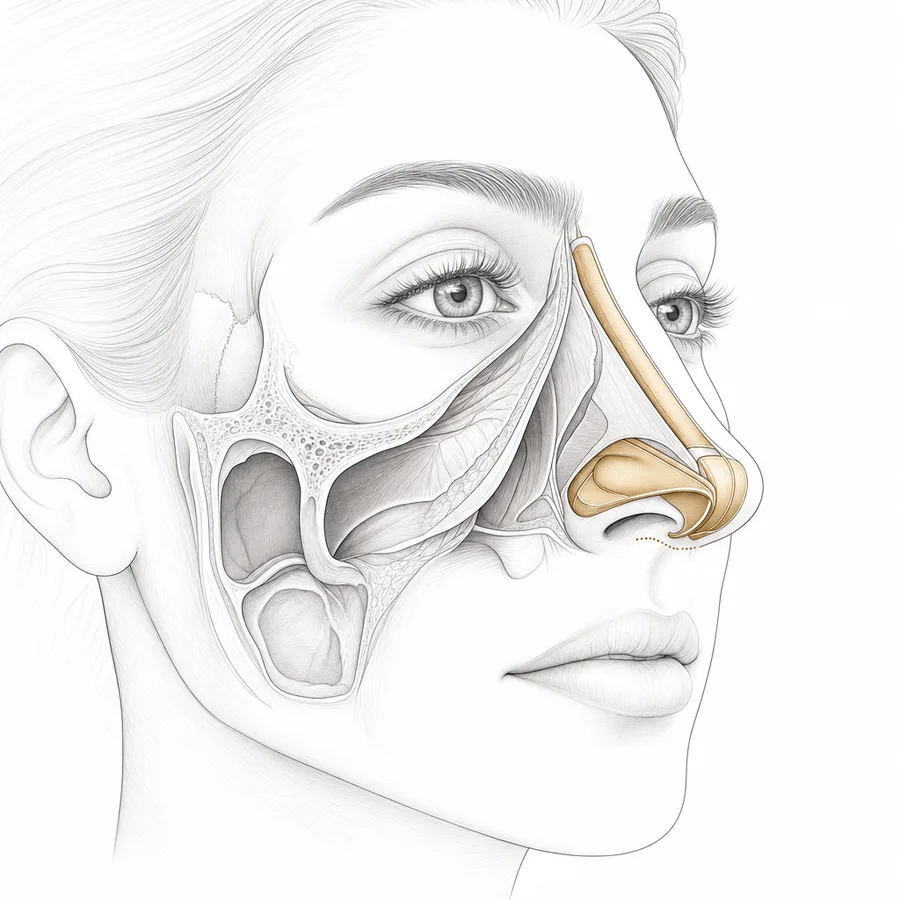 Structure beforeStructure after
Drag to compare
Who it’s not for
Not advised for teenagers whose nose is still growing, for anyone unable to stop smoking, or when the result you expect is not structurally possible.
What we suggest instead
If only the tip is the issue, tip surgery or cartilage repositioning; light refinement of the bridge can be done with filler.
What are the potential side effects or complications?
Pick a surgery date to see stitch removal, return to daily life and the earliest flight home as calendar dates. Confirmed at consultation.
- Arrive in Seoul · consultationD-1Fri, Sep 25
- SurgeryD+0Sat, Sep 26
- Stitch removalD+7Sat, Oct 3
- Back to daily lifeD+14Sat, Oct 10
- Earliest flight homeD+14Sat, Oct 10
- Major swelling settledD+30Mon, Oct 26
Individual recovery and combined procedures change the dates.
Cost depends on the extent of surgery, anesthesia and any combined procedures, and is quoted at consultation. The same criteria apply to every patient.
See current offersQ&A
Post-op Instructions
- Do not rub the surgical area strongly for about a week.
- Avoid alcohol and smoking for at least 2 weeks as they delay recovery.
- Swelling and bruising vary individually but will gradually improve.
- Light walking or stretching helps reduce swelling.
Curious About This Procedure?
Our head surgeon provides a one-on-one assessment and a tailored treatment plan just for you. Results and recovery may vary by individual.