SMASリフト・ディーププレーン・デュアルディーププレーン切開リフト — 「剥離層(プレーン)」の本当の意味
- Facelift technique names are defined by two anatomical variables: which tissue layer (dissection plane) is separated, and which structural layer carries the suspensory lifting tension.
- While SMAS plication or imbrication tightens fascia without wide sub-SMAS undermining, a deep-plane facelift enters the sub-SMAS glide space to release the zygomatic and masseteric cutaneous retaining ligaments so the anterior cheek and jawline can be repositioned.
- AVA Plastic Surgery's Dual-Deep Plane Facelift uses two dissection planes: within the subcutaneous layer and beneath the SMAS. The SMAS flap is lifted and fixed first, and the skin is redraped separately to minimize closure tension.
切開リフト(フェイスリフト)の術式名は「どの層(プレーン)を剥離するか」と「どの層に引き上げの張力を担わせるか」の2点で決まります。皮下層とSMAS下層の2つの平面を精密に剥離し、支持靭帯を解除した上でSMAS弁に重力を担わせ、皮膚は無張力で被せる「デュアルディーププレーン法」の解剖学的根拠を解説します。
こんにちは。ソウル・江南(新沙駅)AVA美容外科の代表院長、形成外科専門医のキム・スンス(Dr. Seungsoo Kim)です。

01. 顔面の5層解剖と支持靭帯(リガメント):なぜ皮膚だけを引いても戻るのか
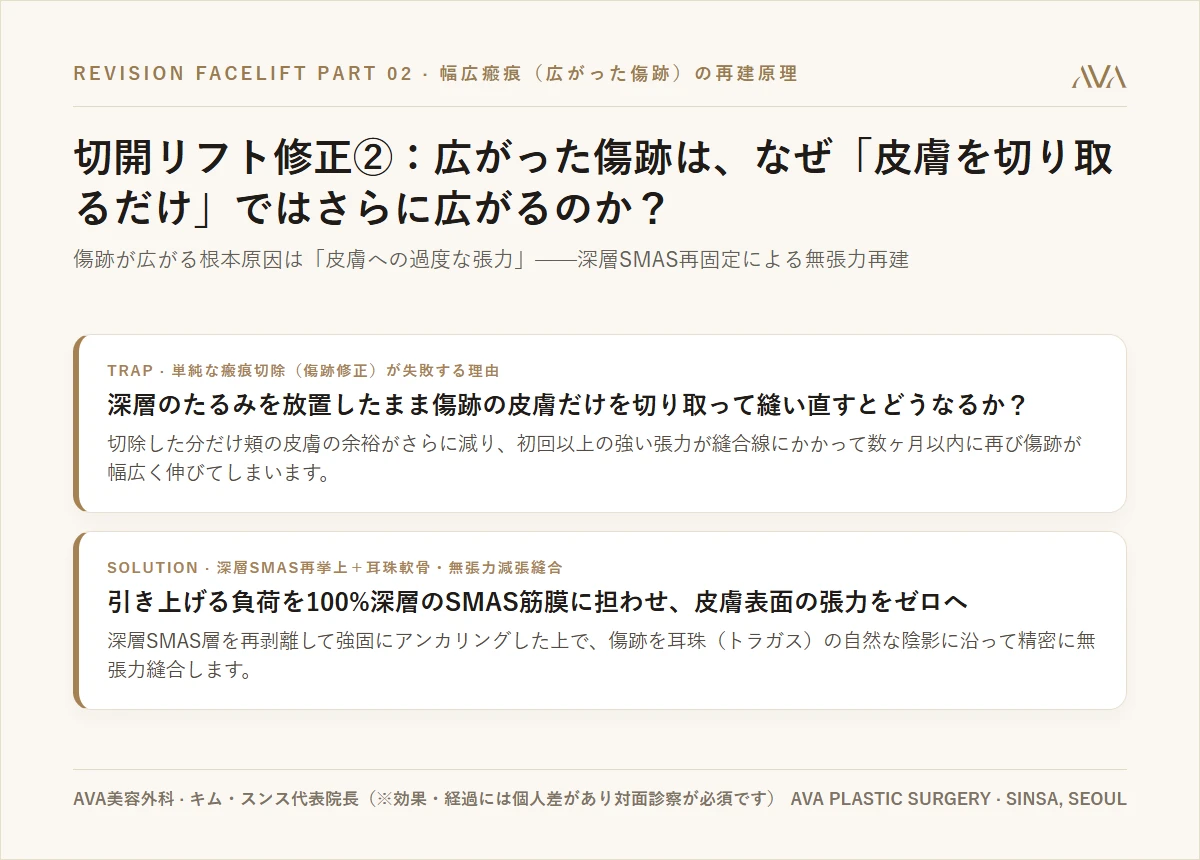
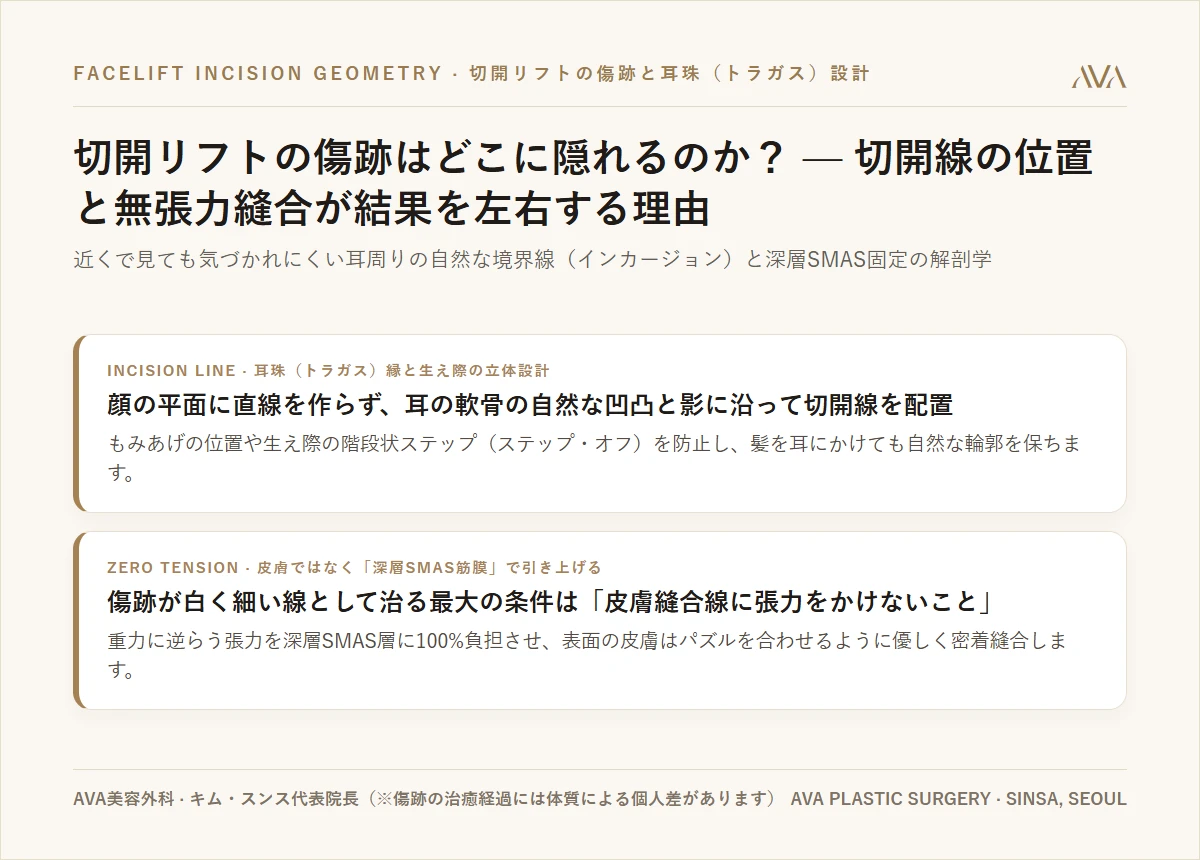
顔面軟部組織は外側から①皮膚、②皮下脂肪、③SMAS(表在性筋膜系・広頚筋)、④深部隙(グライディングプレーン)と支持靭帯、⑤骨膜・深部筋膜の5層で構成されています。加齢によるブルドッグ顔(ジョール)や深い法令線は、皮膚の伸びだけでなくSMAS層の緩みと頬骨靭帯・咬筋皮膚靭帯・下顎靭帯による引き込みが原因です。皮膚のみを剥離して強く引っ張ると、伸びやすい真皮に過度な張力がかかり、早期の後戻りや傷跡の拡がり・耳たぶの変形(ピクシーイヤー)を招きます。
02. 従来SMAS法 vs ディーププレーン法 vs デュアルディーププレーン法の違い
従来のSMASプリケーション(折り畳み)や浅いSMAS引き上げでは、前方の支持靭帯が温存されるため口元や中顔面への伝達力が制限されます。一方、古典的ディーププレーン法は皮膚とSMASを一塊(コンポジット)としてSMAS下層で剥離し靭帯を解除しますが、皮膚とSMASを同一ベクトルでしか引けません。AVA美容外科の「デュアルディーププレーン(Dual-Deep Plane)法」は、皮下層とSMAS下層の2層(デュアルプレーン)を独立して剥離することで、深部SMASは重力に逆らう垂直〜後上方ベクトルで強固に固定し、表面の皮膚は自然なドレープ方向へ張力ゼロで縫合します。
03. 顔面神経の保護と長期持続性・自然な表情の両立
SMAS下層(ディーププレーン)の剥離では、深部筋膜の下を走行する顔面神経枝(側頭枝・頬骨枝・頬筋枝・下顎縁枝)の走行深度を熟知し、安全な無血管層(グライディングスペース)を直視下に展開することが不可欠です。支持靭帯を確実にリリースしてSMASを本来の位置へ再固定することで、不自然な引きつれのない表情と長期的な輪郭維持を両立します。

04. キム・スンス代表院長 1:1 切開リフト・若返り相談のご案内
お一人おひとりの骨格・皮膚の厚み・SMAS層の状態に合わせた最適な術式設計については、以下の日本語専用窓口よりお気軽にご相談ください:
- 📅 1:1 Zoomオンライン相談・ソウル来院予約(日本語予約ハブ) →
- 💬 公式LINEで日本語相談(@864xbnzp · お写真による事前相談) →
- ✨ デュアルディーププレーン切開リフト(顔面挙上術)詳細を見る →
- 📖 「母の切開リフトと目元手術を自ら執刀した理由 — 術後2ヶ月5方向経過」を読む →
📍 AVA美容外科(AVA Plastic Surgery) · ソウル特別市 瑞草区 江南大路 603 インソンビル 4階(新沙駅4番出口 徒歩1分) · TEL +82 2-545-1882
※ 医療に関するご案内(自由診療・リスク告知):切開リフトおよび関連する若返り手術は公的医療保険が適用されない自由診療です。標準的な費用目安は料金案内ページ(/legal/pricing.html)をご参照ください。主なリスク・副作用として、出血・血腫・感染・腫れ・内出血・左右差・傷跡の赤みや肥厚・一時的な感覚鈍麻・稀に顔面神経麻痺等が生じる可能性があり、回復経過には個人差があります。必ず形成外科専門医との1:1対面診察の上でご決定ください。
よくあるご質問(臨床FAQ)
Q. What is the anatomical difference between a skin-only facelift, an SMAS facelift, and a deep-plane facelift?
A skin-only facelift undermines only subcutaneous fat and pulls the skin envelope, which can stretch over time and place excessive tension on the ear incision (increasing the risk of widened scars or pixie-ear deformity). SMAS facelifts tighten the Superficial Muscular Aponeurotic System via folding (plication), partial strip excision (SMASectomy/imbrication), or elevating an SMAS flap. A deep-plane facelift enters the sub-SMAS space and releases the retaining ligaments (such as the zygomatic and masseteric cutaneous ligaments) that tether sagging midface and jawline soft tissue.
Q. How does AVA's Dual-Deep Plane Facelift differ from a traditional composite deep-plane facelift?
A traditional deep-plane facelift typically elevates the skin and SMAS together as a composite unit after releasing the retaining ligaments. AVA Plastic Surgery's Dual-Deep Plane approach uses two dissection planes, within the subcutaneous layer and beneath the SMAS. The intervening SMAS flap, including some subcutaneous fat, is advanced and fixed first; the skin is then redraped separately with minimal closure tension. Two dissection planes should not be confused with the tissue layers separated by them.
Q. Does clinical literature prove that one facelift plane always lasts longer, and what surgical risks must be considered?
Published systematic reviews note that head-to-head comparative studies have heterogeneous follow-up periods, meaning no single named technique is universally superior for every patient. Instead, surgical selection should match the specific anatomical layer and retaining ligaments where your laxity originates. Because facial nerve branches course near the deep sub-SMAS plane and retaining ligaments, surgery requires thorough anatomical precision; potential risks include bleeding, hematoma, infection, swelling, contour irregularity, asymmetry, scarring, sensory changes, or temporary/rare facial nerve weakness, and recovery varies by individual.
同じお悩みに関するキム・スンス代表院長の関連コラム 3選