AVA Journal
Facelift Scars: Where the Incision Goes Makes the Difference | AVA Plastic Surgery, Sinsa Station
When people consider a facelift, they usually ask how much lift they will get and how much younger they will look. When Dr. Kim Seung Soo design a facelift, he gives just as much thought to something else: where the incisions go.
The incision does more than decide where a scar will sit. Once the skin has been lifted, the incision also determines where your temple hairline and sideburns end up, and whether your ear keeps its natural shape.
01 Facelift Incisions Diverge in Two Places
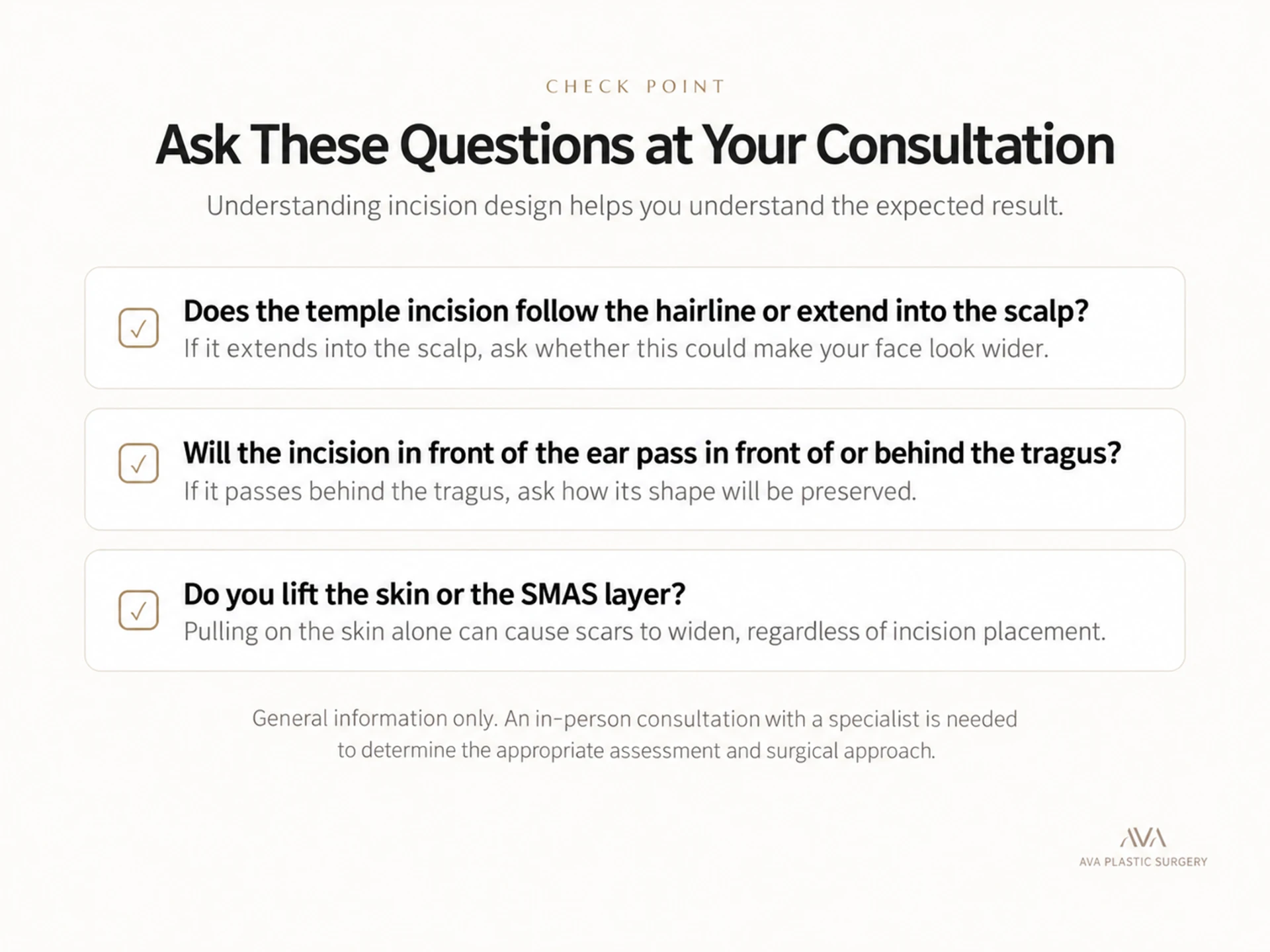
At the temple, the incision can go inside the scalp or follow the hairline.
In front of the ear, it can run in front of the tragus, the small cartilage flap at the opening of the ear canal, or tuck in behind it.
From there, it usually curves around the earlobe and continues behind the ear. How far it goes depends on how much correction is needed.
Dr. Kim prefers to follow the hairline at the temple and hide the incision behind the tragus.
02 The Temple: Why I Follow the Hairline
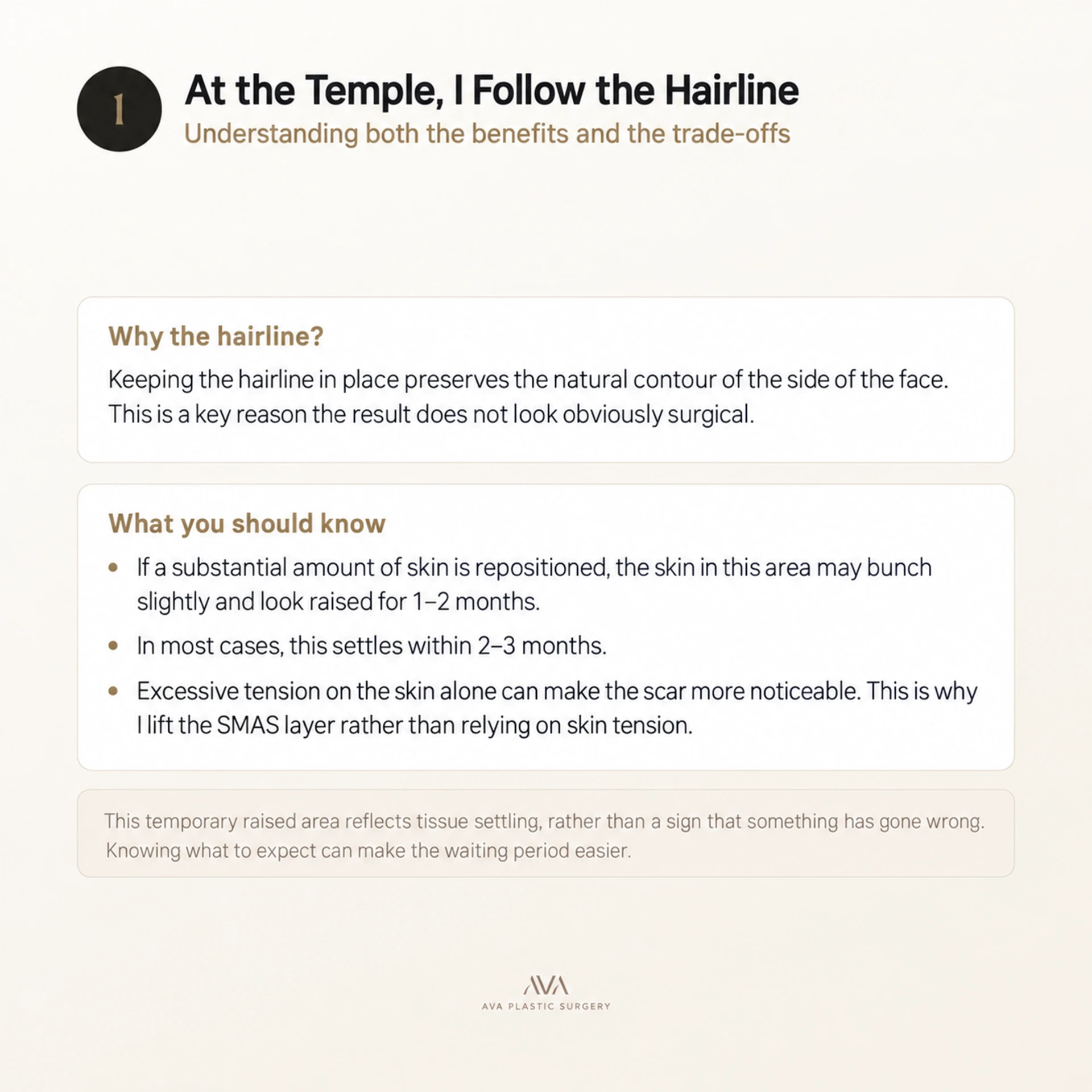
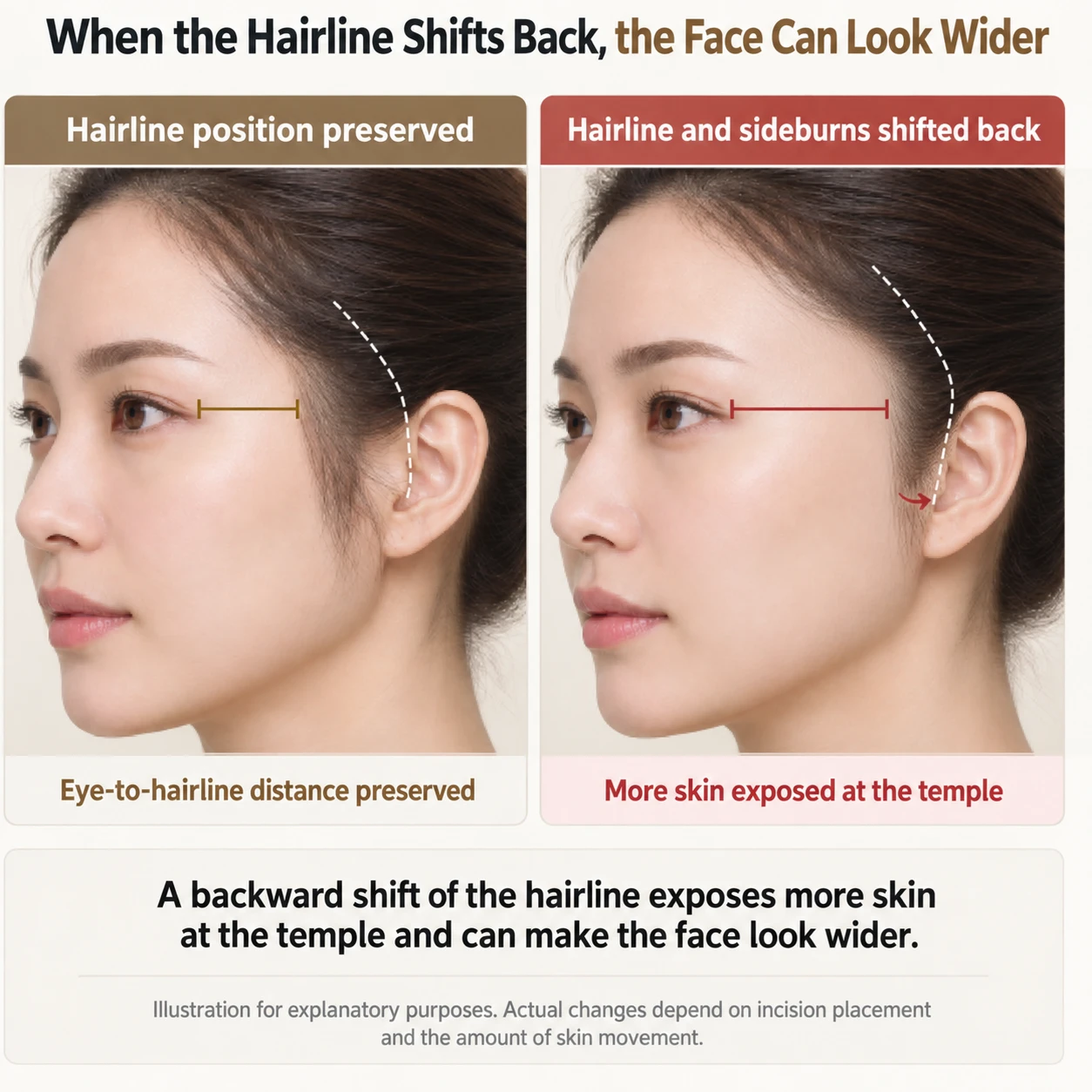
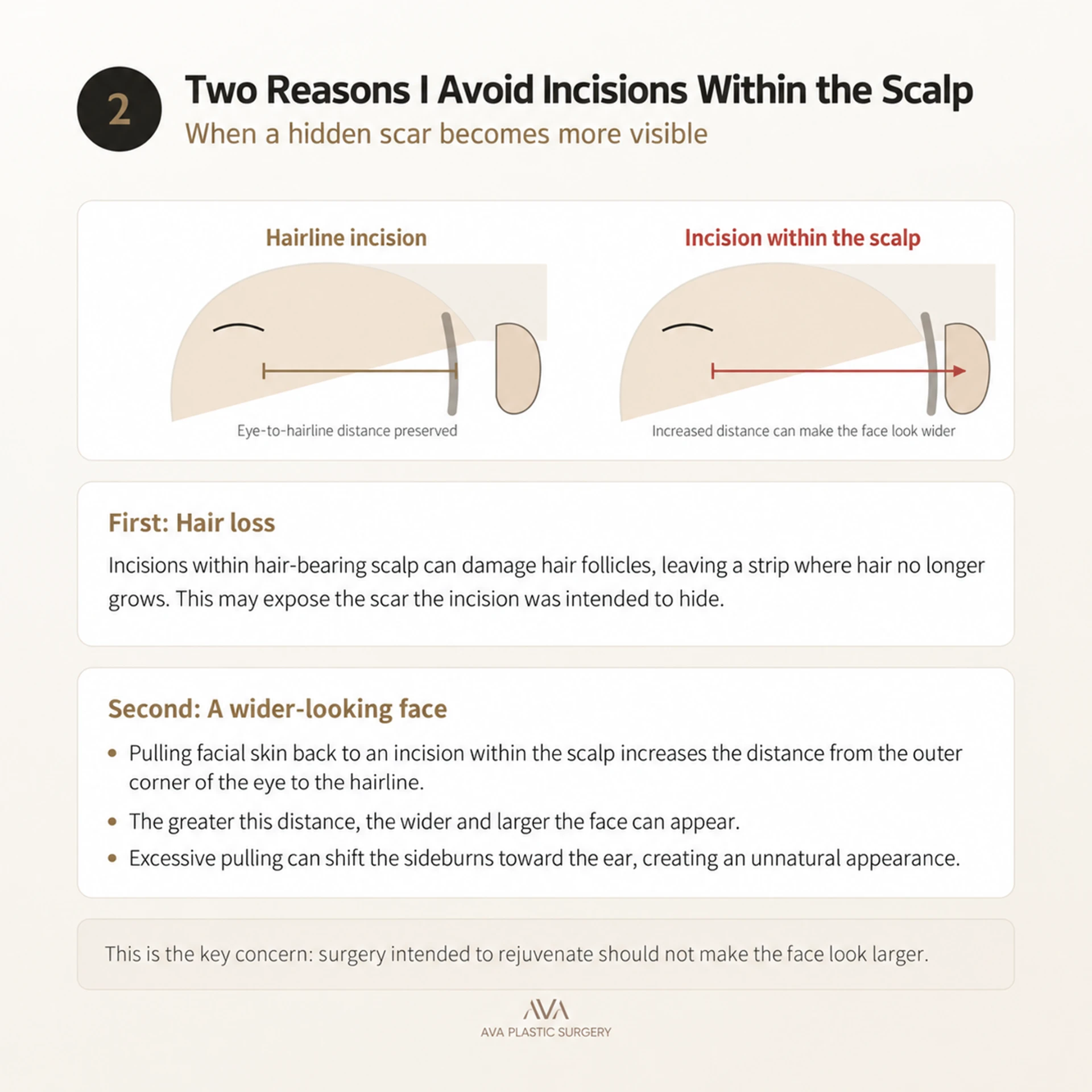
The main goal is to keep the hairline and sideburns where they naturally are.
A scalp incision hides the scar under hair, but lifting the skin can pull the hairline and sideburns back or up with it.
This widens the bare skin between the eye and the hairline, so the sides of the face can look broader. Sideburns may also shift toward the ear or become shorter.
A scalp scar isn't always hidden, either. If hair thins around it or the scar widens, it can become more noticeable.
A scalp incision is still a valid option for some people. Because Dr. Kim wants to avoid pushing the hairline back, though, following the hairline is the preferred choice.
03 What to Consider with a Hairline Incision
This approach has its own trade-offs.
In Dr. Kim's experience, when a lot of skin is moved, the temple can feel slightly puffy for the first one to two months. This usually settles within two to three months.
Healing speed varies, so if the puffiness lingers or other changes appear, a checkup is needed.
Tension also matters. If the skin alone is pulled tight, the scar can widen or thicken. That is why Dr. Kim lifts the SMAS, the firm layer beneath the skin, and lets the skin follow without strain. Even so, some risk of scarring or hair damage remains.
04 In Front of the Ear: Why I Prefer Going Behind the Tragus
An incision in front of the tragus follows the natural crease there. It often heals well but may still be visible up close.
Placing it behind the tragus uses the ear's own curves to hide the scar, which is why Dr. Kim prefers it. This means behind that small flap, not behind the whole ear.
The scar doesn't vanish, though. Its visibility depends on ear shape, skin type, stitching and healing.
The key challenge is tension. Too much pull can create tight skin or odd diagonal creases, flatten the natural hollow in front of the ear, or lift the tragus enough to make earbuds uncomfortable.
So the skin must be positioned to preserve these contours without straining the stitches. That takes experience.
A front-of-tragus incision can also be the better choice, depending on ear creases, tragus shape or beard growth. Dr. Kim checks these first, then favors the behind-the-tragus approach when it suits.
05 Real Recovery Photos
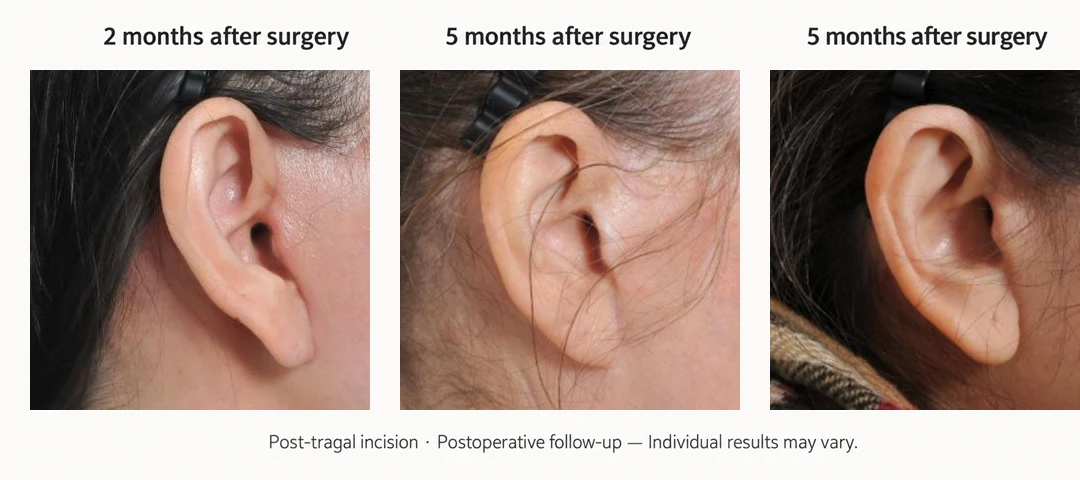
These are Dr. Kim's own patients who had a behind-the-tragus incision, all of whom consented to sharing their photos.
The left photo is at three months. Some redness is normal at this stage, but the line follows the ear's curve and is hard to spot.
The middle and right photos are at more than one year. The redness has faded and the scar blends into the ear. The tragus keeps its shape and the hollow in front of the ear looks natural. This is why Dr. Kim stresses tension control.
Results vary. Some people stay red longer due to skin thickness or constitution. These photos show where the scar sits, not a guaranteed outcome.
06 Summary
· Incision placement is what shapes a facelift scar first.
· At the temple, Dr. Kim follows the hairline to keep the hairline and sideburns in place.
· A scalp incision can make the sides of the face look wider, and hair thinning can expose the scar.
· In front of the ear, Dr. Kim hides the incision behind the tragus, which requires careful tension control.
· Good design considers both how much to lift and how everything looks afterward.
07 Frequently Asked Questions
Q. How long until facelift scars fade?
Redness fades in two to three months, and scars mature over six months to a year. Incisions along the hairline and ear stay fairly discreet throughout.
Q. Can I wear my hair up with a hairline incision?
Generally yes, since the line sits right along the hairline. In the first few months, short bangs can help.
Q. Will the scar make earbuds uncomfortable?
The goal is to keep the tragus in its original shape, so earbuds shouldn't be a problem. Dr. Kim recommends waiting two to three weeks before using wireless earbuds.
Q. I had a scalp incision and my face looks wider. Can it be fixed?
Your hairline may have moved back. Revision surgery can bring it forward, but your current condition and remaining skin need to be evaluated first.
Q. Will I see the incision plan during my consultation?
Yes. Dr. Kim draws the lines on your face and explains where they go and why.
Q. Does a mini facelift use the same incisions?
A mini facelift shortens or skips the temple incision and focuses on the area in front of the ear. Dr. Kim still hides the incision behind the tragus.

🕙 Weekdays 10:00 AM–7:00 PM · Sat 10:00 AM–5:00 PM · Closed Sundays and public holidays
📞 Reservations & consultations: 02-545-1882
🔗 Website

Dr. Seungsoo KimBoard-certified plastic surgeon · AVA Plastic Surgery, Seoul · 6 international journal publications