Facelift with Liposuction and Fat Grafting: Planning and Timing
Facelift with Liposuction and Fat Grafting: Why Liposuction Is Done Simultaneously and Fat Grafting Is Staged 1–2 Months Later

"If I have a facelift, will my hollow temples and sunken cheeks fill out too?" This is one of the most frequent questions I hear during consultations. When you gently lift your cheeks in front of a mirror, your face looks noticeably fresher, making it easy to assume that pulling the tissue up alone will solve every sign of facial aging.
In short, facial aging involves not only sagging and hollowing, but also unwanted fat accumulation in specific areas; therefore, after lifting sagging tissue with a facelift, refining the facial contour—much like sanding the surface of a sculpture after carving—requires performing liposuction simultaneously on heavy areas (the upper part above the nasolabial fold, jawline, and double chin) to enable greater skin redraping, while staging fat grafting 1 to 2 months later on hollow areas (the temples, forehead, nasolabial folds, and chin) to prevent fat migration caused by temple and lateral cheek dissection [1][3][4]. Here is how we design this three-part contour refinement from a plastic surgeon's perspective.
Three Changes of Facial Aging: Sagging, Hollowing, and Unwanted Fat Accumulation
With age, facial fat compartments do not change uniformly: supporting ligaments loosen to cause sagging, certain areas lose volume and hollow out, and other areas accumulate unwanted excess fat, with individual variation [1][2]. First, sagging occurs when the retaining ligaments and SMAS layer that support facial soft tissue weaken, allowing the cheek and jawline tissues to slide downward and form heavy jowls below the mandibular border [1][2].
Second is hollowing (volume loss), and third is unwanted fat accumulation in areas where bulk is unflattering [1][2]. While areas such as the temples, forehead, deep nasolabial groove, and chin lose volume and look sunken with age, areas such as the upper part above the nasolabial fold (nasolabial/paranasal fat pad), the jawline (jowls), and the double chin often accumulate excess fat that makes the lower contour look heavy and blunted [1][2]. The American Society of Plastic Surgeons (ASPS) likewise identifies loss of skin elasticity, loss of facial fat, and localized fat shifting/accumulation as key contributors to an aging facial contour [2].
To summarize, anti-aging surgery requires lifting what has sagged (facelift), and then smoothing the contour—like sanding a sculpture after carving—by removing unwanted fat where it has accumulated (liposuction) and replenishing volume where it has hollowed (fat grafting) [1][3].
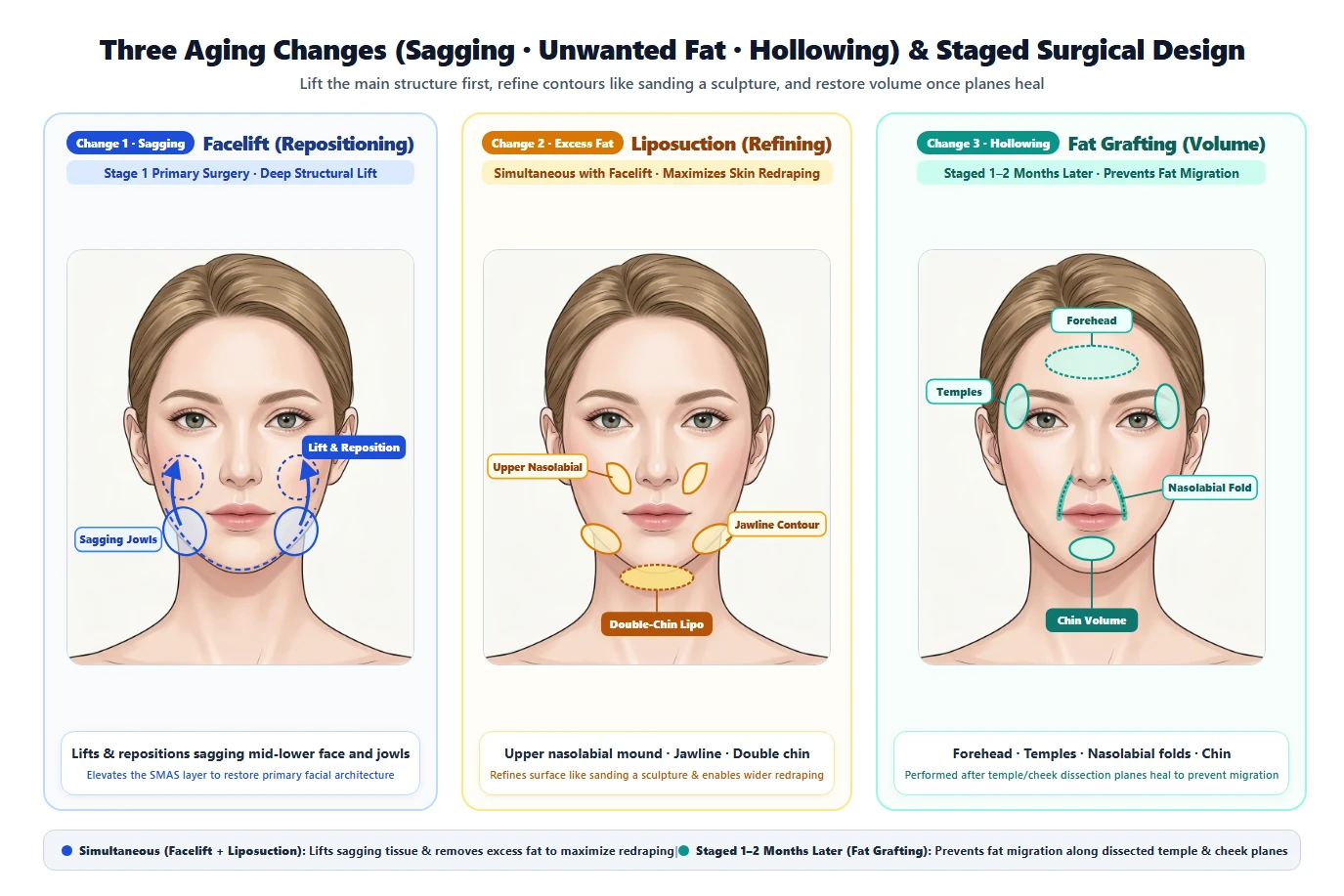
▲ Because aging brings sagging, hollowing, and unwanted fat accumulation together, a facelift lifts the descended tissue while contour refinement ("sanding the sculpture") combines simultaneous liposuction (upper part above the nasolabial fold, jawline, double chin) with staged fat grafting 1–2 months later (temples, forehead, nasolabial folds, chin).
Why Is "Sanding the Sculpture" After a Facelift So Important for Natural Contours?
In anti-aging surgery, lifting sagging tissue back into place with an SMAS facelift is the foundational structural carving, but achieving a smooth, refined facial silhouette requires a finishing phase—like sanding the surface of a sculpture after carving—that subtracts excess bulk via liposuction and restores lost volume via fat grafting [1][3].
During this contour-smoothing process, areas with unwanted fullness—such as the upper part above the nasolabial fold, the jawline, and the double chin—are sculpted with liposuction as needed, while volume-depleted zones—such as the temples, forehead, nasolabial folds, and chin—are replenished with autologous fat grafting [1][3]. If a facelift lifts sagging tissue without debulking heavy nasolabial or submental fat, residual heaviness can persist; conversely, if deep hollowing in the temples, forehead, nasolabial folds, or chin is left untreated, the jawline may look tight while the overall face still appears somewhat gaunt [3][4].
What Happens If You Only Do Fat Grafting Without a Facelift When Sagging Is Present?
Attempting to mask significant facial sagging with fat grafting alone adds weight and bulk to tissues that have already descended, keeping the center of gravity low in the face and creating a heavy, overfilled appearance [3][4].
At AVA Plastic Surgery, if volume loss is the primary issue without significant laxity, fat grafting is considered first; however, when sagging and unwanted lower-face fat accumulation coexist, lifting and contour debulking must come first. Identifying which aging mechanism predominates in your face is always the starting point.
Why Is Liposuction Performed Simultaneously with a Facelift, While Fat Grafting Is Staged 1–2 Months Later?
1. Liposuction of the upper part above the nasolabial fold, jawline, and double chin is performed simultaneously during the facelift to allow greater skin redraping, whereas fat grafting to the temples, forehead, nasolabial folds, and chin is performed at a 1-to-2-month interval after the facelift because dissecting the temple and lateral cheek planes during the facelift can cause grafted fat to migrate if injected at the same time [3][4].
2. 1) Simultaneous Liposuction (Upper Part Above Nasolabial Fold, Jawline, Double Chin): Targeted liposuction of the upper nasolabial mound, jawline, and submental double chin is performed during the facelift operation itself [3]. Removing unwanted fat bulk at the same time lightens the tissue being elevated and allows the dissected skin flap to redrape more extensively and smoothly over the newly sculpted contour [3].
3. 2) Staged Fat Grafting 1–2 Months Later (Temples, Forehead, Nasolabial Folds, Chin): By contrast, fat grafting to replenish hollow areas such as the temples, forehead, nasolabial folds, and chin is staged 1 to 2 months after the facelift. Because a facelift involves extensive surgical dissection across the temple region and lateral cheek, injecting fat simultaneously into or near freshly dissected, unhealed tissue planes carries a risk of fat migration along the dissection space [4].
A systematic review of 15 clinical studies confirmed that combining fat grafting with facelift surgery significantly improves facial volume and aesthetic ratings, while emphasizing that surgeons must carefully account for the anatomical relationship between facelift dissection planes and fat grafting recipient sites [4].
For this reason, AVA Plastic Surgery performs simultaneous liposuction on heavy zones (above the nasolabial fold, jawline, double chin) during the facelift to maximize skin redraping, and then waits 1 to 2 months until the temple and lateral cheek dissection planes have fully healed and stabilized before performing precision fat grafting to the temples, forehead, nasolabial folds, and chin.
Does All Transferred Fat Survive? Understanding Individual Retention Rates
The most important clinical fact to understand about autologous fat grafting is that not 100% of the transferred fat survives permanently, and long-term volume retention varies significantly between individuals [5].
According to a systematic review of facial fat grafting studies, long-term volume retention ranges widely from 25% to 80%, and some patients require an additional touch-up session to achieve their ideal volume [5]. The same systematic review examined studies adding supplements such as platelet-rich plasma (PRP), stromal vascular fraction (SVF), and nanofat, concluding that current clinical evidence remains too limited to prove that these additives reliably increase fat survival [5].
Fat graft survival depends on gentle harvesting and purification, micro-droplet injection across stable anatomical layers, recipient-site blood supply and tissue stability, smoking status, and postoperative weight stability [4][5]. Performing fat grafting 1 to 2 months after a facelift—once swelling has subsided and the dissected temple and cheek planes have healed—prevents fat migration and allows the surgeon to fine-tune volume precisely to your settled post-lift contour.
Potential Risks and Considerations of Facial Fat Grafting
1. Partial Resorption & Fat Migration: A portion of the grafted fat is naturally absorbed, and injecting fat immediately into freshly dissected temple or lateral cheek planes can lead to fat migration—which is why we stage fat grafting 1 to 2 months after the facelift [4][5].
2. Contour Irregularities or Nodules: Placing excessive fat in a single spot can cause palpable lumps or visible unevenness [4].
3. Asymmetry: Differences in left-versus-right fat survival or underlying skeletal asymmetry may require fine adjustment [4][5].
4. Donor-Site Bruising and Swelling: Temporary bruising and swelling occur at the harvest site (such as the thigh or abdomen).
5. Vascular Complications: Though rare, intravascular injection is a serious risk that requires blunt cannulas, low-pressure micro-droplet technique, and thorough anatomical expertise [4].
Final Thoughts: Lift What Sags, Debulk Simultaneously, and Restore Volume After 1–2 Months
Facial aging brings a personalized combination of sagging, hollowing, and unwanted fat accumulation [1][2]. Lifting descended tissues with a facelift, smoothing heavy contours simultaneously via liposuction (upper part above the nasolabial fold, jawline, double chin) to enable greater skin redraping, and then staging fat grafting 1 to 2 months later (temples, forehead, nasolabial folds, chin) to prevent migration caused by temple and cheek dissection is the key to a refined, natural anti-aging result [1][3][4].
Key Takeaways: Facelift + Simultaneous Liposuction vs. Staged Fat Grafting (1–2 Months Later)
Here is a summary of how a facelift, simultaneous liposuction, and staged fat grafting work together to sculpt the facial contour.
Feature | Facelift + Simultaneous Liposuction | Staged Fat Grafting (1–2 Months After Facelift) |
|---|---|---|
Aging Problem Addressed | Sagging & Unwanted Fat Accumulation: Lifts descended tissue and debulks heavy fat contours like sanding a sculpture [1][3]. | Hollowing (Volume Loss): Restores age-related volume depletion to complete smooth, three-dimensional facial contours [1][4]. |
Main Target Areas | Mid/lower-face & jowl sagging (Facelift) + unwanted fat in the upper part above the nasolabial fold, jawline, and double chin (Liposuction) [1][3] | Hollowed areas including the temples, forehead, nasolabial folds, and chin [1][4] |
Limitation When Done Alone | Cannot create lost volume; deep hollows in the temples, forehead, or nasolabial folds may leave the face looking gaunt [3][4]. | Adding volume without lifting sagging tissue and debulking lower-face fat leaves the center of gravity low and heavy [4]. |
Timing & Surgical Principle | Performed simultaneously during the facelift to reduce tissue weight and enable greater skin redraping [3]. | Performed at a 1–2 month interval after the facelift to prevent fat migration caused by temple and lateral cheek dissection [4]. |
Clinical Considerations | Requires accurate preoperative mapping of ligament laxity and localized fat compartments [1][3]. | Long-term volume retention ranges from 25% to 80%; staged micro-droplet injection into healed planes prevents migration and lumps [4][5]. |
At AVA Plastic Surgery, Dr. Seungsoo Kim personally oversees every case from consultation through surgery and recovery.
※ This article provides general medical information for educational purposes. Results, recovery and scarring vary between individuals, and every surgery carries risks such as bleeding, infection, swelling and asymmetry. Diagnosis and treatment decisions are made only through an in-person consultation.
References
2. American Society of Plastic Surgeons. Facelift.
3. Warren RJ, Aston SJ, Mendelson BC. Face lift. Plast Reconstr Surg. 2011;128(6):747e-764e.
Related procedures
• Facelift
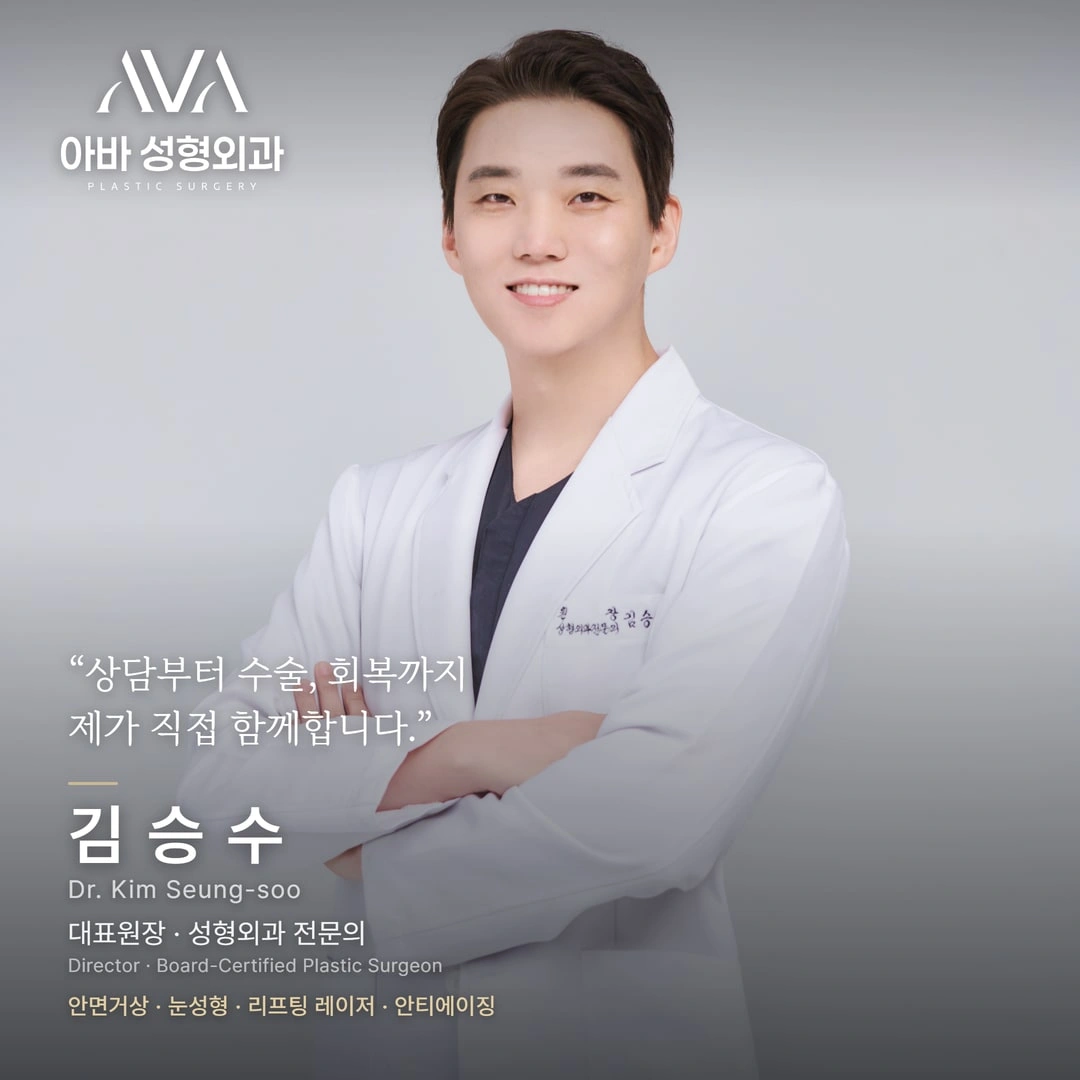
Dr. Seungsoo Kim · Board-Certified Plastic Surgeon, AVA Plastic Surgery (Seoul)
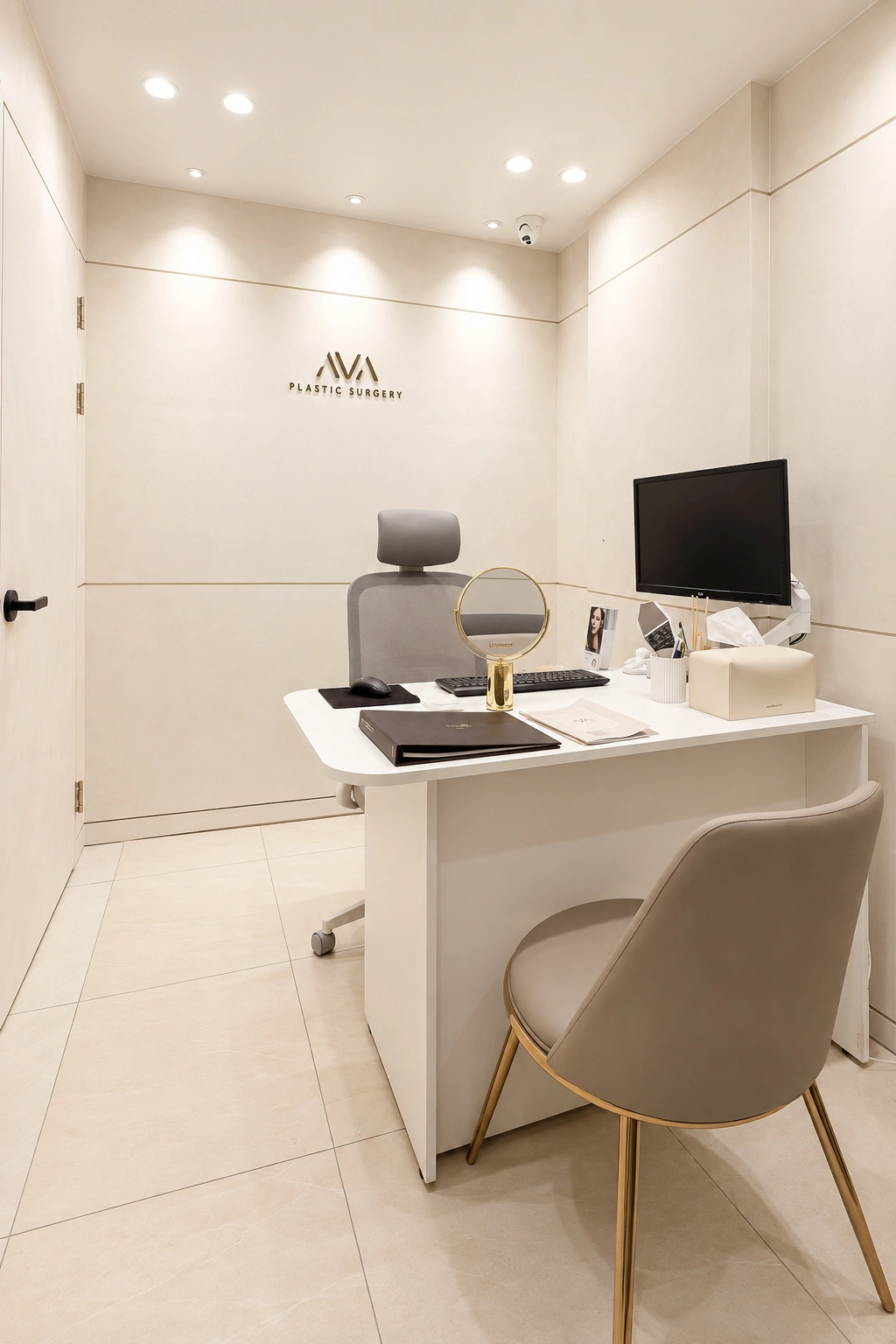
Facelift consultation in Seoul, Korea
Visit AVA Plastic Surgery near Exit 4 of Sinsa Station, on Gangnam-daero in Seoul. Our clinic is on the 4th floor of Inseong Building, 603 Gangnam-daero, Seocho-gu. A facelift consultation covers your concerns, previous treatments and recovery plans, including arrangements for your stay in Korea.
Facelift surgery in KoreaMeet Dr. KimDirections to Sinsa Station clinicRequest a facelift consultation
Recommended Related Columns by Dr. Seungsoo Kim

SMAS, Deep Plane and Dual-Deep Plane: What Surgical Planes Mean
Read article →
Facelift Scars: Where the Incision Goes Makes the Difference | AVA Plastic Surgery, Sinsa Station
Read article →
Why I Performed a Deep-Plane Facelift & Eyelid Surgery on My Own Mother — 2-Month Recovery Log
Read article →