Facial Sagging After Weight Loss and When to Consider a Facelift

“I have lost weight, but my face looks older.” Some patients seek advice after substantial weight loss because their cheeks look hollow and their jawline has become loose. Although they feel lighter, the remaining facial sagging can make it harder to enjoy the changes they have achieved.
A facelift can improve facial sagging that remains after weight loss. It is best to decide on surgery after completing weight loss and confirming that your weight is stable. Around six months of weight stability can serve as a planning benchmark. We then distinguish the sagging that remains from areas of volume loss and plan treatment accordingly.
If you are still losing weight, first clarify your weight-loss plan. Once your weight is stable, any remaining cheek and jawline sagging can be assessed for correction.
01 Hollow cheeks and facial sagging after weight loss
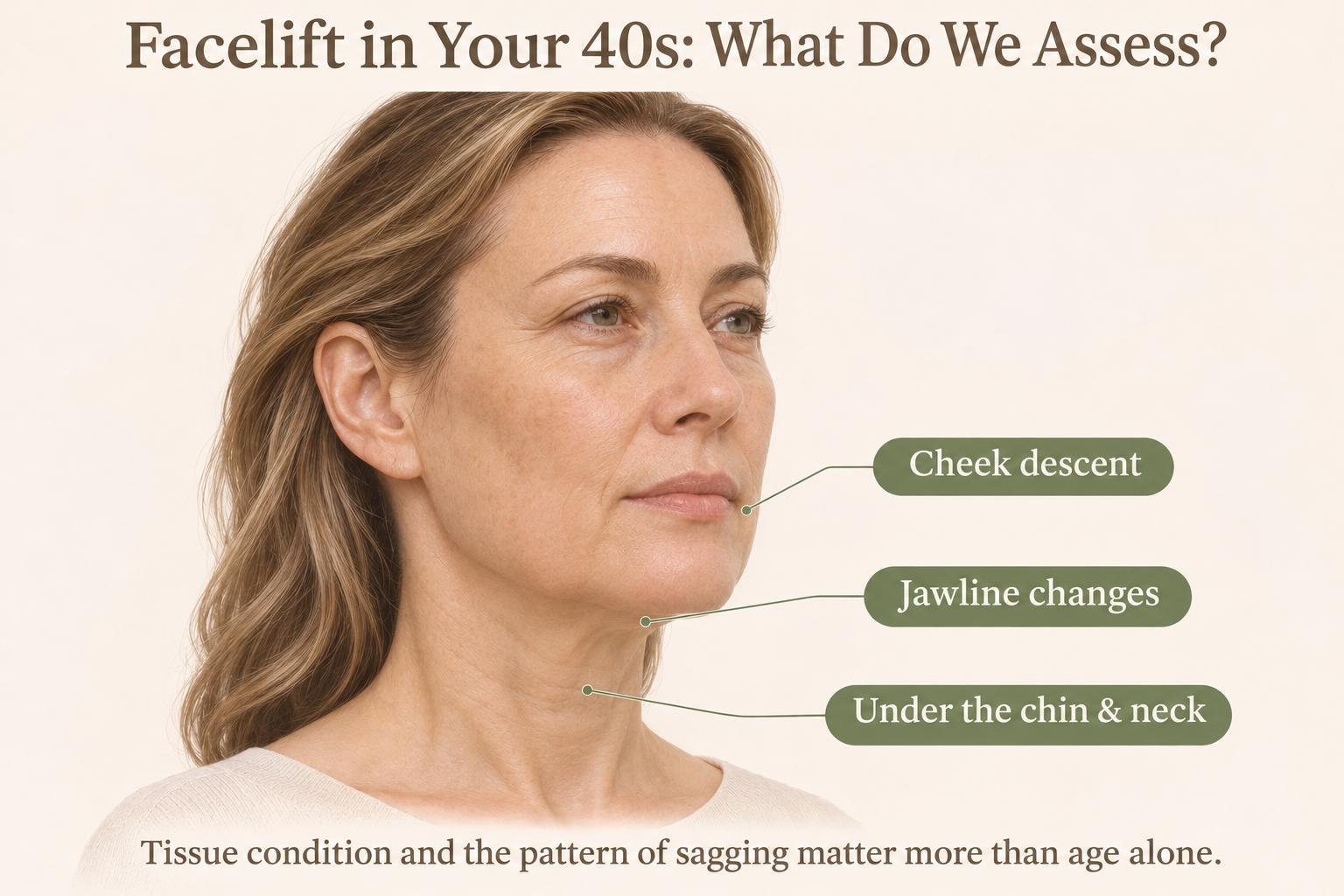
As body weight decreases, facial fat can also decrease. Loss of volume in the cheeks and temples can create a gaunt appearance. If the skin that previously covered that volume does not contract sufficiently, loose tissue around the lower cheeks and jawline becomes more noticeable. Existing age-related sagging may also become more apparent after weight loss.[1, 5]
These changes are often described as “Ozempic face.” This is not a separate diagnosis limited to people using one particular medication. Facial hollowing and sagging need to be assessed together after substantial weight loss, whether achieved through medication, dietary changes, exercise, or bariatric surgery.[1]
During examination, I distinguish two problems. Hollow temples and upper cheeks reflect volume loss, while descended tissue that obscures the jawline reflects sagging. When both are present, both need to be considered in the treatment plan.
02 Facelift timing and around six months of stable weight
If you are still losing weight, your face may continue to change. Even after surgery planned around your current appearance, further volume loss or loose skin can change what needs correction. The first step is to establish the weight you intend to maintain.
The six-month period does not start on the day you begin your diet. It refers to a period after weight loss during which your intended maintenance weight remains broadly stable. For example, six months may have passed since you started losing weight, but if your weight has continued to fall until recently, that is different from having a stable weight.
Published literature and professional society information emphasize weight stability before surgery and describe periods of approximately three to six months or at least six months.[1, 2] In this article, around six months is suggested as a practical planning benchmark. Actual timing depends not only on the calendar but also on further weight-loss plans, recent weight changes, nutrition, and general health.
If you have already completed weight loss and maintained a stable weight for a sufficient period, you do not need to start another six-month wait on the day of your consultation. Recent weight records and an examination of your face can help guide surgical planning.
03 Why wait for weight stability?
After weight loss, the skin may adapt to some extent and the facial changes may appear less pronounced over time. However, substantial excess skin and descended tissues do not necessarily become adequately defined simply by waiting.
A period of stable weight helps us assess the facial contour more accurately and decide which tissues to lift, how much excess skin to remove, and where volume needs to be restored. If sagging cheeks still obscure the jawline or neck laxity remains clear after weight stabilizes, we can assess more specifically what surgery could improve.
Clinical reports of facelifts after massive weight loss also describe planning around both excess skin and volume deficiency.[3] Rather than focusing only on whether to wait longer, it is important to identify the changes that remain and how to address them.
A small study assessing photographs of seven patients who underwent a facelift after massive weight loss found improvements in facial and neck appearance and apparent age after surgery. It provides clinical evidence that the changes remaining after weight loss can be addressed surgically.[6]
04 Lift sagging tissues and restore volume where needed
A facelift for descended cheek and jawline tissues
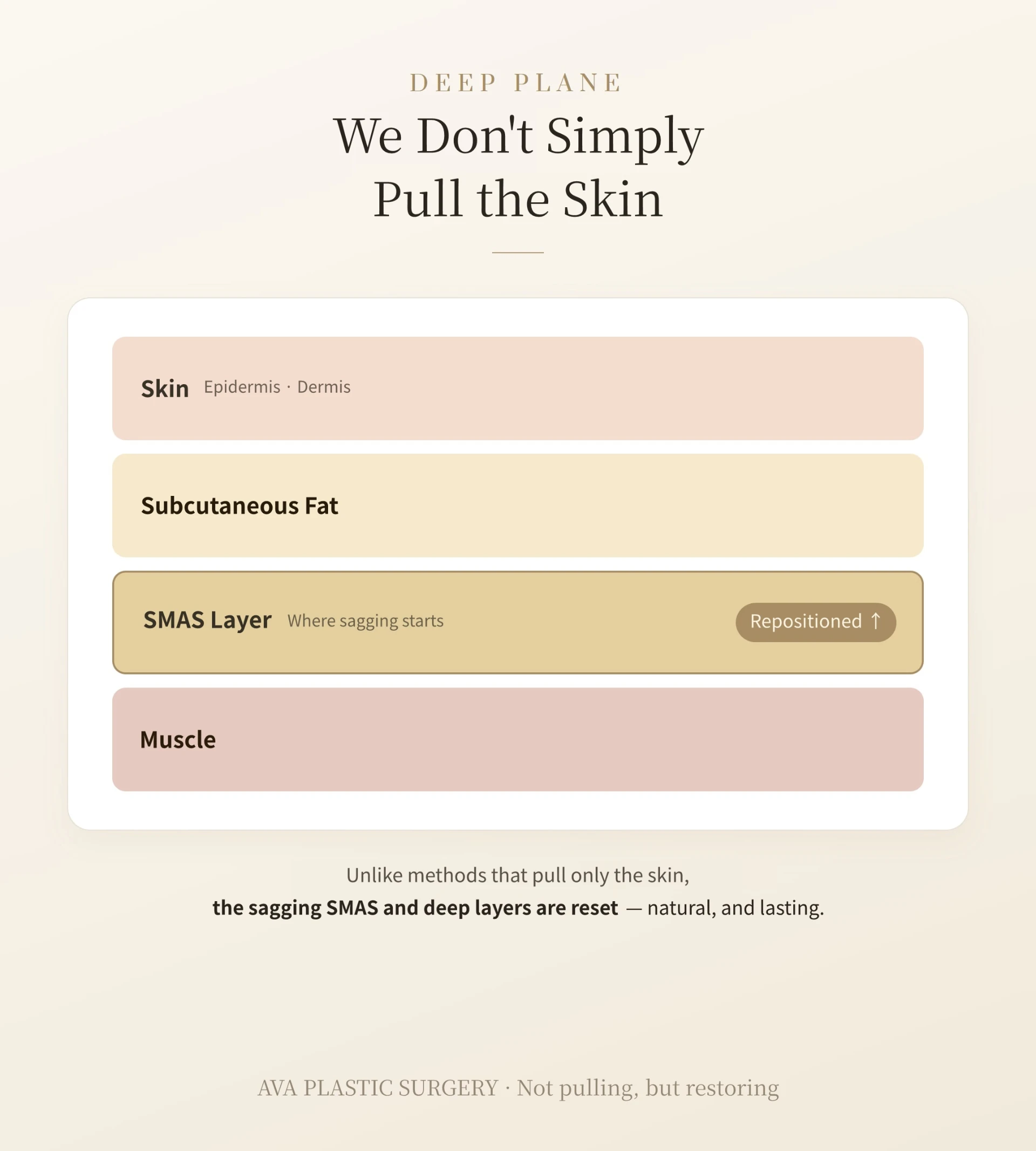
A facelift can be considered when tissue gathers in the lower cheeks, the jawline loses definition, or excess skin and neck laxity are prominent. I dissect and mobilize the superficial musculoaponeurotic system, or SMAS, lift it, and trim excess SMAS and skin as needed to refine the contour. This addresses the position and support of descended tissues rather than simply pulling the skin surface.
For more information, see our guide to facelift surgery addressing the SMAS and skin.
Volume restoration for hollow temples and upper cheeks
If the face appears hollow but skin laxity is limited, fat grafting or fillers may be considered to restore missing volume. In this situation, the priority is to identify where volume loss has changed the appearance, rather than deciding on a facelift first.
Read more about facial fat grafting treatment areas and the procedure.
A combined plan when sagging and hollowing coexist
After weight loss, sagging cheeks and jawline tissues may coexist with hollow temples and upper cheeks. In that situation, we lift the descended tissues and restore volume only where it is lacking to improve facial balance. Published reports of patients after massive weight loss have also used lifting together with fat augmentation.[3]
The aim is not to recreate the heavier face you had before losing weight. It is to preserve the changes you value while correcting remaining sagging and excessive hollowing.
05 Can I have a consultation now?
You do not need to postpone the consultation itself until your weight is stable. We can assess your current sagging and hollowing and discuss your weight-loss goals, maintenance plan, and surgical timing in advance. The actual extent of correction is best reassessed once weight changes have settled.
- If you are still losing weight: Clarify how much more you intend to lose and monitor changes in both your weight and face.
- If you have just completed weight loss: Review weight maintenance and nutritional health while preparing for surgery.
- If your weight has been stable for around six months but sagging remains: Assess the areas a facelift could improve and any areas that need volume restoration.
- If hollowing is your main concern: Consider a treatment plan focused on restoring volume.
At your consultation, tell us your weight before weight loss, your current weight, changes over recent months, and any further weight-loss goals. Earlier photographs and weight records help us understand how your face has changed. We also review concerns such as very low food intake, fatigue, or possible nutritional deficiencies.
06 Preparing for surgery while taking weight-loss medication
Confirming weight stability and planning medication management before anesthesia are separate issues. Weight-loss and diabetes medications such as GLP-1 therapies can affect stomach emptying. Tell your care team the medication name and dose, whether the dose has recently increased, the date of your last dose, and any gastrointestinal symptoms.
Multisociety guidance recommends considering the risk of retained stomach contents alongside the need for ongoing treatment, rather than routinely stopping medication in every patient.[4] Your prescribing team and surgical and anesthesia teams should coordinate any interruption and fasting instructions. Do not stop medication on your own or prepare for surgery using only an online suggested stopping interval.
Let your team know in advance if you have nausea, vomiting, abdominal bloating, or a recent dose increase. This information matters when deciding on the schedule and preparation for surgery.[4]
07 Frequently asked questions about facelifts after weight loss
Will sagging disappear after six months of stable weight?
Six months is not a deadline by which sagging disappears. It is a planning benchmark for assessing whether weight and facial changes have stabilized. If cheek, jawline, or neck sagging remains, we assess what surgery could correct.
Can I have surgery before losing more weight?
If you plan substantial further weight loss, it is better to clarify your weight-loss and maintenance plan first. Facial volume and excess skin may otherwise continue to change after surgery. You can consult in advance and decide on surgical timing as your weight stabilizes.
My weight has been stable for a year. Do I need to wait again?
The six-month period does not restart at your consultation. We review your current weight maintenance, health, and nutritional status and plan surgery around the sagging that remains.
Does everyone with a hollow face need a facelift?
We distinguish volume loss from actual tissue descent. If volume loss is the main issue, we consider restoring volume. If sagging is prominent, we consider lifting surgery. When both are present, a combined plan may be appropriate.
Key takeaways
If facial sagging remains after you have completed weight loss and maintained a stable weight for around six months, it is reasonable to consider a facelift in detail. Jawline and neck sagging are addressed by lifting tissues and removing excess, while hollow areas receive volume restoration as needed.
The decision is not simply to wait indefinitely or to rush into surgery immediately after weight loss. The aim is to assess the facial changes that remain at the weight you intend to maintain and choose treatment that addresses those changes.
The extent of surgery and recovery depend on individual circumstances. Consultation includes discussion of expected improvement and risks such as scarring, bleeding or hematoma, infection, wound-healing problems, altered sensation, facial nerve injury, and asymmetry.
References
- Daneshgaran G, Shauly O, Gould DJ. “Ozempic Face” in Plastic Surgery: A Systematic Review of the Literature on GLP-1 Receptor Agonist Mediated Weight Loss and Analysis of Public Perceptions. Aesthet Surg J Open Forum. 2025;7:ojaf056. doi:10.1093/asjof/ojaf056. View source
- American Academy of Facial Plastic and Reconstructive Surgery. Weight Loss and Facial Plastic Surgery. View source
- Narasimhan K, Ramanadham S, Rohrich RJ. Face lifting in the massive weight loss patient: modifications of our technique for this population. Plast Reconstr Surg. 2015;135(2):397–405. doi:10.1097/PRS.0000000000000881. View source
- Multi-society clinical practice guidance for the safe use of glucagon-like peptide-1 receptor agonists in the perioperative period. 2024. View source
- Jafar AB, Jacob J, Kao WK, Ho T. Soft Tissue Facial Changes Following Massive Weight Loss Secondary to Medical and Surgical Bariatric Interventions: A Systematic Review. Aesthet Surg J Open Forum. 2024;6:ojae069. doi:10.1093/asjof/ojae069. View source
- Couto RA, Waltzman JT, Tadisina KK, et al. Objective Assessment of Facial Rejuvenation After Massive Weight Loss. Aesthetic Plast Surg. 2015;39(6):847–855. doi:10.1007/s00266-015-0540-6. View source

Facelift consultation in Seoul, Korea
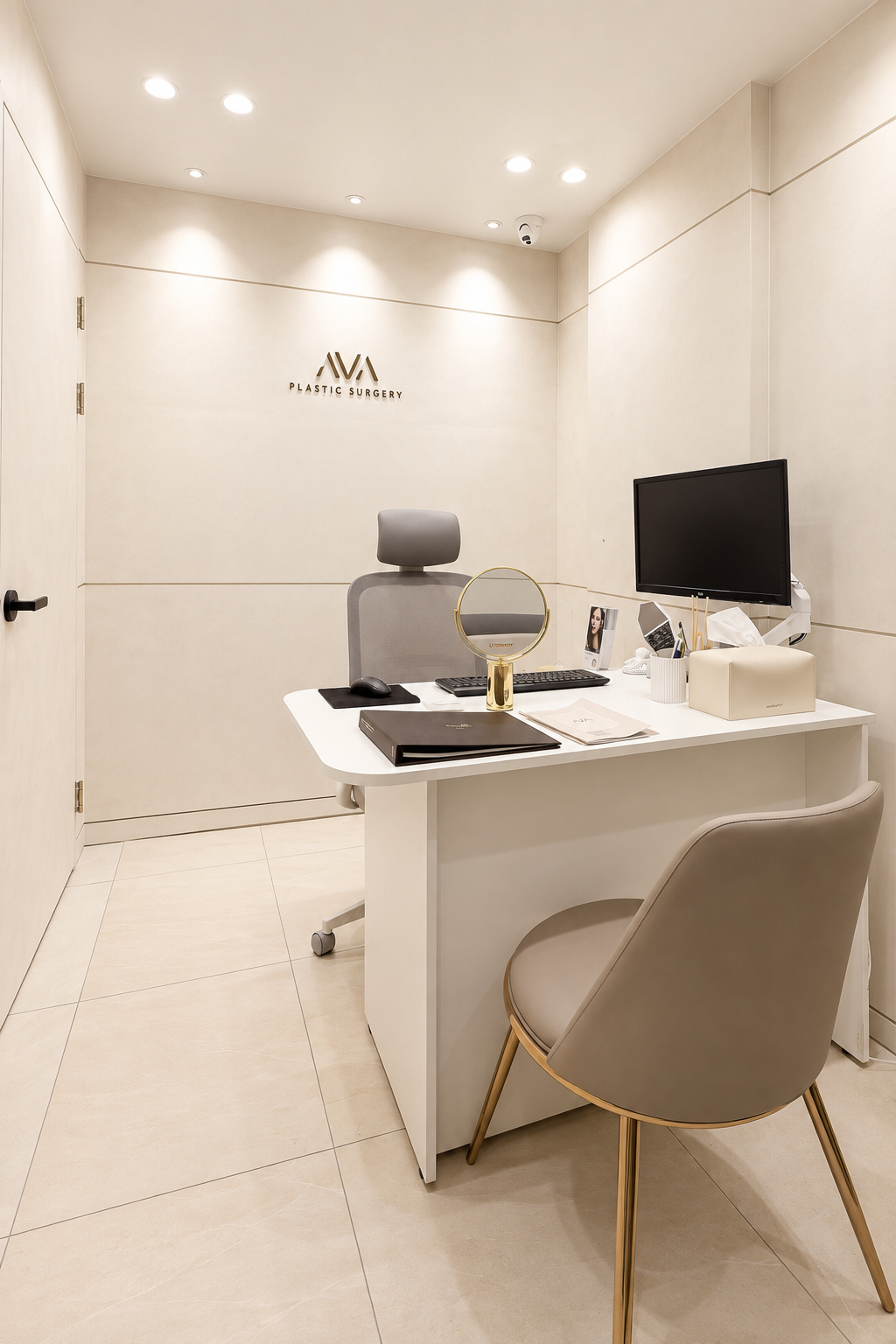
Visit AVA Plastic Surgery near Exit 4 of Sinsa Station, on Gangnam-daero in Seoul. Our clinic is on the 4th floor of Inseong Building, 603 Gangnam-daero, Seocho-gu. A facelift consultation covers your concerns, previous treatments and recovery plans, including arrangements for your stay in Korea.
Facelift surgery in KoreaMeet Dr. KimDirections to Sinsa Station clinicRequest a facelift consultation
Recommended Related Columns by Dr. Seungsoo Kim