Upper Blepharoplasty, Sub-Brow Lift, Forehead Lift & Double Eyelid: Which Combination Fits Your Eyes?
When you look in the mirror, have you ever felt that your eyelids look heavier than before and your overall expression has grown tired or stern?
Upper eyelid sagging is rarely resolved with a single, one-size-fits-all incision. What matters far more is respecting the correct anatomical sequence and choosing the right combination. Today, from the perspective of a board-certified plastic surgeon, I will clarify how upper blepharoplasty, sub-brow lift, forehead lift, and double eyelid surgery should be combined for a seamless, natural result.
1. Why We Must Always Begin with 'Eyebrow Position'
When eyelids droop, many people subconsciously compensate by engaging their forehead muscles to lift their eyebrows every time they open their eyes.
If you simply excise skin from the eyelid area (via upper blepharoplasty or sub-brow lift alone) while in this state, the forehead no longer needs to strain. The eyebrows subsequently drop back down to their resting level, compressing the distance between the eyes and brows even further and bunching skin across the glabella.
2. The Most Ideal Surgical Sequence
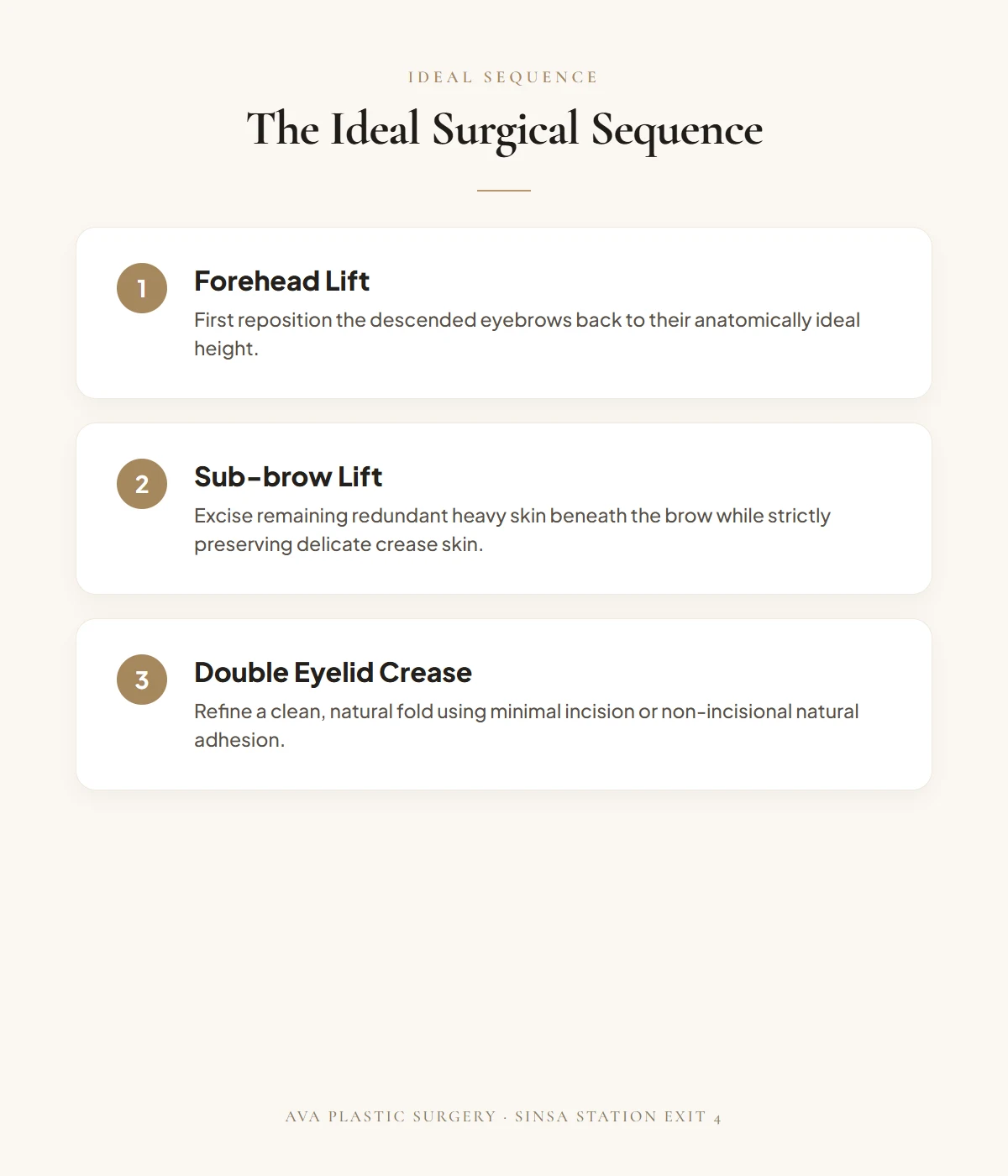
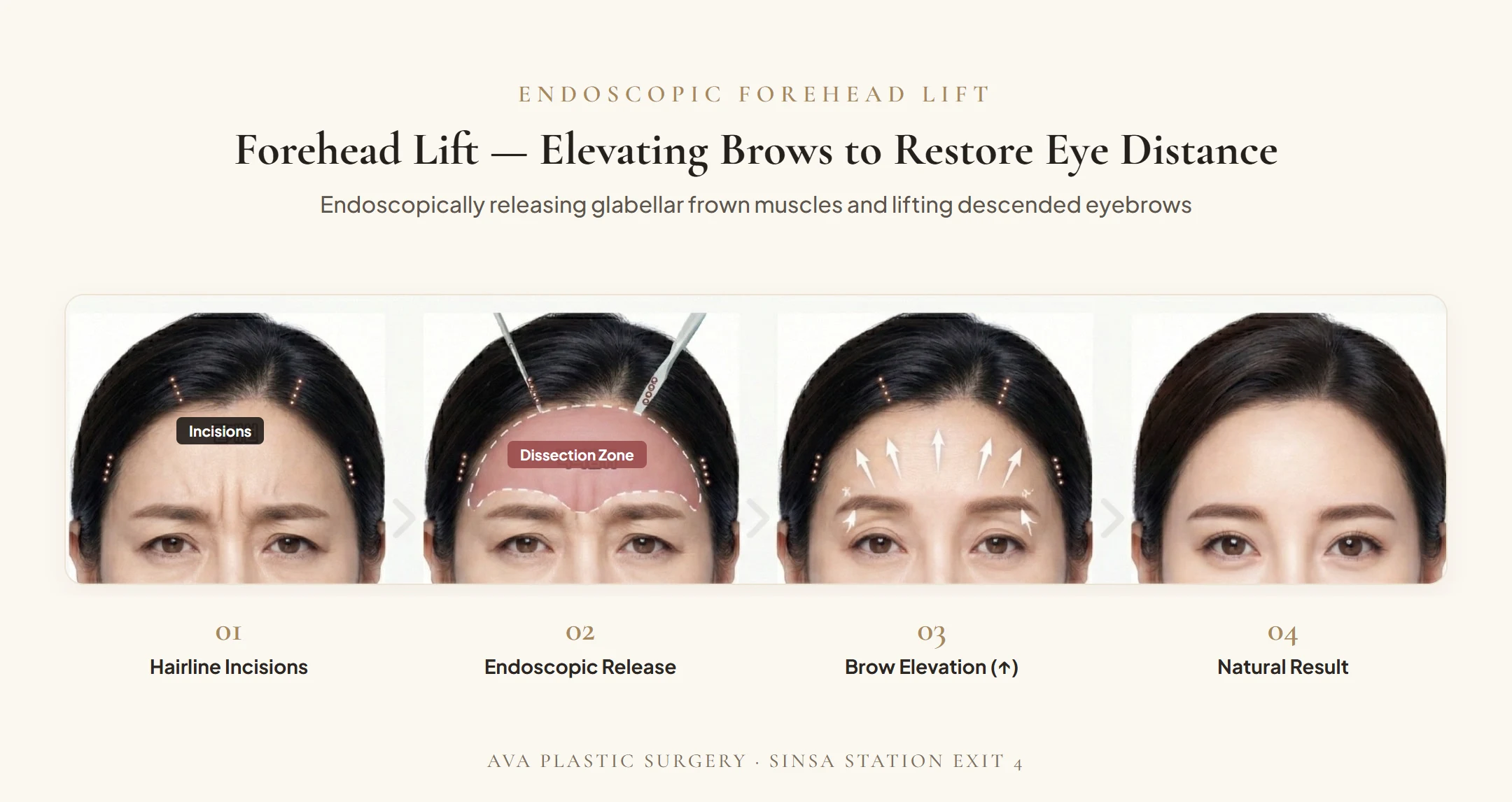
- Forehead Lift: First, reposition the eyebrows to their anatomically ideal height.
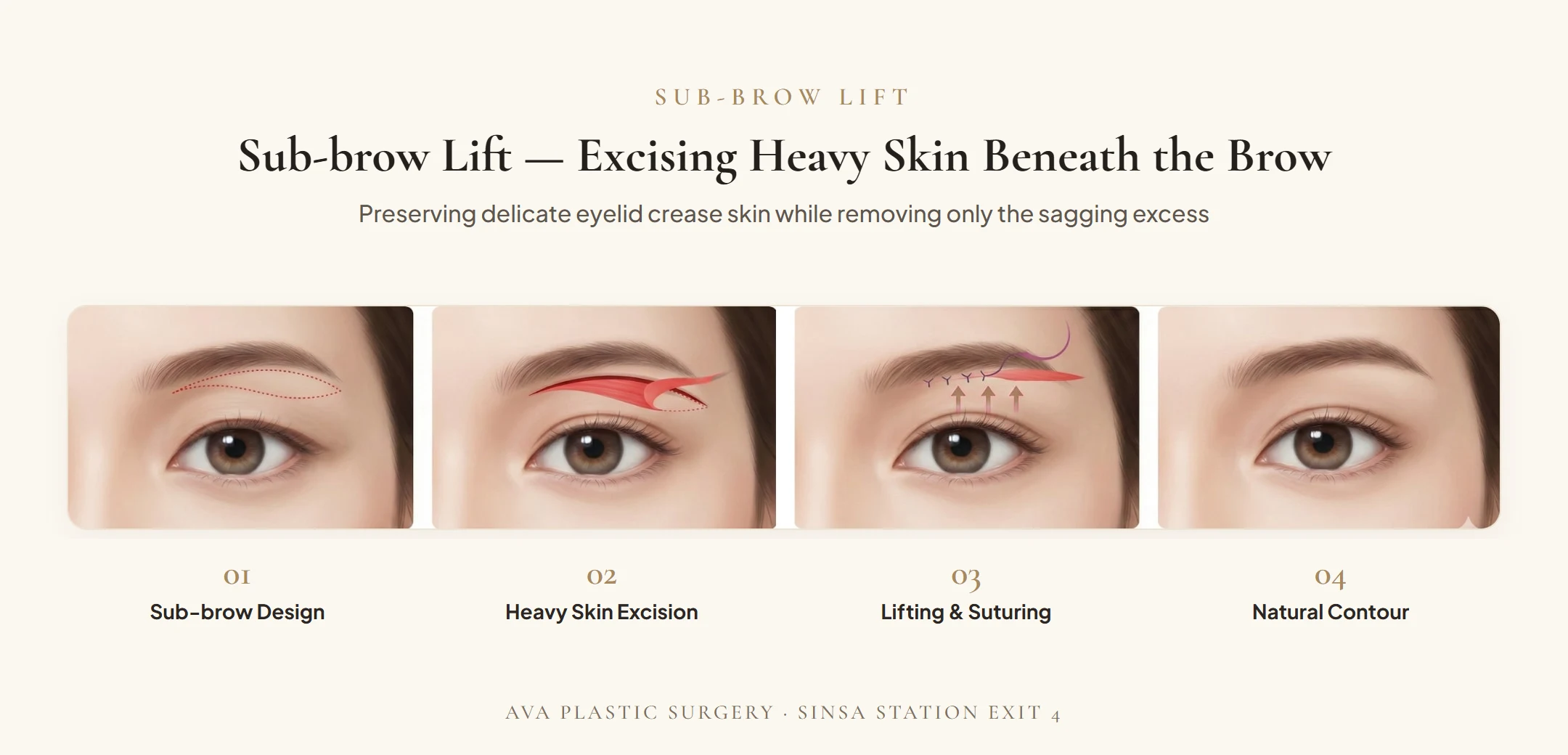
- Sub-Brow Lift: Next, remove remaining redundant skin beneath the brow while strictly preserving the delicate, paper-thin skin near the lashes.
- Double Eyelid Line: Finally, create or refine a crisp crease using minimal incision or natural adhesion for an effortless finish.
3. Why All Three Are Often Combined
In most patients, skin laxity develops far more extensively on the outer (lateral) aspect of the eyelid than on the inner (medial) corner. Because of this, a forehead lift alone cannot always clear heavy lateral hooding completely. Elevating the brows with a forehead lift, trimming lateral excess beneath the brow, and refining the crease line is why combining all three frequently produces the most harmonious outcome.



4. Case-by-Case Breakdown: Which Combination Fits You?
The golden rule of diagnosis is evaluating brow position and eyelid laxity while the forehead muscles are completely relaxed:
- Minimal eyelid laxity: Double Eyelid Surgery alone (incisional or natural adhesion).
- Mild laxity where previewing a crease does not look harsh: Incisional Double Eyelid / Upper Blepharoplasty.
- Normal brow height at rest, but pronounced outer-corner hooding: Sub-Brow Lift + Natural Adhesion Double Eyelid.
- Outer hooding with an asymmetrical or high prior crease: Sub-Brow Lift + Incisional Revision Double Eyelid.
- Significant brow descent or compressed eye-to-brow distance with forehead relaxed: Endoscopic Forehead Lift combined with eyelid refinement.

5. The Golden Principle in Upper Blepharoplasty: 'Minimal Lid Excision'
Regardless of the combination chosen, the skin along the double eyelid crease is exceptionally thin. Excising too much skin directly at the crease creates a thick, unnatural fold. Skin excision on the eyelid itself should be minimized, while heavy excess is removed directly beneath the eyebrow where the skin is naturally thicker.
"Upper eyelid surgery is not about cutting away as much skin as possible—it is about respecting the correct anatomical sequence. Repositioning the eyebrows first, preserving delicate eyelid skin, and excising only what is necessary restores your youthful gaze naturally." — Dr. Seungsoo Kim
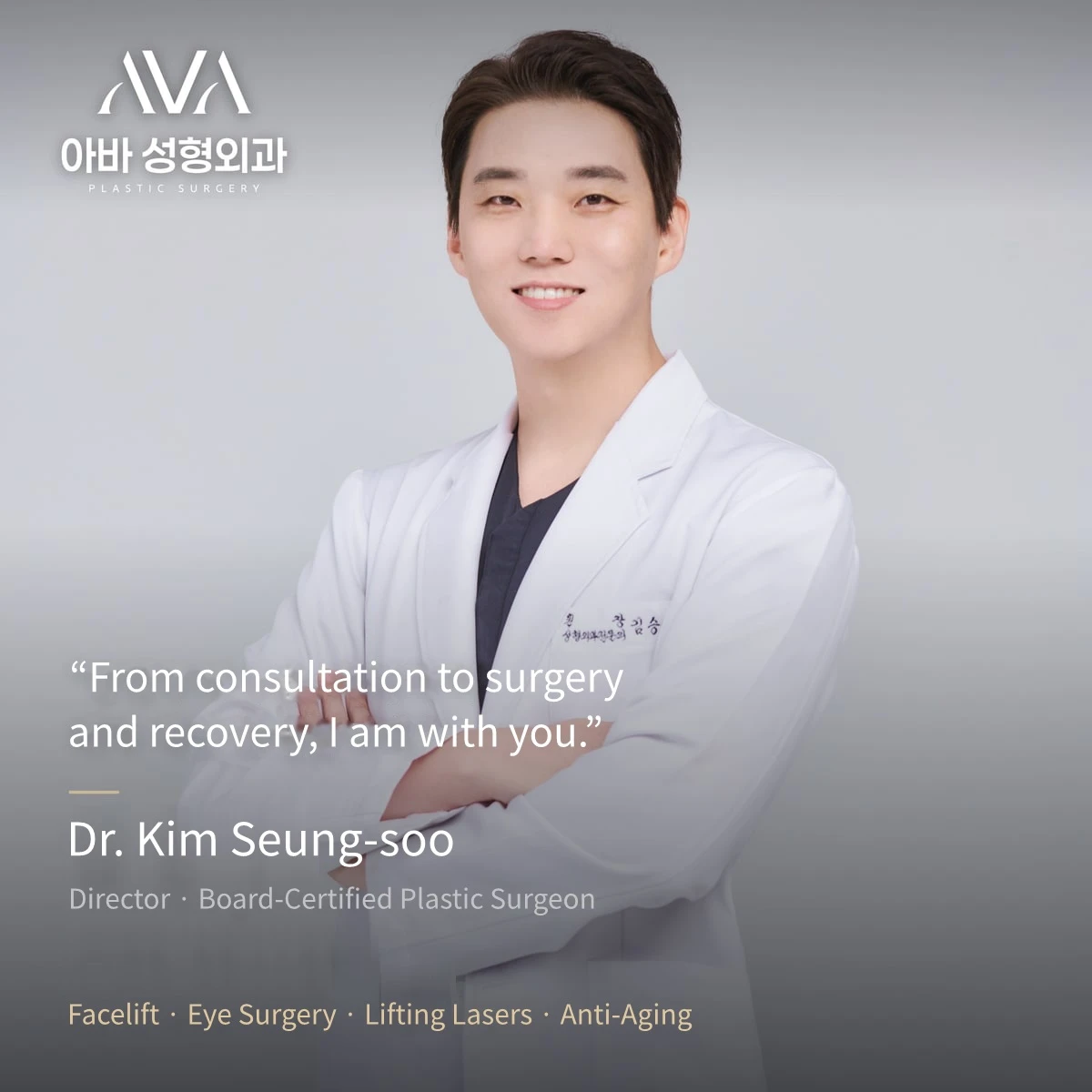
Book Your 1:1 Consultation with Dr. Seungsoo Kim
Whether you are flying in from overseas or living in Korea, Dr. Seungsoo Kim personally oversees every step from initial consultation to surgery and recovery:
- 📅 Book a 1:1 Zoom Video Consultation or Seoul Clinic Visit (English Booking Hub) →
- ✨ View Deep-Plane Facelift Guide & 1-Year Follow-Up Cases →
- 👁️ View Upper Eyelid, Sub-Brow & Forehead Lift Guide →
- 💬 Chat Directly on WhatsApp (+82 10-3705-3423) →
📍 AVA Plastic Surgery · 4F Insung Building, 603 Gangnam-daero, Seocho-gu, Seoul (1-min walk from Sinsa Station Exit 4) · TEL +82 2-545-1882
※ Surgical Notice: Post-operative complications such as bleeding, infection, swelling, scarring, asymmetry, or sensory changes may occur, and results and recovery vary by individual.
Read the original Naver blog post ·