Autologous Adipose SVF & Venous PRP Regenerative Care — Facial Fat Grafting, Scalp & Recovery Safety
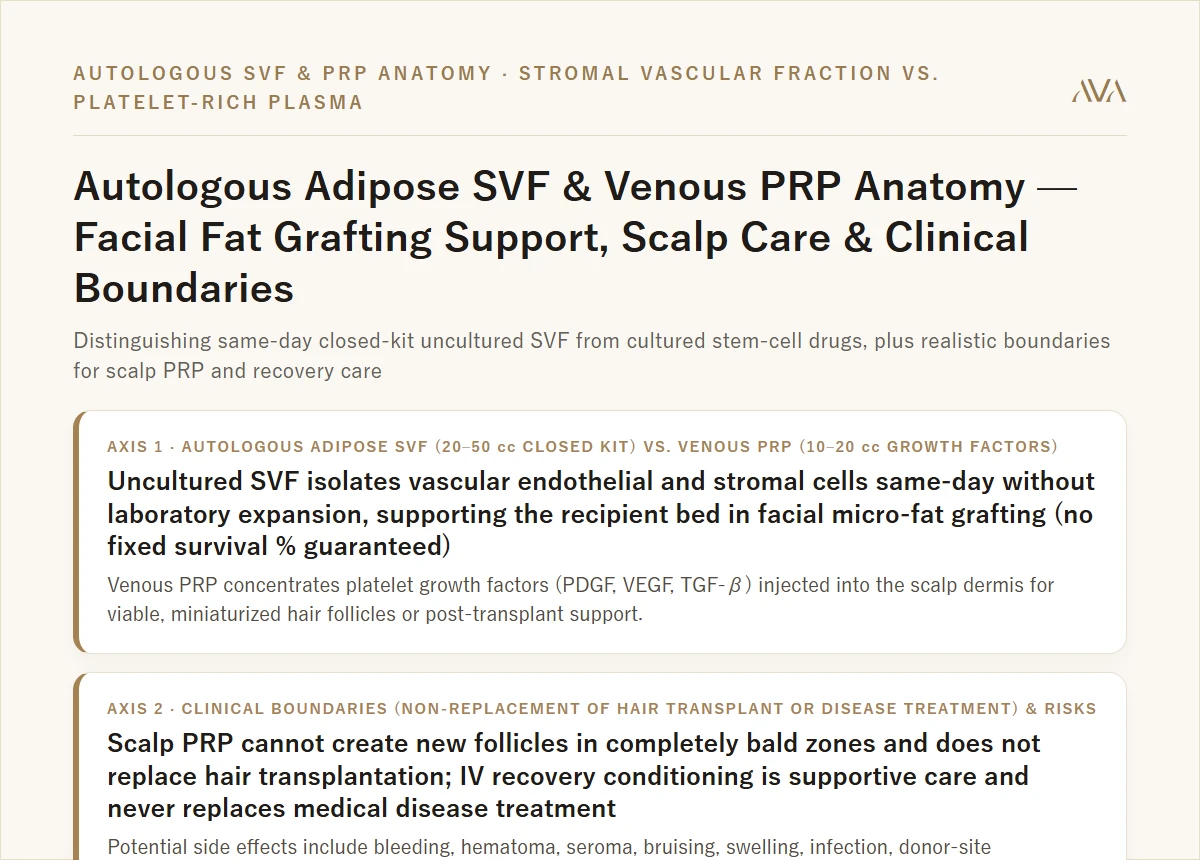
- Autologous adipose SVF (Stromal Vascular Fraction) is an uncultured heterogeneous vascular-stromal cell fraction mechanically/enzymatically isolated via a closed-system kit from 20–50 cc of the patient’s own fat—legally and clinically distinct from laboratory-cultured stem-cell drugs—while autologous PRP (Platelet-Rich Plasma) concentrates platelet growth factors (PDGF, VEGF, TGF-β) from 10–20 cc of venous blood.
- When combined with facial micro-fat grafting, SVF serves as supportive care for the recipient-bed microenvironment during early neovascularization (without guaranteeing a fixed graft survival percentage); scalp dermal PRP serves as a non-incisional adjunct for early follicular miniaturization or post-transplant care (it cannot regenerate completely lost follicles or replace hair transplantation), and IV immunity conditioning is strictly supportive recovery care that does not replace medical disease treatment.
- Although using autologous tissue lowers foreign-body allergic risk, potential side effects and limitations include bleeding, hematoma, seroma, bruising, swelling, infection, donor-site tenderness or contour irregularity, fat necrosis or micro-calcification, transient scalp pinpoint bleeding/soreness, and significant individual variation in clinical response.
"Dr. Kim, many clinics in Korea advertise 'stem cell facial fat grafting' or 'stem cell scalp and anti-aging injections.' What is actually inside those treatments, how do same-day autologous SVF and PRP differ from laboratory-cultured stem-cell drugs, and what are their real anatomical indications and limits?" — Responsible regenerative aesthetics begins with (1) clearly distinguishing same-day, closed-kit uncultured autologous adipose SVF (Stromal Vascular Fraction) and venous PRP (Platelet-Rich Plasma) from laboratory-expanded stem-cell pharmaceuticals, and (2) defining the exact anatomical boundaries across facial micro-fat grafting support, dermal scalp follicle care, and perioperative IV recovery conditioning without exaggerated survival or cure claims.
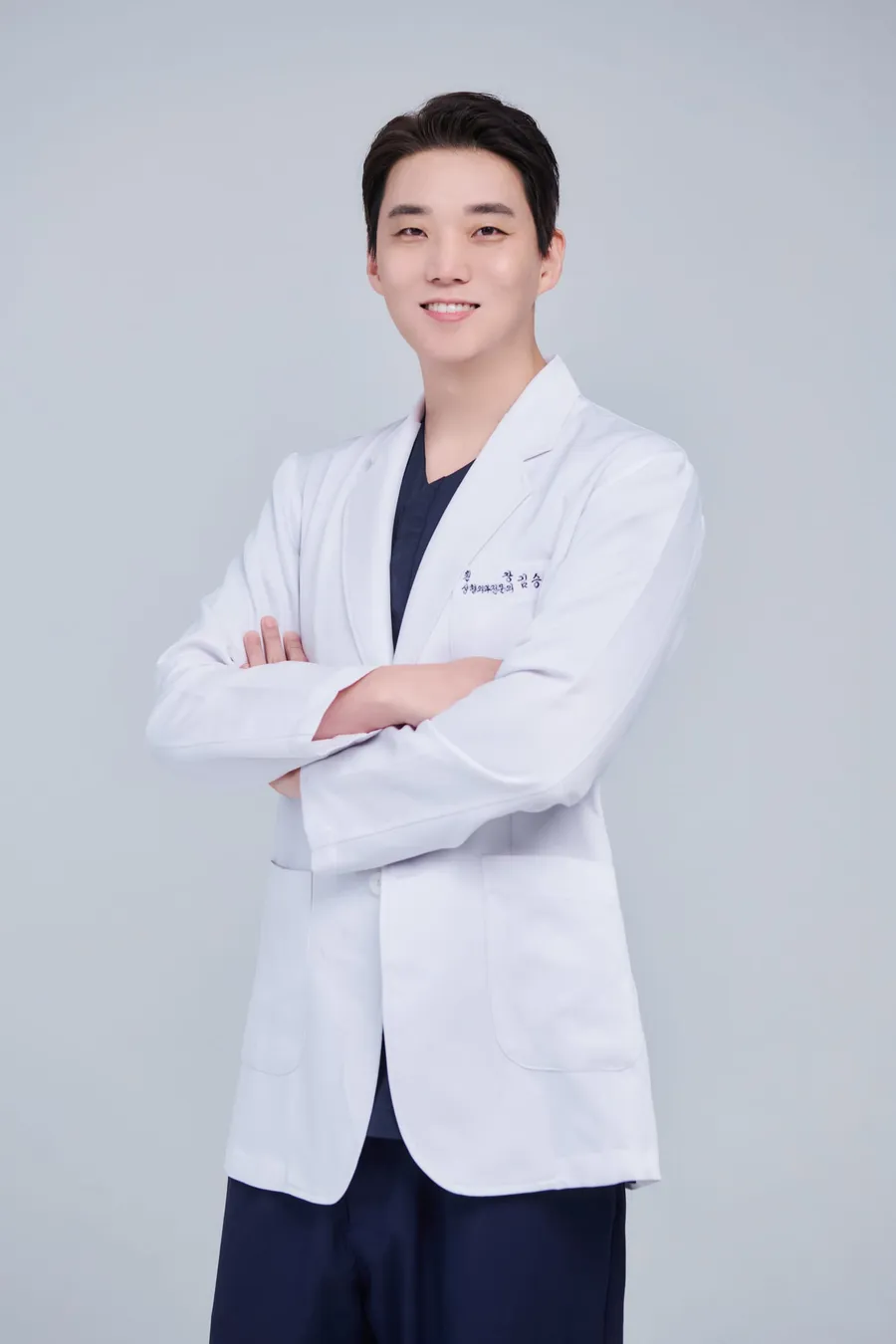
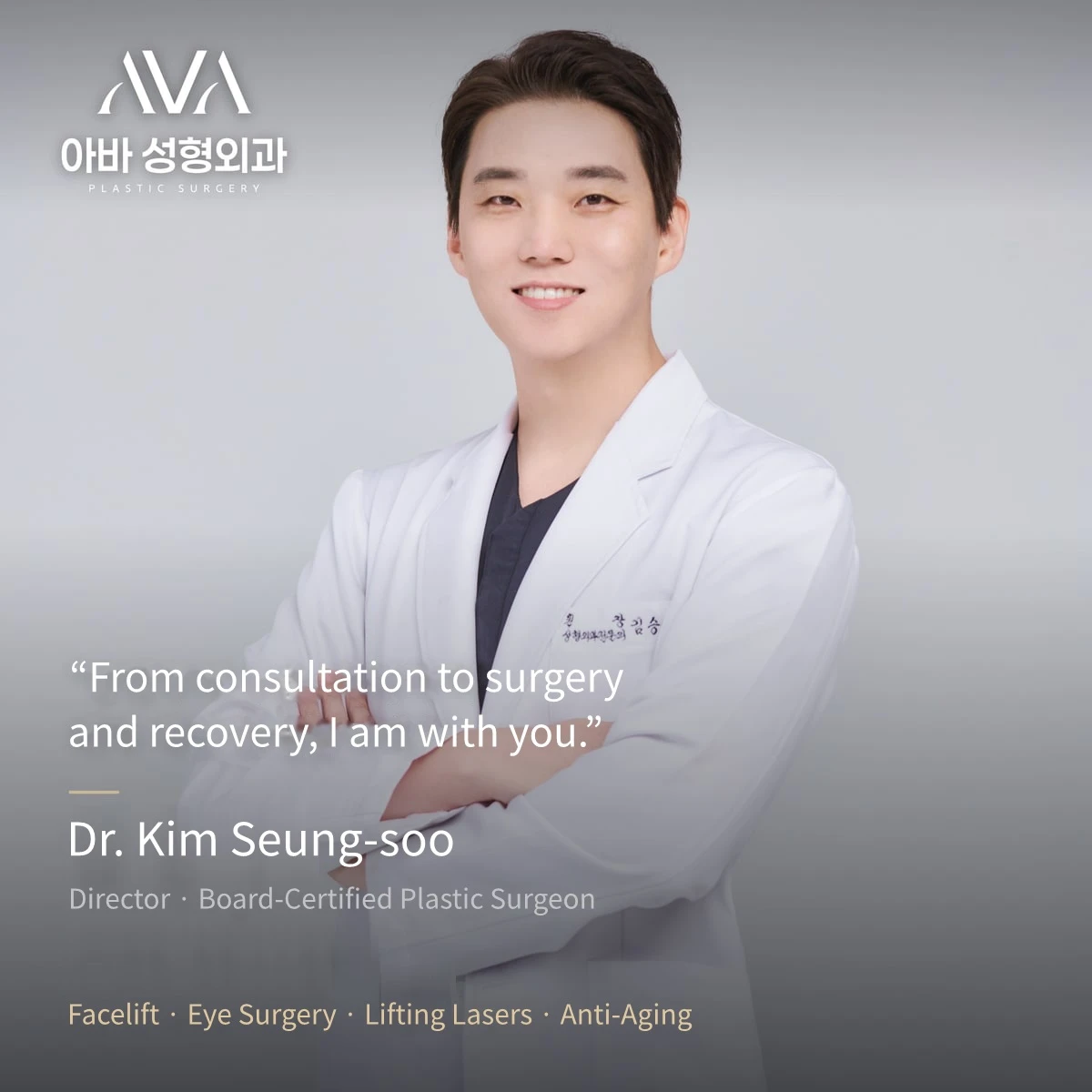
Hello. I am Dr. Seungsoo Kim, Chief Director and Board-Certified Plastic Surgeon at AVA Plastic Surgery in Sinsa, Gangnam, Seoul.
Patients visiting our Autologous Anti-Aging Regenerative Clinic, Scalp & Follicle Regenerative Clinic, IV Recovery & Conditioning Center, and VIP Anti-Aging Program frequently ask what "stem cell regenerative care" means in clinical plastic surgery practice. Rather than relying on vague marketing buzzwords, I explain the two exact autologous biological fractions prepared on the day of procedure—autologous adipose-derived SVF (Stromal Vascular Fraction) and autologous venous PRP (Platelet-Rich Plasma)—along with their biological mechanisms, appropriate indications, and strict clinical limits.
01. Biological & Regulatory Distinction: Uncultured Autologous SVF & PRP vs. Cultured Stem-Cell Pharmaceuticals
Under Korean medical regulations and international clinical standards, point-of-care autologous tissue fractions prepared during the same surgical session are fundamentally distinct from laboratory-cultured cell therapy drugs:
- Uncultured Autologous Adipose SVF (Stromal Vascular Fraction):
- Cellular Composition: When a small volume of your own subcutaneous fat is gently harvested from the thigh or abdomen and processed inside a sterile, single-use closed-system kit via mechanical filtration and centrifugation, it yields a heterogeneous stromal vascular fraction. This fraction contains adipose-derived stromal/stem cells (ADSCs), endothelial progenitor cells, pericytes, fibroblasts, and native extracellular matrix (ECM) peptides.
- No In-Vitro Culturing or Genetic Manipulation: Unlike commercial stem-cell pharmaceuticals that undergo weeks of in-vitro laboratory cell expansion, point-of-care SVF is isolated and re-applied during the same procedure without external cell culturing—preserving autologous biocompatibility while avoiding culture-medium contamination risks.
- Autologous Venous PRP (Platelet-Rich Plasma):
- Biological Mechanism: Drawn from a small sample of your peripheral venous blood and concentrated in a closed centrifugation kit, PRP isolates the buffy-coat platelet layer at several times baseline concentration.
- Paracrine Growth-Factor Signaling: PRP itself is not a stem cell solution; rather, alpha-granules within activated platelets release autologous growth factors—including PDGF, TGF-β, VEGF, and EGF—that support local microvascular repair, fibroblast collagen synthesis, and extracellular matrix remodeling.
02. Three Clinical Pillars & Their Strict Anatomical Boundaries
Each regenerative protocol targets a specific anatomical layer and must be planned with realistic expectations:
- Pillar 1 — Facial Micro-Fat Grafting & Dermal Microenvironment Support (Anti-Aging Regenerative Care & Autologous Micro-Fat Grafting):
- Anatomical Rationale: When restoring volume across the forehead, temples, midface, or nasolabial base via micro-fat grafting, transplanted fat droplets must establish capillary revascularization from the recipient bed within the first few days. Supplementing purified micro-fat or nano-fat with autologous SVF or PRP helps support recipient-bed angiogenesis and dermal matrix quality.
- ※ Clinical Boundary (No Fixed Survival Percentage Guarantee & When Surgery Is Required): No ethical surgeon can promise a fixed percentage of fat graft survival (such as "guaranteed 90% retention"). Graft take varies significantly by individual vascularity, age, smoking status, and—most importantly—meticulous multi-plane micro-droplet dispersion that prevents central fat necrosis, oil cysts, or calcification. Furthermore, when mid-to-lower facial aging is driven by sagging SMAS fascia and retaining ligaments, cellular or fat injections cannot lift heavy tissues; a structural Dual-Deep Plane Facelift must address the gravitational descent first.
- Pillar 2 — Dermal Scalp Microenvironment & Follicle Care (Scalp & Hair Regenerative Clinic):
- Anatomical Rationale: In early-to-moderate hair thinning where hair follicles are still viable but miniaturized, targeted intradermal micro-injections of autologous PRP (approx. 1.5–2.5 mm depth around the dermal papilla vascular plexus) deliver localized growth-factor signaling to support perifollicular circulation and hair shaft caliber.
- ※ Clinical Boundary (Cannot Replace Hair Transplantation): Scalp PRP and regenerative mesotherapy only support existing, viable hair follicles. They cannot generate new hair follicles in completely bald, fibrotic scalp zones and cannot replace surgical hair transplantation. In androgenetic alopecia, regenerative scalp sessions are planned as an adjunct alongside evidence-based medical therapy after dermatologic/surgical evaluation.
- Pillar 3 — Perioperative IV Nutritional & Recovery Conditioning (IV Recovery Conditioning & Post-Op Recovery Care):
- Clinical Role: Tailored intravenous hydration, electrolytes, water-soluble vitamins, and antioxidant amino acids support metabolic recovery and tissue healing before or after facial plastic surgery or during periods of physical fatigue.
- ※ Clinical Boundary (Supportive Wellness Only): IV nutritional and antioxidant protocols are supportive perioperative and wellness conditioning measures—they do not diagnose, cure, or replace medical treatment for systemic or immunologic diseases, and are administered only after screening renal/cardiac history and drug allergies.
03. Three Core Safety Protocols: Closed-System Sterility, Vascular Protection & Contraindications
- Single-Use Closed-System Processing: All blood and adipose tissue handling uses sterile, single-use closed kits on the day of treatment without storage or external laboratory transport.
- Blunt Micro-Cannula & Retrograde Low-Pressure Placement: Facial fat and SVF/PRP placement strictly uses blunt micro-cannulas with slow, low-pressure retrograde micro-droplet deposition to protect facial and ophthalmic arterial branches and prevent central clumping or oil cysts.
- Pre-Procedure Screening & Contraindications: Treatments are contraindicated in areas of active skin or scalp infection, severe thrombocytopenia or coagulation disorders, active malignancy, or pregnancy/lactation. Patients taking prescription anticoagulants or antiplatelet medications must coordinate with their prescribing physician prior to any harvesting or injection procedure.
※ Clinical & Regulatory Notice: The autologous adipose SVF (stromal vascular fraction) and autologous venous PRP (platelet-rich plasma) protocols described in this article are same-day, uncultured point-of-care autologous tissue procedures—not laboratory-cultured stem-cell pharmaceutical drugs. Clinical outcomes, fat graft retention, hair caliber changes, and recovery timelines vary by individual age, baseline tissue quality, and health status, and no specific survival percentage or therapeutic cure is guaranteed. Potential risks and side effects include donor- or recipient-site pain, swelling, bruising, hematoma, seroma, infection, contour asymmetry, variable fat resorption, oil cysts, micro-calcification, subcutaneous nodules, transient scalp tenderness or folliculitis, phlebitis or hypersensitivity during IV infusion, and rare but serious vascular complications (skin necrosis, vision loss, or cerebral embolism) during facial injections. Always complete a 1-on-1 in-person examination with a board-certified plastic surgeon before deciding on treatment.
Book Your 1:1 Consultation with Dr. Seungsoo Kim
Whether you are flying in from overseas or living in Korea, Dr. Seungsoo Kim personally oversees every step from initial consultation to surgery and recovery:
- 📅 Book a 1:1 Zoom Video Pre-Consultation or Seoul Clinic Visit (English Booking Hub) →
- 📖 Read Dr. Kim's Mother's Deep-Plane Facelift & Eyelid Surgery 2-Month Recovery Log →
- ✨ View Deep-Plane Facelift Guide & 1-Year Follow-Up Cases →
- 👁️ View Upper Eyelid, Sub-Brow & Forehead Lift Guide →
- 💬 Chat Directly on WhatsApp (+82 10-3705-3423) →
📍 AVA Plastic Surgery · 4F Insung Building, 603 Gangnam-daero, Seocho-gu, Seoul (1-min walk from Sinsa Station Exit 4) · TEL +82 2-545-1882
※ Surgical & Consultation Notice: 1:1 Zoom video consultations provide a preliminary educational assessment; final surgical candidacy and operative plans are confirmed through an in-person clinical examination by Dr. Seungsoo Kim in Seoul. Post-operative complications such as bleeding, infection, swelling, scarring, asymmetry, or sensory changes may occur, and results and recovery vary by individual.
Frequently Asked Clinical Questions (FAQ)
Q. How does autologous adipose SVF (Stromal Vascular Fraction) differ from cultured stem-cell drugs and venous PRP?
Autologous SVF (Stromal Vascular Fraction) harvests a small volume (roughly 20–50 cc) of your own subcutaneous fat from the thigh or abdomen and processes it same-day inside a closed sterile kit to concentrate stromal, vascular endothelial, and perivascular cells without external cell expansion—making it fundamentally distinct from laboratory-cultured stem-cell pharmaceuticals. Autologous PRP (Platelet-Rich Plasma), by contrast, is centrifuged from 10–20 cc of peripheral venous blood to deliver platelet-derived growth factors (PDGF, VEGF, TGF-β) rather than an adipose stromal fraction.
Q. What are the clinical roles and anatomical limits of combining SVF with facial fat grafting or using PRP for scalp thinning?
In facial micro-fat grafting, co-administering SVF is designed to support the recipient-bed microenvironment during the early ischemic phase (the first 72 hours to 2 weeks) as transferred fat droplets establish microvascular perfusion; however, retention varies widely by patient metabolism, skin envelope, and smoking status, and no fixed survival percentage can be guaranteed. In the scalp, dermal PRP injections support viable, miniaturized hair follicles (often alongside oral medication or after hair transplantation), but PRP cannot create new follicles in completely bald areas and does not replace surgical hair transplantation.
Q. What side effects, recovery precautions, and medical boundaries apply to SVF, scalp PRP, and recovery conditioning care?
Because SVF involves micro-cannula fat harvesting, patients may experience donor- and recipient-site bruising, swelling, bleeding, hematoma, seroma, infection, transient numbness, or oil cysts/calcification, and should avoid alcohol, saunas, and strenuous exercise for at least 1 week. Scalp PRP can cause 1–2 days of mild scalp tightness, pinpoint bleeding, or redness. In addition, autologous IV immunity conditioning is strictly a supportive wellness/recovery measure and never replaces medical diagnosis or disease treatment.