Lower Blepharoplasty vs. Under-Eye Fat Repositioning — Why the Mid-30s Is the Dividing Line
"People often tell me I look dark and tired under my eyes. Should I get a lower blepharoplasty, or under-eye fat repositioning?"
This is the most frequent question patients ask when visiting our clinic for lower eyelid concerns. While the two procedures sound similar, the anatomical planes addressed and the surgical techniques involved are fundamentally different. Today, I will clarify the exact differences between lower blepharoplasty and under-eye fat repositioning, and why the mid-30s serves as a practical clinical watershed.
1. The Real Reason the Under-Eye Looks Dark: Pigment + Structural Shadow
Under-eye dark circles are almost always the result of two overlapping factors: intrinsic skin tone and a three-dimensional structural shadow cast by bulging orbital fat over a sunken tear trough. While surface pigmentation can be concealed with makeup, a structural shadow cannot—which is why reconstructing the contour beneath the eye is essential.
2. Under-Eye Fat Repositioning: Incision-Free Contour Reconstruction
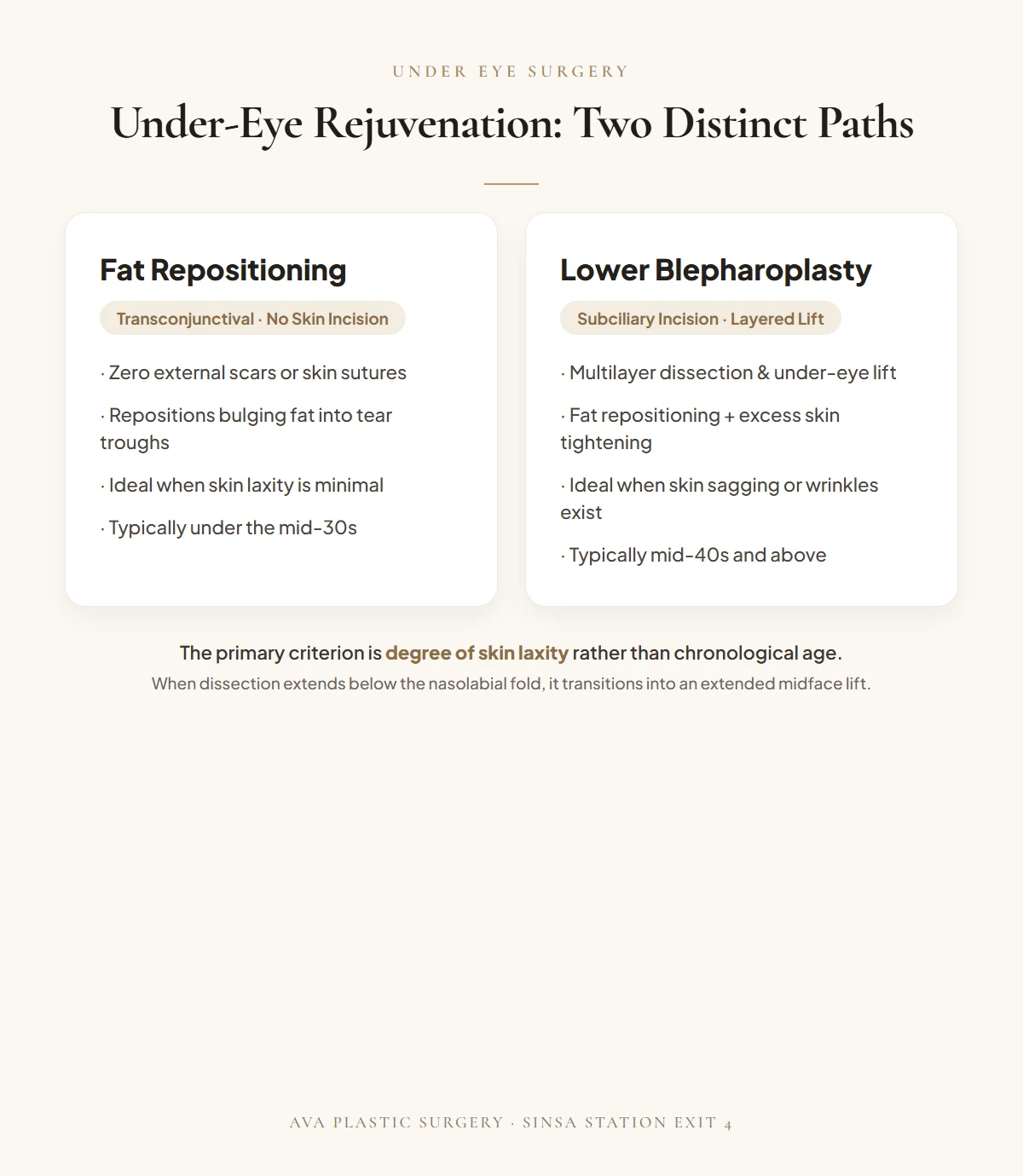
Under-eye fat repositioning is performed entirely through the conjunctiva on the inside of the lower eyelid—leaving zero external scars and requiring no stitch removal. Rather than indiscriminately stripping out fat (which leaves the eye looking hollow years later), we release the tethered tear trough and reposition your living orbital fat downward to cushion the groove.
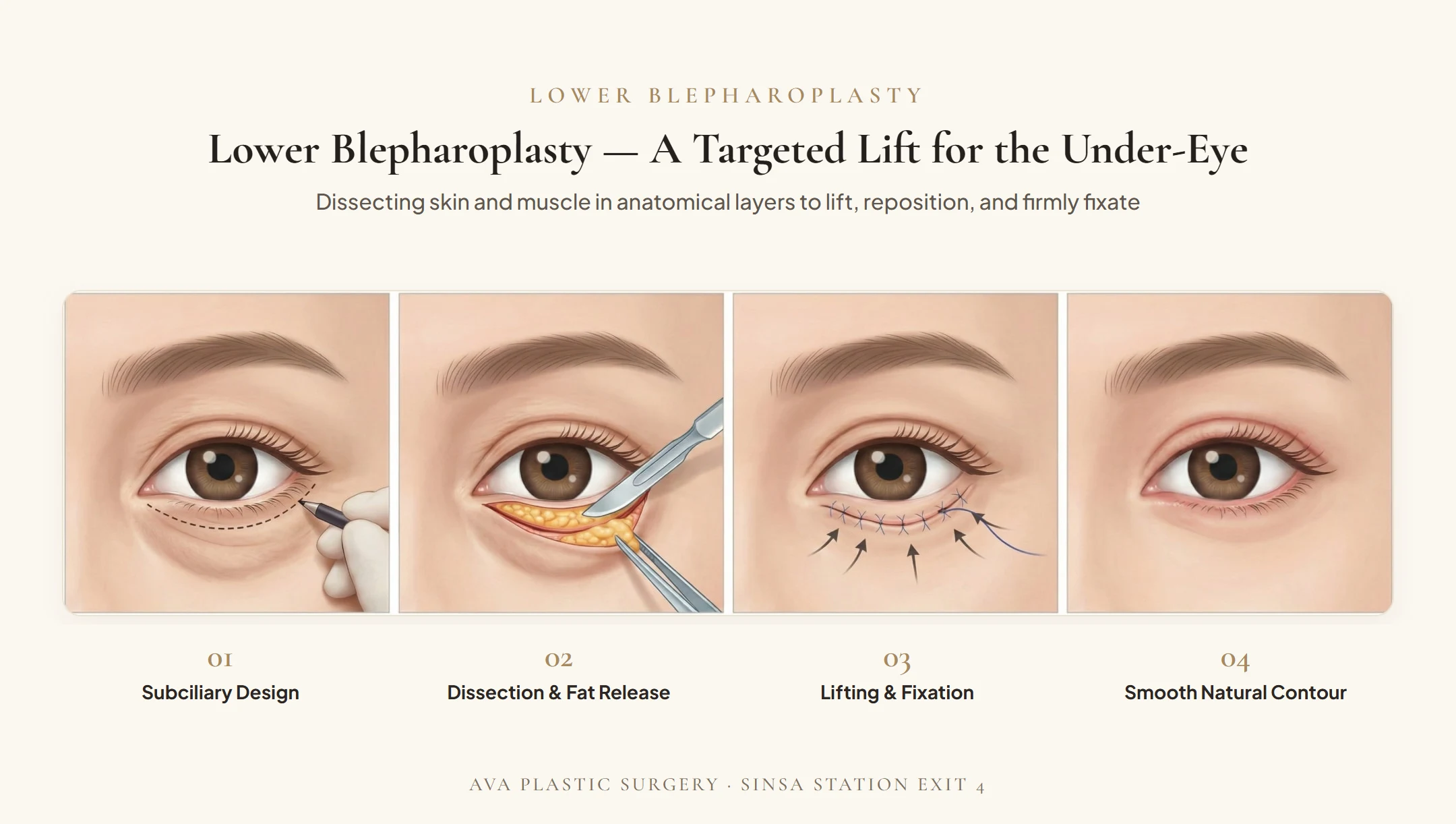
3. Lower Blepharoplasty: A Targeted 'Lift' for the Under-Eye
When aging brings true skin laxity and fine wrinkling beneath the eyes, moving the underlying fat alone leaves loose, crinkled skin behind. Lower blepharoplasty enters just beneath the lower lash line (subciliary incision), dissects skin and orbicularis muscle in layers, repositions the orbital fat, and lifts and re-fixates the slackened tissues. When this dissection extends below the nasolabial fold, it transitions seamlessly into an extended midface lift.
4. Which Option Suits You? The 'Mid-30s' Watershed
- Under the Mid-30s (Minimal Skin Laxity): Transconjunctival fat repositioning achieves smooth, scarless results because youthful skin redrapes naturally.
- Mid-30s to Mid-40s: Decided case-by-case based on skin recoil test during examination.
- Mid-40s and Above (Visible Skin Laxity & Crepiness): Lower blepharoplasty is recommended to address fat bags, tear troughs, and loose skin simultaneously.
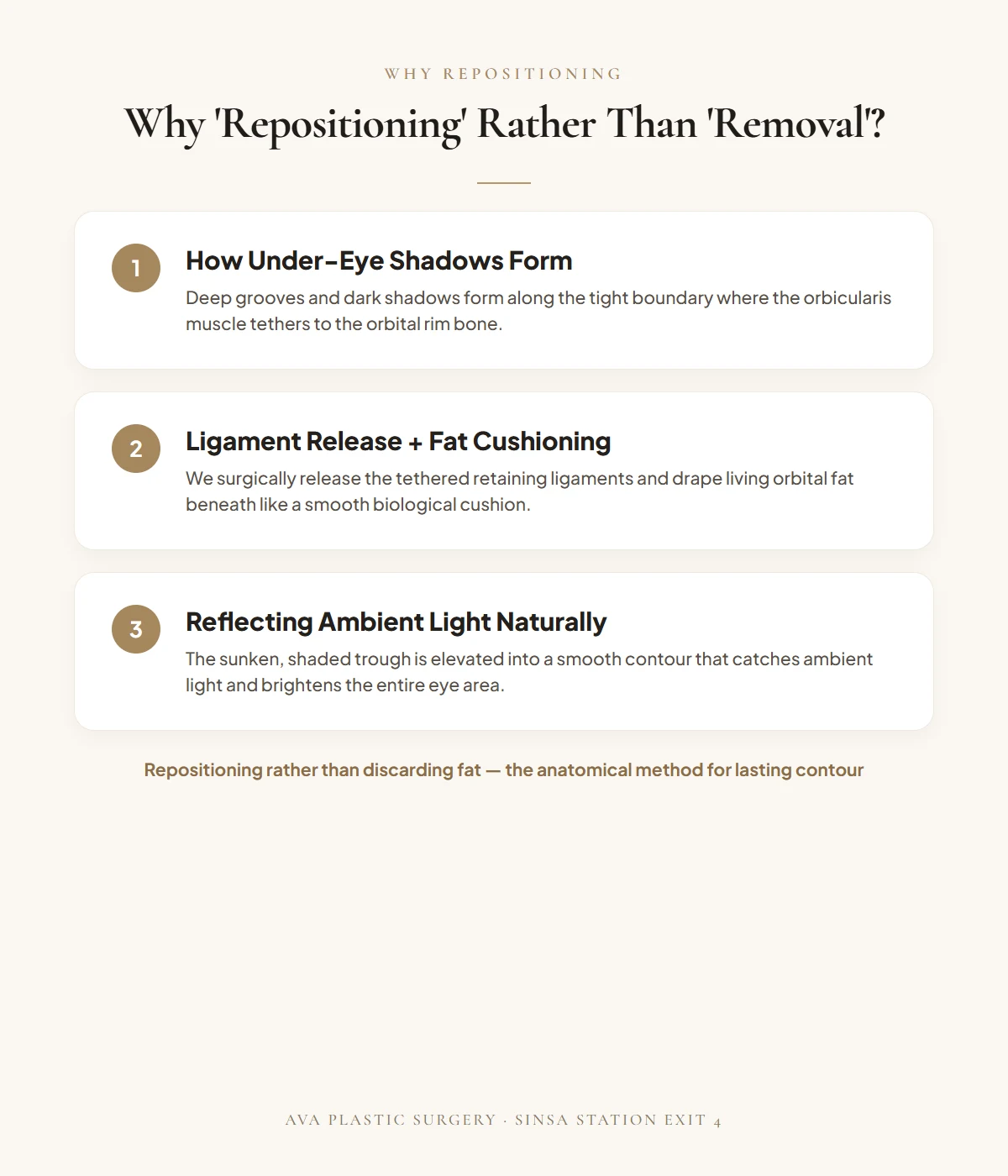
5. Why 'Repositioning' Rather Than 'Removal'? The Anatomical Rationale
Along the lower orbital rim, the orbicularis oculi muscle tethers firmly to bone via retaining ligaments, creating a deep groove. Under-eye fat repositioning releases these retaining ligaments and drapes mobilized orbital fat beneath as a biological cushion—turning a shadowy recess into a smooth, light-reflecting surface.

"Under-eye surgery is not about taking away; it is about reconstructing anatomy. Trimming only the precise excess of lax skin and repositioning fat into hollow zones creates natural, enduring under-eye contours." — Dr. Seungsoo Kim
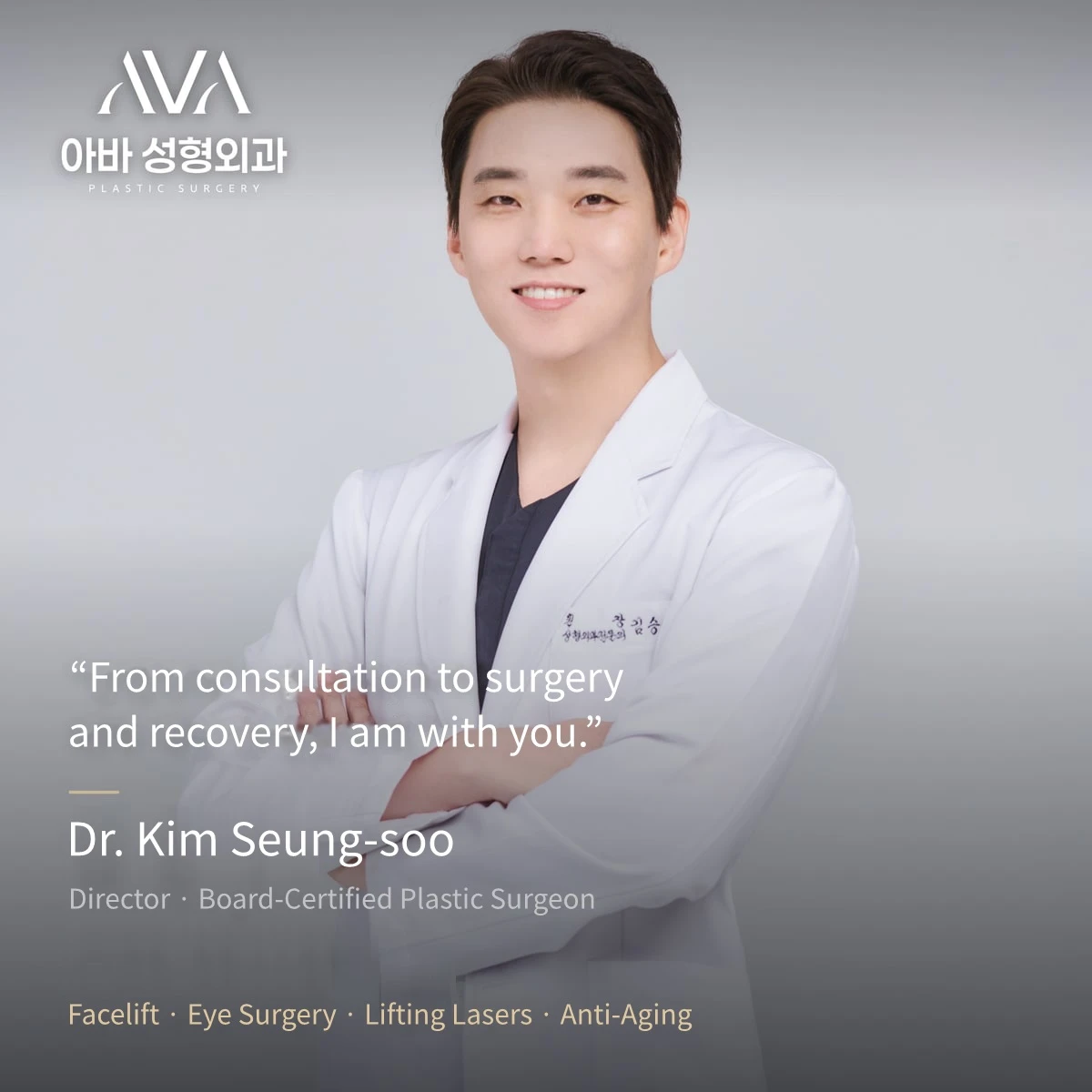
Book Your 1:1 Consultation with Dr. Seungsoo Kim
Whether you are flying in from overseas or living in Korea, Dr. Seungsoo Kim personally oversees every step from initial consultation to surgery and recovery:
- 📅 Book a 1:1 Zoom Video Consultation or Seoul Clinic Visit (English Booking Hub) →
- ✨ View Deep-Plane Facelift Guide & 1-Year Follow-Up Cases →
- 👁️ View Upper Eyelid, Sub-Brow & Forehead Lift Guide →
- 💬 Chat Directly on WhatsApp (+82 10-3705-3423) →
📍 AVA Plastic Surgery · 4F Insung Building, 603 Gangnam-daero, Seocho-gu, Seoul (1-min walk from Sinsa Station Exit 4) · TEL +82 2-545-1882
※ Surgical Notice: Post-operative complications such as bleeding, infection, swelling, scarring, asymmetry, or sensory changes may occur, and results and recovery vary by individual.
Read the original Naver blog post ·