ไทม์ไลน์การยุบบวม・รอยช้ำ・ก้อนแข็งชั้นลึก (Bio-bond)・และการดูแลแผลเป็นหลังศัลยกรรม — วิธีดูแลตัวเองแต่ละช่วงเวลาและอาการที่ควรพบแพทย์
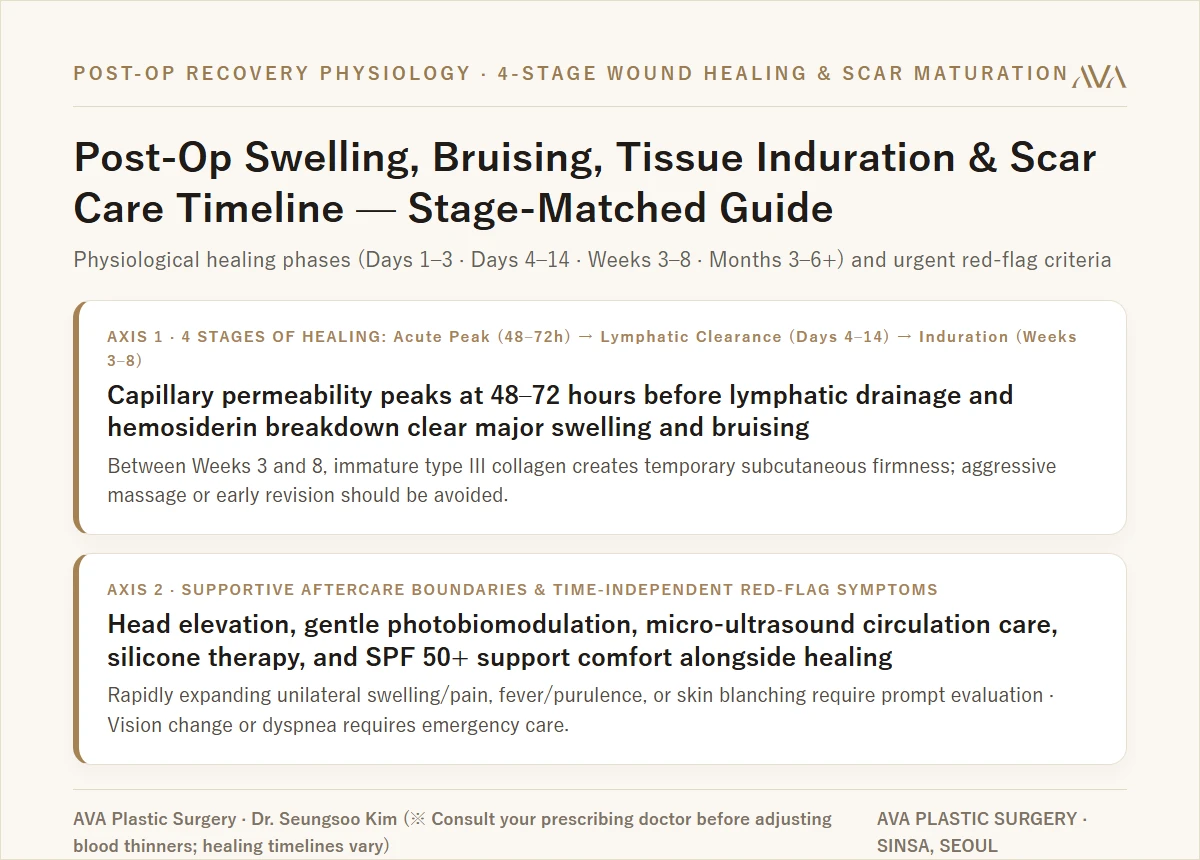
- Postoperative healing follows four distinct physiological phases: (1) Acute Hemostasis & Peak Edema (Days 0–3), (2) Ecchymosis Resolution & Suture Removal (Days 4–14), (3) Deep Subdermal Induration / "Bio-Bond" Remodeling (Weeks 3–8), and (4) Scar Collagen Maturation (Months 2–6+).
- During the first 48–72 hours, gentle gauze-wrapped cooling and 30–45° head elevation minimize capillary leakage, whereas mild warmth is used only when cleared by the surgeon after bleeding risk subsides (fat-grafted zones must never be compressed or exposed to extreme cold/heat).
- Regardless of postoperative day, red-flag signs—rapidly expanding unilateral tense swelling, severe throbbing pain, vision loss/diplopia/proptosis, shortness of breath, high fever, or purulent drainage—require immediate clinic contact or emergency room care, and prescribed anticoagulants must never be stopped without consulting the prescribing physician.
สรุปประเด็นสำคัญโดย นพ. คิม ซึงซู: เข้าใจการเปลี่ยนแปลงตามธรรมชาติหลังผ่าตัดตั้งแต่ระยะบวมช้ำ 7 วันแรก ระยะพังผืดชั้นลึกจับตัว (Bio-bond สัปดาห์ที่ 2–6) ไปจนถึงการทายาลดแผลเป็นในเดือนที่ 3–6 บทความนี้เขียนขึ้นเพื่ออธิบายโครงสร้างทางกายวิภาค ขอบเขตของชั้นเนื้อเยื่อ (Anatomical Planes) และเกณฑ์การตัดสินใจเลือกวิธีรักษาที่เหมาะสมและปลอดภัยสำหรับคนไข้แต่ละบุคคล
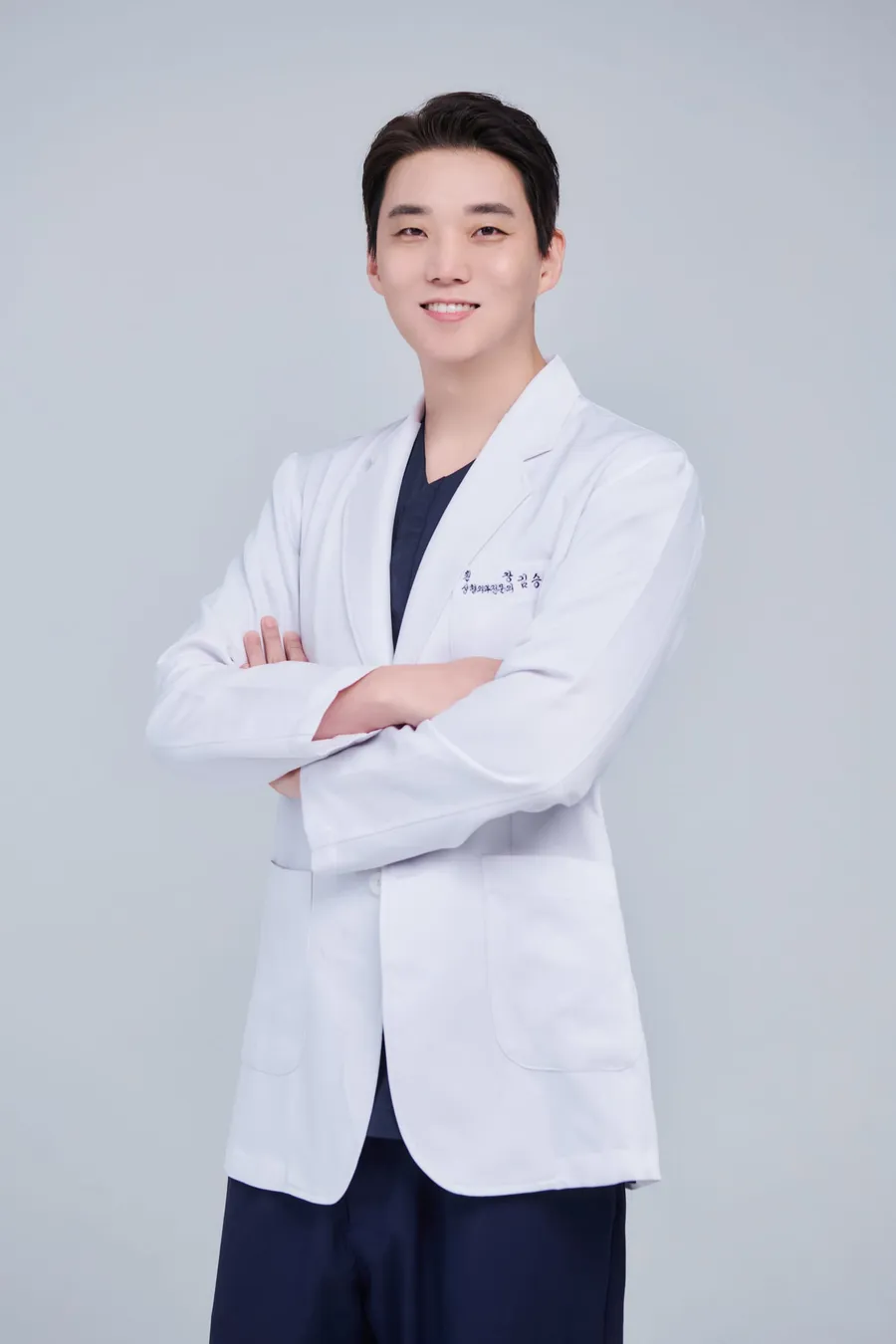
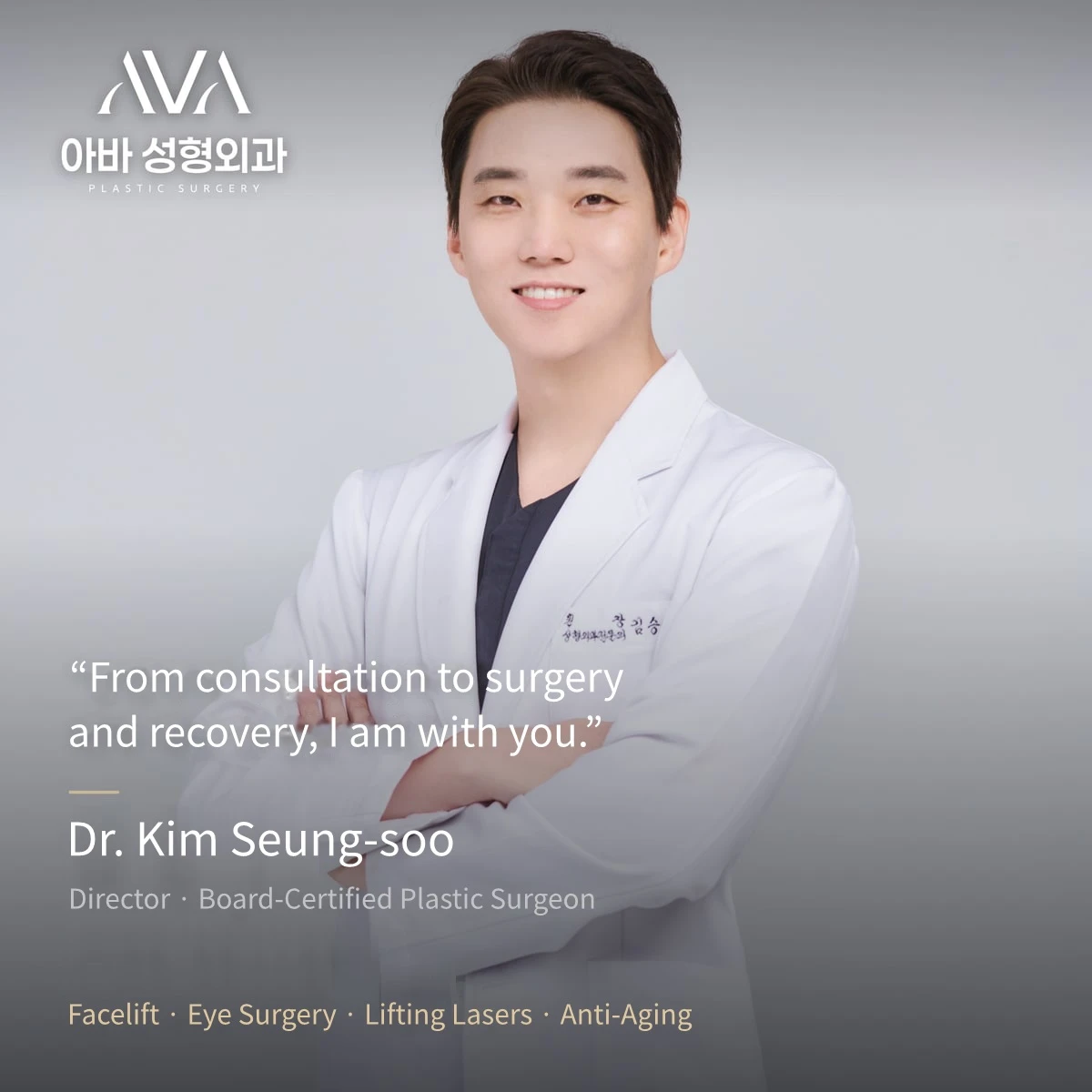
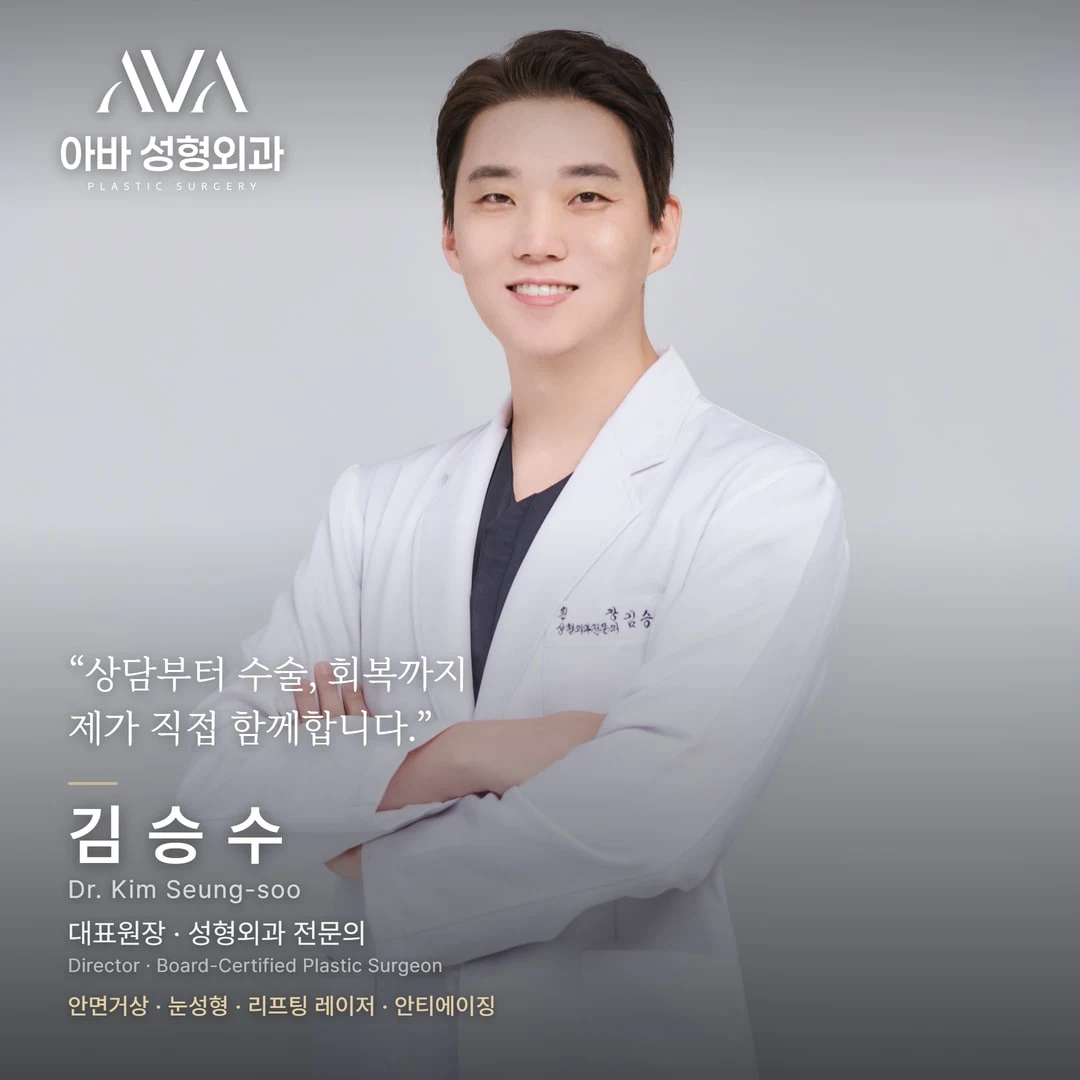
สวัสดีครับ ผม นพ. คิม ซึงซู (Dr. Seungsoo Kim) ศัลยแพทย์ตกแต่งเฉพาะทางและผู้อำนวยการบริหารคลินิก AVA Plastic Surgery ย่านชินซา–คังนัม กรุงโซลครับ
01. การวินิจฉัยโครงสร้างทางกายวิภาคและสาเหตุที่แท้จริงของปัญหา
ในการผ่าตัดศัลยกรรมตกแต่งและการดูแลฟื้นฟูใบหน้า ผลลัพธ์ที่ดูเป็นธรรมชาติและอยู่ได้นานไม่ได้เกิดจากการดึงผิวหนังชั้นนอกให้ตึงเพียงอย่างเดียว แต่เกิดจากการวินิจฉัยอย่างแม่นยำว่าปัญหาอยู่ที่ชั้นใดของใบหน้า ไม่ว่าจะเป็นชั้นผิวหนังแท้ (Dermis), ชั้นไขมันตื้นและลึก (Fat Compartments), ชั้นพังผืดกล้ามเนื้อ SMAS / Platysma หรือเส้นเอ็นยึดผิว (Retaining Ligaments) การวางแผนการรักษาในหัวข้อ “ไทม์ไลน์การยุบบวม・รอยช้ำ・ก้อนแข็งชั้นลึก (Bio-bond)・และการดูแลแผลเป็นหลังศัลยกรรม — วิธีดูแลตัวเองแต่ละช่วงเวลาและอาการที่ควรพบแพทย์” จึงเริ่มต้นจากการวัดสัดส่วนโครงสร้างใบหน้าและความยืดหยุ่นของเนื้อเยื่ออย่างละเอียด
02. หลักการเลือกเทคนิคการรักษาและการแยกชั้นเนื้อเยื่ออย่างปลอดภัย
ที่ AVA Plastic Surgery เราให้ความสำคัญกับการรักษาตามชั้นกายวิภาคที่ถูกต้อง (Anatomical Plane-Specific Approach) สำหรับเคสที่ต้องผ่าตัดยกกระชับหรือปรับโครงสร้าง เราจะเลาะคลายจุดยึดรั้งในชั้นลึกด้วยความแม่นยำภายใต้การมองเห็นโดยตรงเพื่อปกป้องเส้นประสาทและหลอดเลือดสำคัญ พร้อมให้ชั้นโครงสร้างลึกเป็นตัวรับแรงดึงและเย็บปิดผิวหนังด้านนอกแบบไร้แรงตึง (Tension-Free Closure) ส่วนในเคสที่สามารถดูแลด้วยเครื่องยกกระชับหรือสกินบูสเตอร์ เราจะกำหนดความลึกของพลังงานและชนิดของตัวยาให้ตรงกับความหนาของผิวคนไข้แต่ละท่าน
03. ไทม์ไลน์การพักฟื้น การดูแลหลังหัตถการ และการวางแผนเดินทางมาโซล
ระยะเวลาการยุบบวมและการเข้าที่ของเนื้อเยื่อจะแตกต่างกันไปตามสภาพผิวและขอบเขตของหัตถการ โดยทั่วไปอาการบวมหลักจะค่อยๆ ลดลงในช่วง 1–2 สัปดาห์แรก (ซึ่งเป็นช่วงตัดไหมสำหรับการผ่าตัด) จากนั้นเนื้อเยื่อชั้นลึกจะค่อยๆ นุ่มลงและเข้าที่อย่างเป็นธรรมชาติในช่วง 6 สัปดาห์ถึง 3–6 เดือน ทีมแพทย์และพยาบาลของเรามีระบบดูแลแผลและลดบวมแบบ 1:1 เพื่อให้คนไข้ที่เดินทางมาจากประเทศไทยสามารถกลับไปใช้ชีวิตประจำวันได้อย่างมั่นใจ
04. ช่องทางปรึกษาและนัดหมาย 1:1 กับ นพ. คิม ซึงซู
ท่านสามารถศึกษาข้อมูลหัตถการที่เกี่ยวข้องหรือส่งภาพถ่ายเพื่อประเมินเบื้องต้นกับทีมงานได้ทางช่องทางด้านล่างนี้ครับ:
- ✨ ดูแลผิวทางการแพทย์・ลดบวมหลังผ่าตัด →
- ✨ ดึงหน้า Deep-Plane (Dual-Deep Plane) →
- ✨ ตาสองชั้นแบบกรีดยาว →
- ✨ เสริมจมูกปรับโครงสร้าง (Rhinoplasty) →
- ✨ เติมไขมันหน้าเด็ก (Fat Grafting) →
- 📅 นัดหมายปรึกษาออนไลน์หรือจองคิวเข้าพบคุณหมอที่คลินิก →
- 💬 ปรึกษาทาง WhatsApp (+82 10-3705-3423 · ส่งรูปประเมินเบื้องต้น) →
- 📖 อ่านคอลัมน์ “ทำไมผมถึงผ่าตัดดึงหน้า Deep-Plane และผ่าตัดตาให้คุณแม่ของตัวเอง” →
📍 AVA Plastic Surgery · ชั้น 4 อาคารอินซอง 603 คังนัมแดโร เขตซอโช กรุงโซล (สถานี Sinsa ทางออก 4 เดิน 1 นาที) · โทร +82 2-545-1882
※ ข้อมูลทางการแพทย์: ผลลัพธ์และระยะเวลาพักฟื้นขึ้นอยู่กับสภาพเนื้อเยื่อของแต่ละบุคคล ความเสี่ยงและผลข้างเคียงที่อาจเกิดขึ้น ได้แก่ เลือดออก เลือดคั่ง การติดเชื้อ อาการบวมช้ำ ความไม่สมมาตร รอยแผลเป็น หรืออาการชาชั่วคราว ควรรับการตรวจประเมินแบบ 1:1 กับศัลยแพทย์ตกแต่งเฉพาะทางก่อนตัดสินใจ
คำถามที่พบบ่อยทางคลินิก (FAQ)
Q. When should I switch from cold compresses to warm compresses after facial plastic surgery—and when should both be avoided?
For the first 48 to 72 hours after surgery, gentle intermittent cooling over sterile gauze combined with 30–45° head elevation helps constrict micro-vessels and limit acute edema. Once the risk of fresh bleeding has passed (typically Day 4–5 onward) and your surgeon confirms it is safe, mild lukewarm compresses can support lymphatic clearance of residual bruising. However, because postoperative skin often has temporarily reduced sensation, intense heat risks thermal burns or re-bleeding, and areas treated with autologous fat grafting should avoid both direct pressure and extreme cold or heat to protect adipocyte survival.
Q. Why does the surgical area feel firm, tight, or lumpy ("bio-bond" induration) around Weeks 3 to 6?
Between Weeks 3 and 8, healing enters the proliferative remodeling phase: fibroblasts lay down disorganized type III collagen across dissected planes (such as the SMAS, submental neck, or eyelid crease), creating temporary subdermal firmness, tightness, or mild surface irregularity. Aggressive manual kneading during this stage can provoke inflammation; instead, non-traumatic medical aftercare (such as LDM ultrasound and LED photobiomodulation) supports natural collagen reorganization over 2 to 6 months.
Q. What are the emergency red-flag symptoms that must never be mistaken for normal postoperative swelling?
At any point during recovery, contact your surgical team immediately—or go to the nearest emergency department / call emergency services (119 in Korea)—if you experience: (1) sudden, tense, one-sided swelling accompanied by worsening pain (suspected hematoma), (2) any change in vision, double vision, severe orbital pain, or difficulty breathing/swallowing after periocular or neck/facial procedures, (3) spreading warmth, redness, fever above 38°C, or pus (infection), or (4) pale, mottled, or dusky purple skin discoloration along a flap or incision.
บทความแนะนำในหัวข้อใกล้เคียงโดย นพ.คิม ซึงซู
หลังทำศัลยกรรมที่เกาหลี บินกลับประเทศได้เมื่อไหร่? — ตารางวันตัดไหมและระยะเวลาพำนักในโซลแยกตามประเภทการผ่าตัด
อ่านบทความ →
ตั้งแต่ปรึกษาครั้งแรกจนถึงวันผ่าตัด・ตัดไหม・ติดตามผล — ระบบการดูแลแบบ 1:1 โดย นพ. คิม ซึงซู ผู้อำนวยการบริหาร AVA Plastic Surgery
อ่านบทความ →
แผนการเดินทางและพักฟื้น 12 วันในโซลสำหรับการดึงหน้า Deep-Plane — ไทม์ไลน์ตั้งแต่วันผ่าตัด การตัดไหมแต่ละจุด ไปจนถึงวันบินกลับ
อ่านบทความ →