ผ่าตัดแก้ตาสองชั้น (Revision Eyelid Surgery) — การลดขนาดชั้นตาที่ใหญ่เกินไป (ตาหอยแครง) การเลาะพังผืดแผลเดิม และการแก้ตาปรือ・ตาไม่เท่ากัน
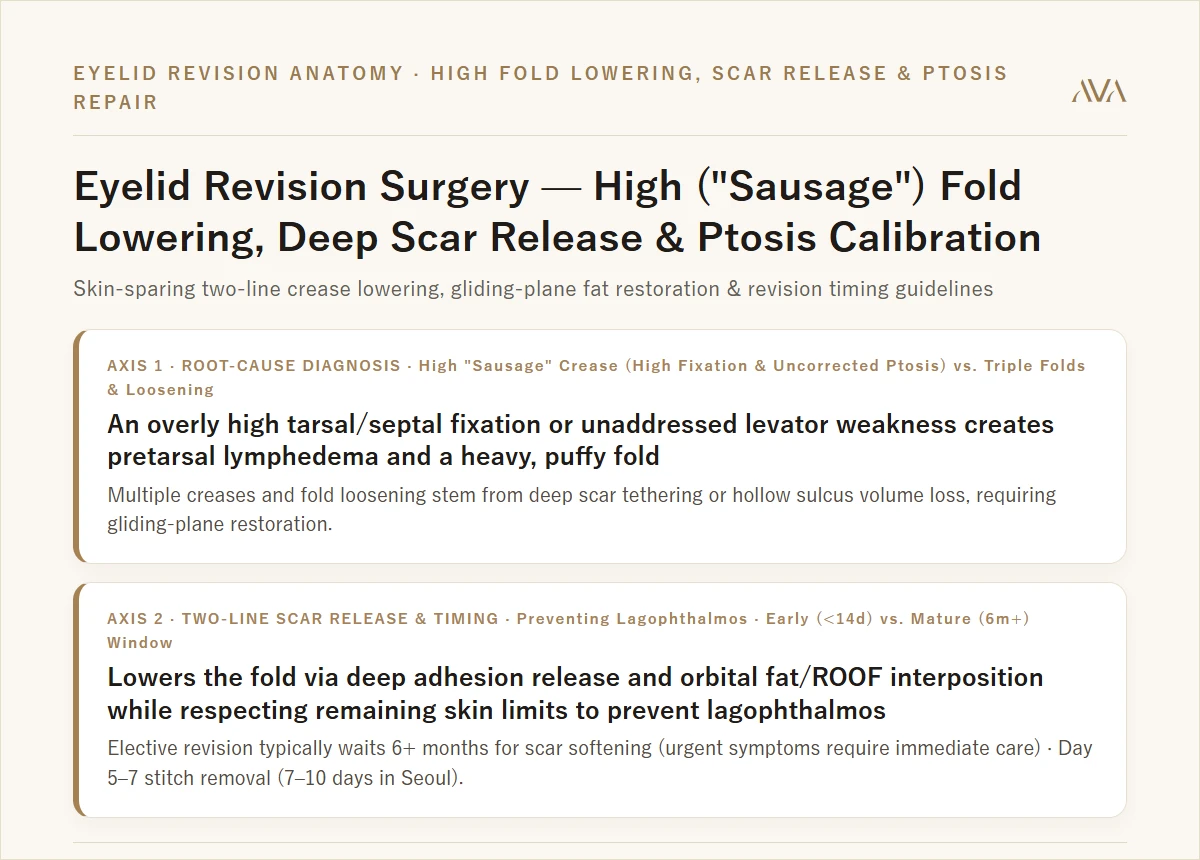
- Successful eyelid revision surgery begins by diagnosing the anatomical root cause: whether a heavy, puffy ("sausage") crease stems from an overly high tarsal/septal fixation, pretarsal lymphatic stasis, or unaddressed blepharoptosis (low MRD1), versus multiple creases or fold loosening caused by deep scar tethering and sunken upper-sulcus fat depletion.
- Lowering a high fold safely relies on skin-sparing two-line crease lowering—releasing the old high scar adhesion and interposing gliding orbital fat or ROOF tissue to prevent re-adhesion—while strictly respecting remaining skin reserves so lagophthalmos (incomplete eyelid closure) is avoided.
- Elective revision is typically performed after 6+ months of scar maturation (except early suture adjustment within 14 days, while acute red-flag symptoms such as vision changes, severe hematoma, or corneal exposure require immediate evaluation regardless of timing), with suture removal on Post-Op Day 5.
สรุปประเด็นสำคัญโดย นพ. คิม ซึงซู: อธิบายเทคนิคการแก้ตาสองชั้นที่ชั้นตาสูงและดูบวมหนา (Sausage eye) ด้วยการเลาะคลายพังผืดแผลเป็นเดิม (Two-line lowering) จัดเรียงไขมันเบ้าตา และปรับกล้ามเนื้อตา บทความนี้เขียนขึ้นเพื่ออธิบายโครงสร้างทางกายวิภาค ขอบเขตของชั้นเนื้อเยื่อ (Anatomical Planes) และเกณฑ์การตัดสินใจเลือกวิธีรักษาที่เหมาะสมและปลอดภัยสำหรับคนไข้แต่ละบุคคล
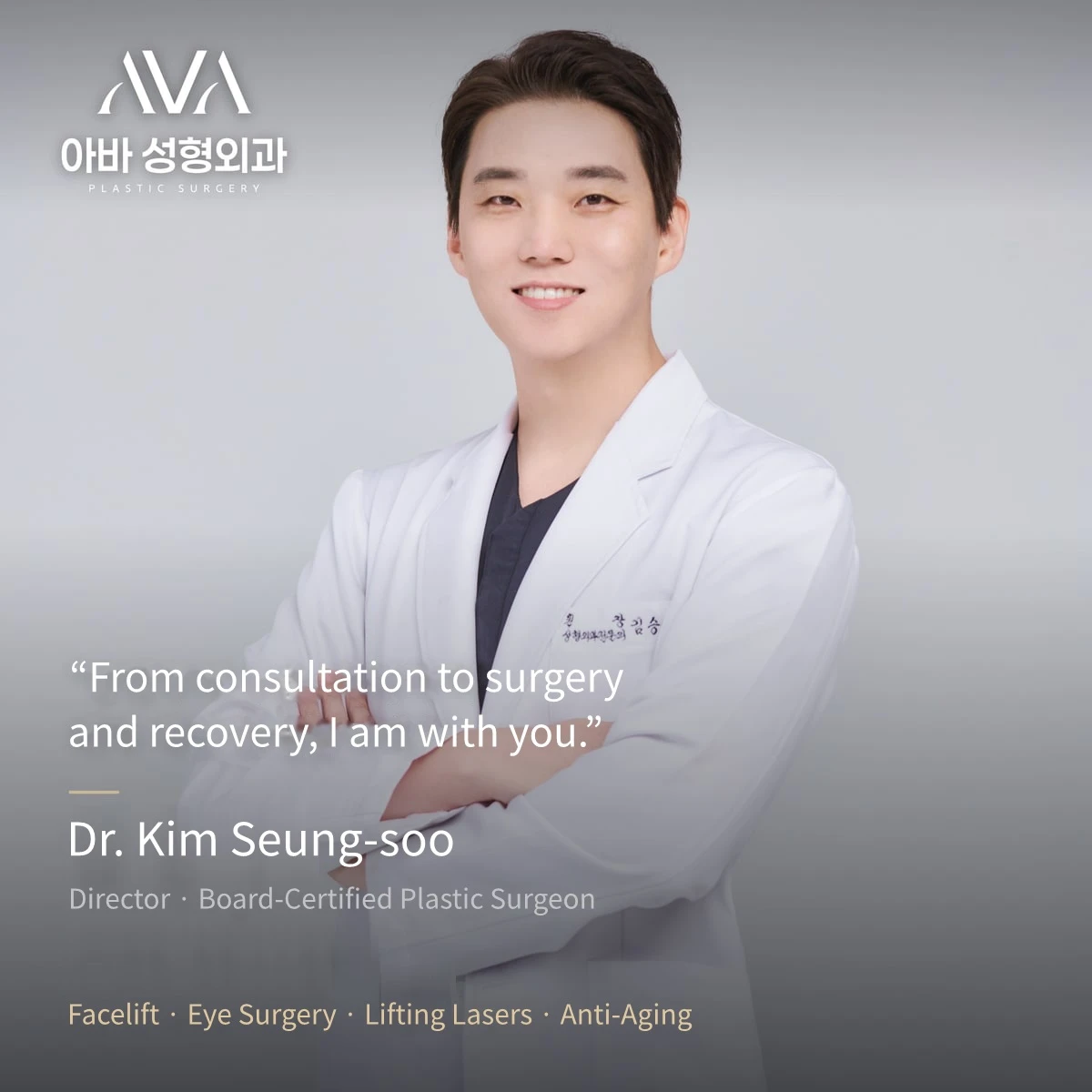
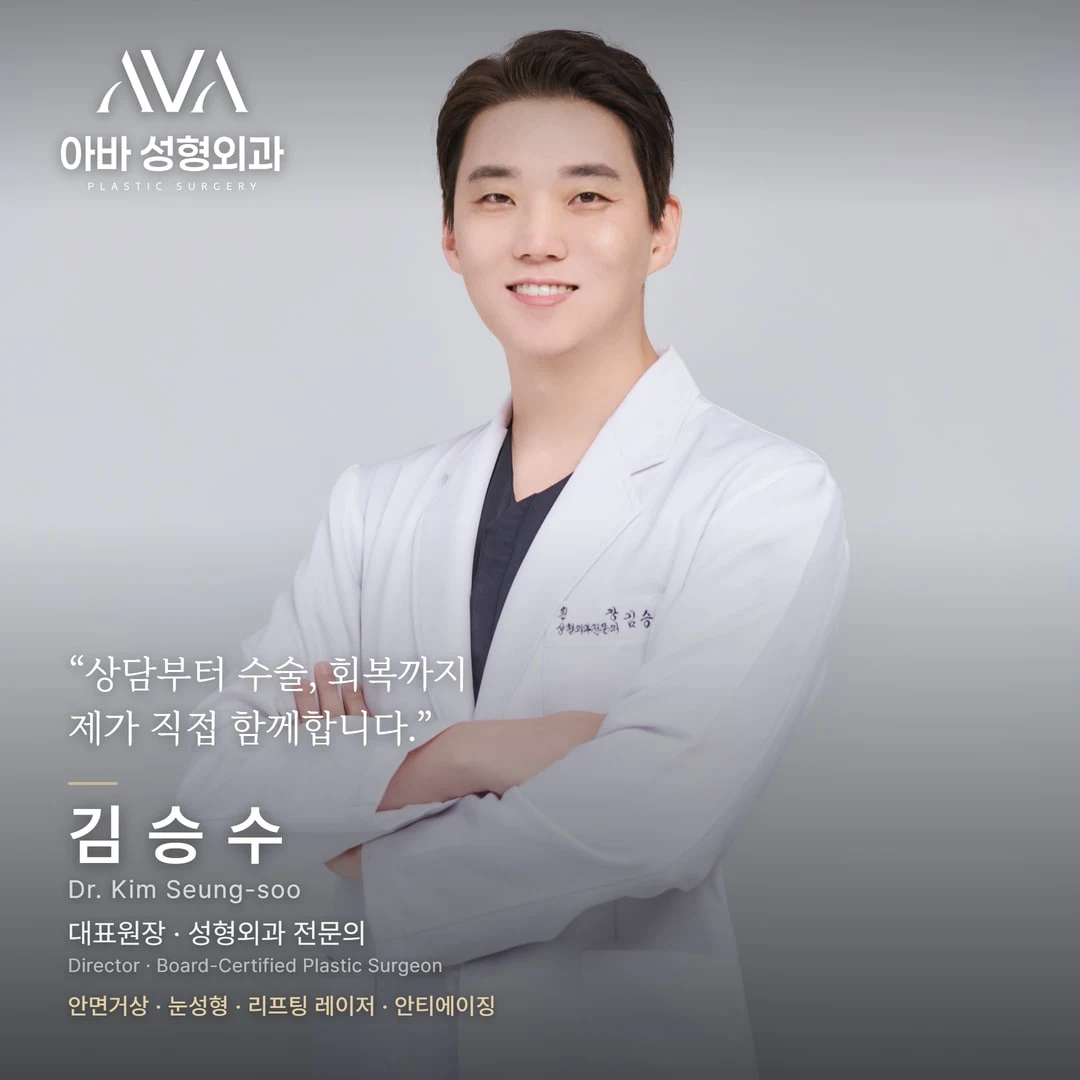
สวัสดีครับ ผม นพ. คิม ซึงซู (Dr. Seungsoo Kim) ศัลยแพทย์ตกแต่งเฉพาะทางและผู้อำนวยการบริหารคลินิก AVA Plastic Surgery ย่านชินซา–คังนัม กรุงโซลครับ
01. การวินิจฉัยโครงสร้างทางกายวิภาคและสาเหตุที่แท้จริงของปัญหา
ในการผ่าตัดศัลยกรรมตกแต่งและการดูแลฟื้นฟูใบหน้า ผลลัพธ์ที่ดูเป็นธรรมชาติและอยู่ได้นานไม่ได้เกิดจากการดึงผิวหนังชั้นนอกให้ตึงเพียงอย่างเดียว แต่เกิดจากการวินิจฉัยอย่างแม่นยำว่าปัญหาอยู่ที่ชั้นใดของใบหน้า ไม่ว่าจะเป็นชั้นผิวหนังแท้ (Dermis), ชั้นไขมันตื้นและลึก (Fat Compartments), ชั้นพังผืดกล้ามเนื้อ SMAS / Platysma หรือเส้นเอ็นยึดผิว (Retaining Ligaments) การวางแผนการรักษาในหัวข้อ “ผ่าตัดแก้ตาสองชั้น (Revision Eyelid Surgery) — การลดขนาดชั้นตาที่ใหญ่เกินไป (ตาหอยแครง) การเลาะพังผืดแผลเดิม และการแก้ตาปรือ・ตาไม่เท่ากัน” จึงเริ่มต้นจากการวัดสัดส่วนโครงสร้างใบหน้าและความยืดหยุ่นของเนื้อเยื่ออย่างละเอียด
02. หลักการเลือกเทคนิคการรักษาและการแยกชั้นเนื้อเยื่ออย่างปลอดภัย
ที่ AVA Plastic Surgery เราให้ความสำคัญกับการรักษาตามชั้นกายวิภาคที่ถูกต้อง (Anatomical Plane-Specific Approach) สำหรับเคสที่ต้องผ่าตัดยกกระชับหรือปรับโครงสร้าง เราจะเลาะคลายจุดยึดรั้งในชั้นลึกด้วยความแม่นยำภายใต้การมองเห็นโดยตรงเพื่อปกป้องเส้นประสาทและหลอดเลือดสำคัญ พร้อมให้ชั้นโครงสร้างลึกเป็นตัวรับแรงดึงและเย็บปิดผิวหนังด้านนอกแบบไร้แรงตึง (Tension-Free Closure) ส่วนในเคสที่สามารถดูแลด้วยเครื่องยกกระชับหรือสกินบูสเตอร์ เราจะกำหนดความลึกของพลังงานและชนิดของตัวยาให้ตรงกับความหนาของผิวคนไข้แต่ละท่าน
03. ไทม์ไลน์การพักฟื้น การดูแลหลังหัตถการ และการวางแผนเดินทางมาโซล
ระยะเวลาการยุบบวมและการเข้าที่ของเนื้อเยื่อจะแตกต่างกันไปตามสภาพผิวและขอบเขตของหัตถการ โดยทั่วไปอาการบวมหลักจะค่อยๆ ลดลงในช่วง 1–2 สัปดาห์แรก (ซึ่งเป็นช่วงตัดไหมสำหรับการผ่าตัด) จากนั้นเนื้อเยื่อชั้นลึกจะค่อยๆ นุ่มลงและเข้าที่อย่างเป็นธรรมชาติในช่วง 6 สัปดาห์ถึง 3–6 เดือน ทีมแพทย์และพยาบาลของเรามีระบบดูแลแผลและลดบวมแบบ 1:1 เพื่อให้คนไข้ที่เดินทางมาจากประเทศไทยสามารถกลับไปใช้ชีวิตประจำวันได้อย่างมั่นใจ
04. ช่องทางปรึกษาและนัดหมาย 1:1 กับ นพ. คิม ซึงซู
ท่านสามารถศึกษาข้อมูลหัตถการที่เกี่ยวข้องหรือส่งภาพถ่ายเพื่อประเมินเบื้องต้นกับทีมงานได้ทางช่องทางด้านล่างนี้ครับ:
- ✨ แก้ไขตาสองชั้น (Revision Eyelid) →
- ✨ ตาสองชั้นแบบกรีดยาว →
- ✨ แก้ไขกล้ามเนื้อตาอ่อนแรง (Ptosis) →
- ✨ ตาสองชั้นแบบยึดเกาะธรรมชาติ →
- 📅 นัดหมายปรึกษาออนไลน์หรือจองคิวเข้าพบคุณหมอที่คลินิก →
- 💬 ปรึกษาทาง WhatsApp (+82 10-3705-3423 · ส่งรูปประเมินเบื้องต้น) →
- 📖 อ่านคอลัมน์ “ทำไมผมถึงผ่าตัดดึงหน้า Deep-Plane และผ่าตัดตาให้คุณแม่ของตัวเอง” →
📍 AVA Plastic Surgery · ชั้น 4 อาคารอินซอง 603 คังนัมแดโร เขตซอโช กรุงโซล (สถานี Sinsa ทางออก 4 เดิน 1 นาที) · โทร +82 2-545-1882
※ ข้อมูลทางการแพทย์: ผลลัพธ์และระยะเวลาพักฟื้นขึ้นอยู่กับสภาพเนื้อเยื่อของแต่ละบุคคล ความเสี่ยงและผลข้างเคียงที่อาจเกิดขึ้น ได้แก่ เลือดออก เลือดคั่ง การติดเชื้อ อาการบวมช้ำ ความไม่สมมาตร รอยแผลเป็น หรืออาการชาชั่วคราว ควรรับการตรวจประเมินแบบ 1:1 กับศัลยแพทย์ตกแต่งเฉพาะทางก่อนตัดสินใจ
คำถามที่พบบ่อยทางคลินิก (FAQ)
Q. Why does a double eyelid still look swollen and puffy ("sausage eye") even a year after surgery?
When a fold still appears thick and swollen past the 6-to-12-month mark, it is rarely simple edema. The most common culprits are an incision/fixation placed too high on the tarsal plate for thick Asian eyelid skin, deep scar tissue obstructing pretarsal venous and lymphatic drainage, or uncorrected levator ptosis forcing eyebrow compensation. Resolving it requires releasing the deep scar tether and recalibrating levator tension rather than just cutting away more skin.
Q. How does the skin-sparing "two-line" fold-lowering technique work when upper-eyelid skin is scarce?
Instead of excising the entire strip of skin between the old high crease and the new lower crease—which could leave the eye unable to close—we create a lower crease design, dissect and release the deep fibrotic adhesion of the old high line, and mobilize orbital fat or micro-fat grafts into the upper plane so the old crease cannot re-tether. However, if prior surgeries already removed excessive skin, the degree of lowering is anatomically bounded by safe eyelid closure.
Q. Why wait 6 months for eyelid revision, and how long should international patients stay in Seoul?
During the first 3 to 6 months after surgery, internal tissues undergo active collagen remodeling, vascularity, and stiffness, making millimeter-level symmetry unpredictable. Apart from early adjustments within the first 1 to 2 weeks (or urgent evaluation for acute pain, hematoma, or corneal irritation), waiting at least 6 months allows the scar plane to soften. Fine sutures are removed on Day 5, and we recommend a 7- to 10-day stay in Seoul.
บทความแนะนำในหัวข้อใกล้เคียงโดย นพ.คิม ซึงซู
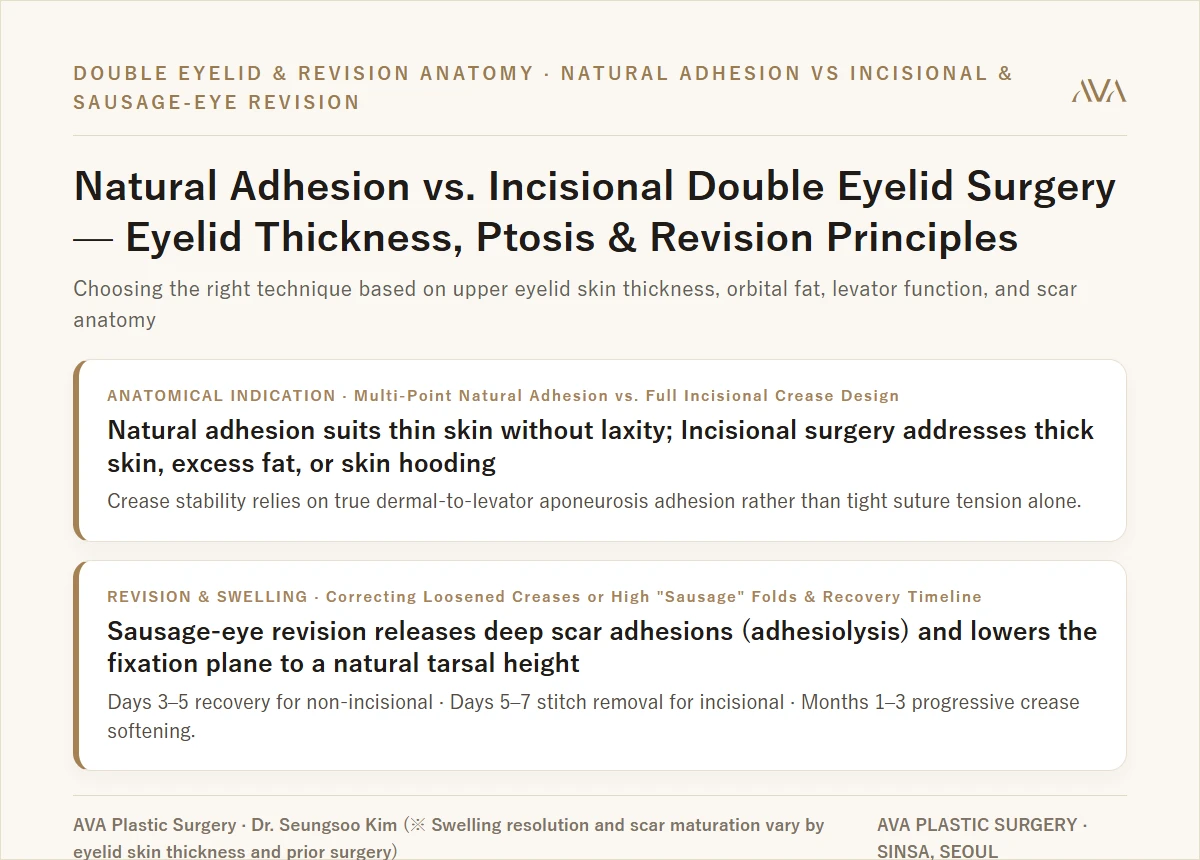
ตาสองชั้นแบบยึดเกาะธรรมชาติ (ไม่กรีด) vs แบบกรีดยาว — เกณฑ์การเลือกจากความหนาเปลือกตา ไขมัน และการป้องกันชั้นตาหลุด・ตาหอยแครง
อ่านบทความ →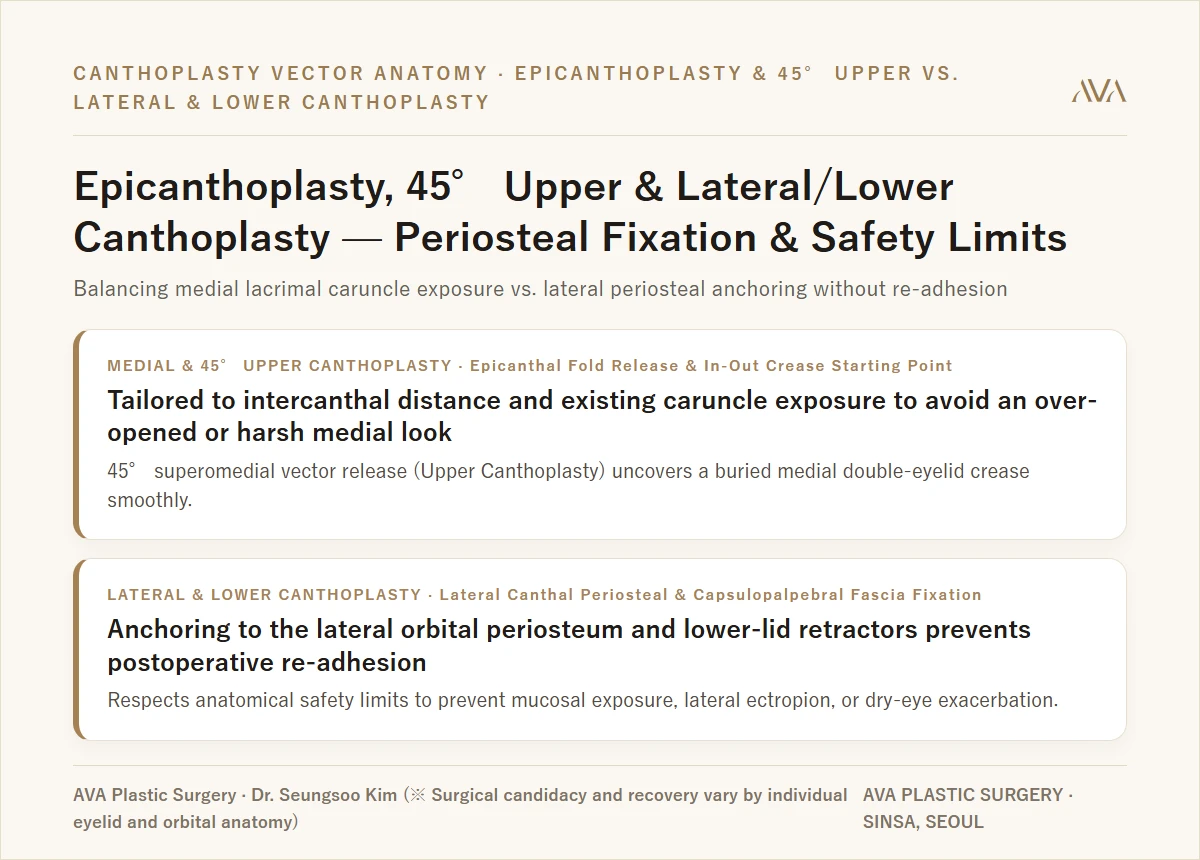
กายวิภาคการเปิดหัวตา・ยกหัวตา vs เปิดหางตา・ลดหางตา — การคลายพังผืดหัวตาและการยึดเยื่อหุ้มกระดูกเบ้าตาด้านนอกไม่ให้กลับมาติดกัน
อ่านบทความ →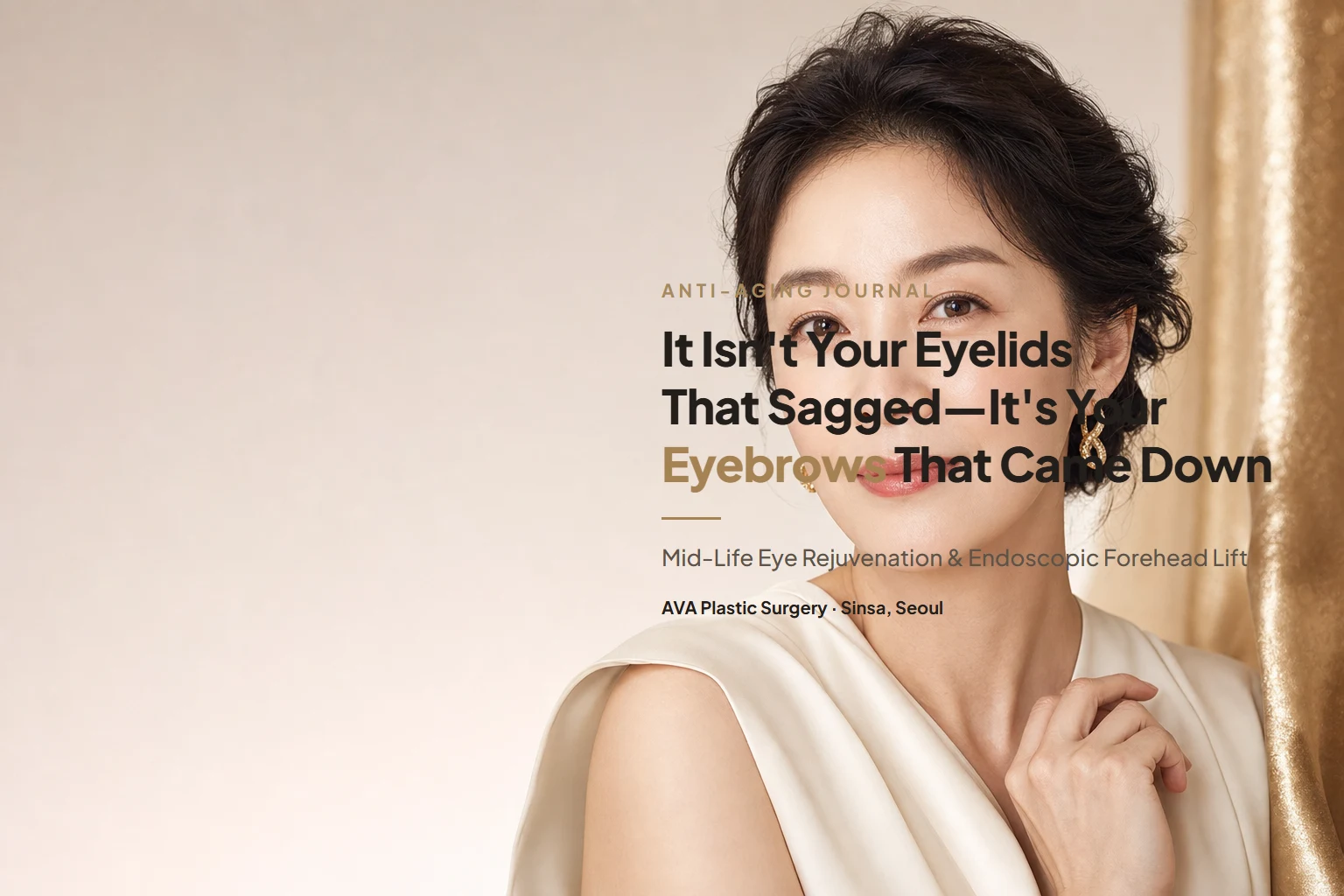
ดึงหน้าผากส่องกล้อง (Endoscopic Forehead Lift) — ปัญหาอาจไม่ใช่หนังตาตก แต่เกิดจาก “คิ้วที่เลื่อนต่ำลง”
อ่านบทความ →